
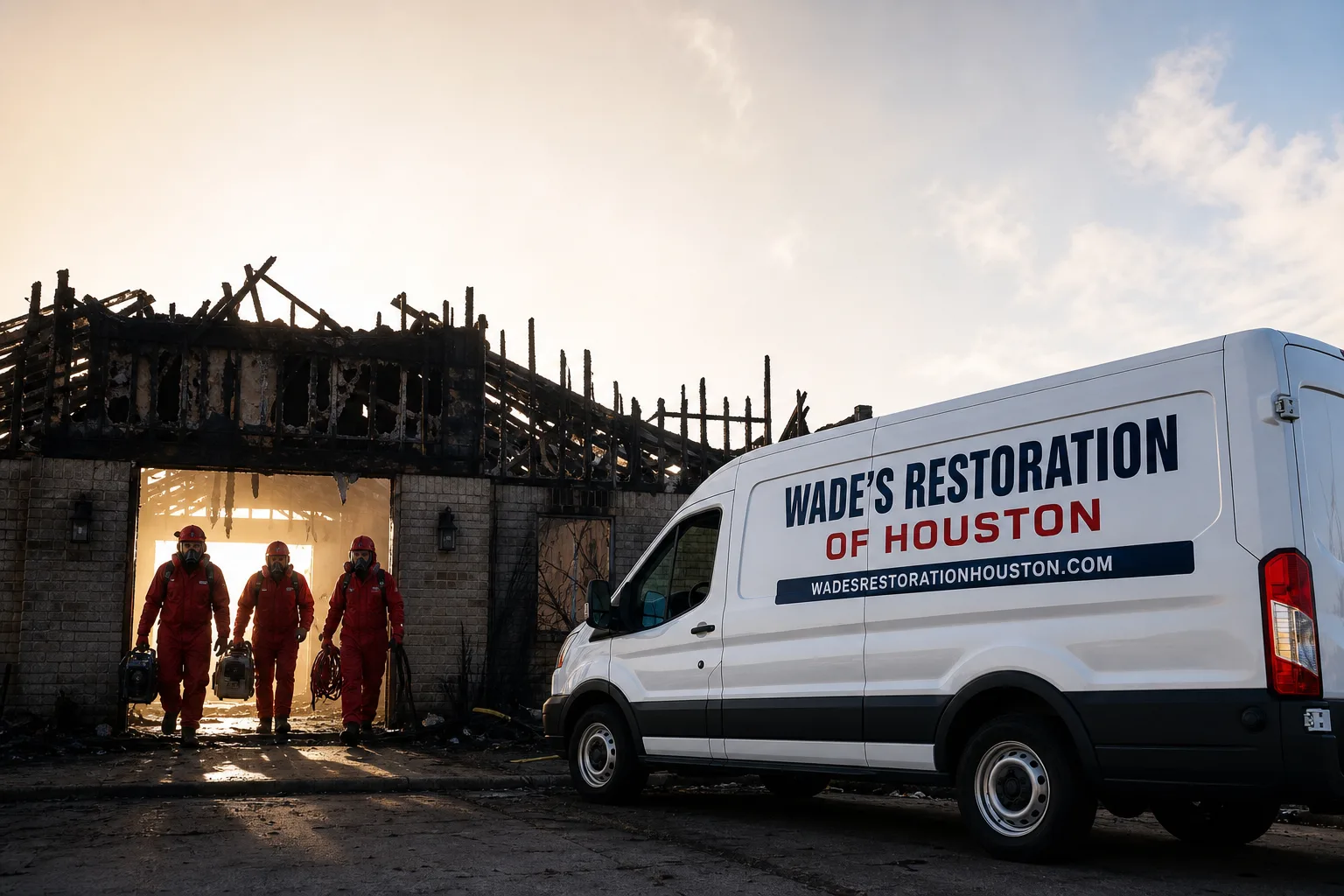
Fast, Reliable Storm & Disaster Restoration Across Richmond
When a storm tears through Richmond, you need someone who knows Brazos River floodwater from ordinary rain runoff. Storm and disaster restoration here isn’t a generic mop-up job. It’s understanding that water in the 77406 zip code often comes from river backwater, not a backed-up gutter. Wade Ferris and his crew respond to Richmond calls around the clock, and Wade himself answers the phone. If your home took water, lost a roof section, or needs board-up before the next band of weather hits, call (888) 534-8116 right now. We’ll have someone on the road to Richmond within the hour.
Why Wade’s Restoration of Houston Is Richmond’s Preferred Storm & Disaster Restoration Company
Wade Ferris put his name on the truck in 2007, and his address and license number are published for anyone to check. That’s not common in restoration. Richmond homeowners who’ve been burned by a national chain that quoted one number on the phone and another at the door tend to appreciate that. The people Wade sends to Richmond are background-checked, uniformed, and answer to one person: Wade.
Ask anyone in Pecan Grove or Greatwood who answered when they called at 2 a.m. after the Brazos started rising. It was Wade, not a call center. He heads out himself on the big jobs. The work is backed by the 90-Day Done Right Promise, stamped in writing on every water, fire, and mold restoration job. If it’s not done right, Wade makes it right. One call brings him back.
What sets us apart in Richmond specifically is documentation. Wade takes moisture readings every single day and hands the homeowner the full log at the end of the job. Almost nobody in this trade does that. Your adjuster gets the same log. You’re never stuck relaying information between two sides because Wade deals with the insurance adjuster directly.
Our Storm & Disaster Restoration Services in Richmond
Our Storm & Disaster Restoration team handles the full scope of storm recovery in Richmond. Here’s what that looks like on the ground.
Flood Damage Restoration
Richmond flood damage runs deep, and it usually starts with the Brazos. When the river overtopped during Harvey and hit a then-record stage, subdivisions across 77406 and 77469 took Category 3 floodwater, the kind carrying sewage, fuel, and bacteria. That means full structural gutting to the studs in most cases, not surface drying. We strip saturated drywall and insulation, remove baseboards, and get Injectidry floor mats down on the slab to pull moisture from concrete and engineered lumber framing. The Beaumont clay under Richmond holds water for weeks, so we monitor daily and log every reading until the structure is bone dry.
Storm Damage Cleanup
Wind and rain leave more than water. Tree limbs through windows, shingle litter, soaked insulation in the attic. Our storm damage cleanup in Richmond clears debris safely, removes water-damaged materials, and preps the home for drying and rebuild. We work with your adjuster from the first assessment, with photo documentation on every step. If a limb punched through the roof and rain poured into the master bedroom, we tarp first, then start the cleanup. You’re not waiting days while water sits.
Emergency Board-Up
A broken window or a caved door is an invitation to looters, animals, and the next storm. Emergency board-up in Richmond means plywood cut to fit, secured properly, and done before sunrise if needed. Wade’s crew carries the materials and the tools to board up any opening on a Richmond home, whether it’s a tract house on a slab in 77407 or a pier-and-beam bungalow near downtown in 77469. We secure the structure first, then scope the interior damage in writing so you know exactly what you’re dealing with before any restoration work starts.
Roof Tarping
Richmond sits in a wind zone where a single overnight storm can peel shingles off a 2012-era tract home faster than you’d believe. Roof tarping stops the bleeding. Our crew anchors heavy-duty tarps over damaged roof sections with proper fastening, not just sandbags and hope. In storm season, a tarped roof is often the difference between a contained repair and a full interior gut three days later. We’ll get the tarp up fast and schedule the permanent repair with your adjuster’s involvement from the start.
What happens when you call
- 1
A real person answersNo phone trees - you reach a local pro.
- 2
You get an upfront price rangeHonest numbers before anyone is dispatched.
- 3
A background-checked tech heads outLicensed & insured, dispatched right away.
- 4
You approve before work beginsNothing starts until you say go.
Trusted Brands We Service in Richmond
Some Richmond homes come to us with builder-grade equipment still in place, and we stock parts and supplies that match the work we do here. We run XPOWER air movers and B-Air dryers on Richmond flood jobs because they hold up to weeks-long structural drying in high humidity. Injectidry mats are standard equipment on our slab drying work across 77406 and 77407. Wade’s crew holds IICRC credentials, so the drying plan we write for your Richmond home follows the industry standard, and we document every step. If you need a repair or replacement to storm-damaged systems, we carry what we need to get Richmond homes back online fast, not wait on a warehouse three states away.
Common Storm & Disaster Restoration Problems We See in Richmond Homes
- Brazos River backwater flooding: When the river crests, subdivisions in 77406 and 77469 flood from the river side, not from overwhelmed storm drains. That water is Category 3, and it sits for days, not hours.
- OSB wall sheathing that wicks fast: The 2000s-era master-planned tract homes across 77406 and 77407 are framed and sheathed with materials that pull floodwater up like a straw. Mold colonies can form within 48 to 72 hours if demo is delayed.
- Beaumont clay saturation: The soil under Richmond holds water long after the surface looks dry. Perimeter wall cavities stay wet for weeks without Injectidry mats on the slab, and Richmond’s humid summers push that moisture into secondary mold growth.
- Coverage disputes from optional flood insurance: Many homes platted before Harvey carried flood-zone maps that made flood insurance optional, so owners skipped it. Harvey proved those maps wrong. We regularly scope homes where only homeowner’s insurance exists, and the homeowner faces a full first-floor gut out of pocket. Wade’s direct adjuster communication and written scope help keep those disputes honest.
Pricing for Storm & Disaster Restoration in Richmond, TX
We Also Serve Cities Near Richmond
If you’re in Pecan Grove, Greatwood, Rosenberg, or Sugar Land, you’re still in our service area, and the same urgency applies. Storm and disaster restoration in Richmond keeps our crews moving across the whole Brazos River corridor, so we know these neighborhoods well. One call brings Wade’s team to any of them.
Serving Richmond, TX - Our Local Coverage Area
We’re based in the Richmond area and know this community well. Use the map below to see our service coverage - if you’re nearby, we can almost certainly help.
FAQs - Storm & Disaster Restoration in Richmond
How fast do Richmond’s 2000s-era OSB-sheathed homes wick Brazos floodwater and start growing mold?
Mold can start forming within 48 to 72 hours on OSB sheathing after Brazos floodwater exposure. The engineered lumber and OSB used in Richmond’s master-planned tract homes wick moisture upward rapidly, so waiting even an extra day can mean the difference between cutting out baseboards and gutting entire walls. Call (888) 534-8116 the moment water recedes.
Why does structural drying take longer in Richmond’s 77406 and 77407 subdivisions than elsewhere in Fort Bend County?
Richmond sits on heavy Beaumont clay soil that holds water for weeks after a flood. The slab edges and perimeter soil under homes in 77406 and 77407 stay saturated long after surface water is gone, which keeps wall cavities wet and extends drying timelines. Wade’s crew uses Injectidry floor mats and daily moisture logs to track the full drying curve, not just the surface reading.
If my Richmond home only had a few inches of water, can I skip the full studs-out gut that Harvey-era contractors recommend?
With Brazos River backwater, even a few inches is Category 3 floodwater, the kind that carries sewage and bacteria. In an OSB-sheathed Richmond home, that water wicks into wall cavities and behind baseboards quickly. Skipping the full gut often means sealing mold inside the wall and paying far more later. We’ll give you a written scope of what actually needs to come out, and if it doesn’t need full demo, we won’t sell you a full demo.
How do Richmond roof tarping and emergency board-up differ around the Brazos during storm season?
Storm season around the Brazos brings wind gusts and debris that can open a roof or window within minutes, and the next band of rain is usually close behind. That’s why tarping and board-up in Richmond have to happen fast, not days later. We anchor tarps for wind, not just rain, and board up every opening before the next system rolls through.
Why do homeowners in pre-Harvey Richmond subdivisions often face coverage disputes during restoration we manage?
A lot of Richmond homes built before Harvey were in zones where flood insurance was optional, so many owners don’t have it. When river flooding hits, homeowner’s insurance doesn’t cover that water damage, and the adjuster’s scope may not match the damage. Wade deals with the adjuster directly and provides daily moisture logs and photo documentation so coverage decisions are based on evidence, not guesswork. Call (888) 534-8116 if you’re facing that mess.
Storm and disaster restoration in Richmond isn’t a template job. It’s the Brazos, it’s the clay, it’s the OSB, and it’s the insurance maps that didn’t hold. Wade Ferris has been honest about all of it since 2007. Call (888) 534-8116 for a free estimate, and you’ll talk to Wade himself, not a call center.
Written by Wade Ferris, Owner at Wade’s Restoration of Houston, serving Richmond and Fort Bend County since 2007.