

Fast, Reliable Storm & Disaster Restoration Across Sugar Land
Storm damage in Sugar Land rarely looks like a broken window and a wet carpet. More often, it’s Brazos River backwater pushing through HOA detention ponds in First Colony, or wind-driven rain finding the gap behind brick veneer on a 1990s slab-on-grade home. We answer the phone at (888) 534-8116, and Wade heads out to Sugar Land the same day. When a storm leaves your home open to the elements or full of contaminated water, the first 48 hours decide whether you’re looking at drying or demolition. We get the documentation right from the first reading so your insurance claim has what it needs, and so do you.
Why Sugar Land Homeowners Call Wade’s Restoration
Wade Ferris started this company in 2007 and built it on showing up, doing the work, and standing behind it. That plays differently in Sugar Land than in most markets. This city’s damage profile is shaped by forces most restoration outfits never learn: privately owned detention ponds, HOA architectural review boards, and slab-on-grade homes that hide moisture in ways that show up months later as mold behind fresh drywall. We have walked those homes in Riverstone, Telfair, and New Territory enough times that we can often tell you where the water is hiding before we pull baseboards.
We are IICRC-certified and RIA-affiliated, and every job is covered by the 90-Day Done Right Promise in writing. That matters here. Sugar Land homeowners have a right to be skeptical of a trade where a crew shows up, quotes one number, and disappears. Our number is published. Wade’s name is on the truck. And if something isn’t right, one call brings him back, no argument.
Our Storm & Disaster Restoration Services in Sugar Land
Flood Damage Restoration
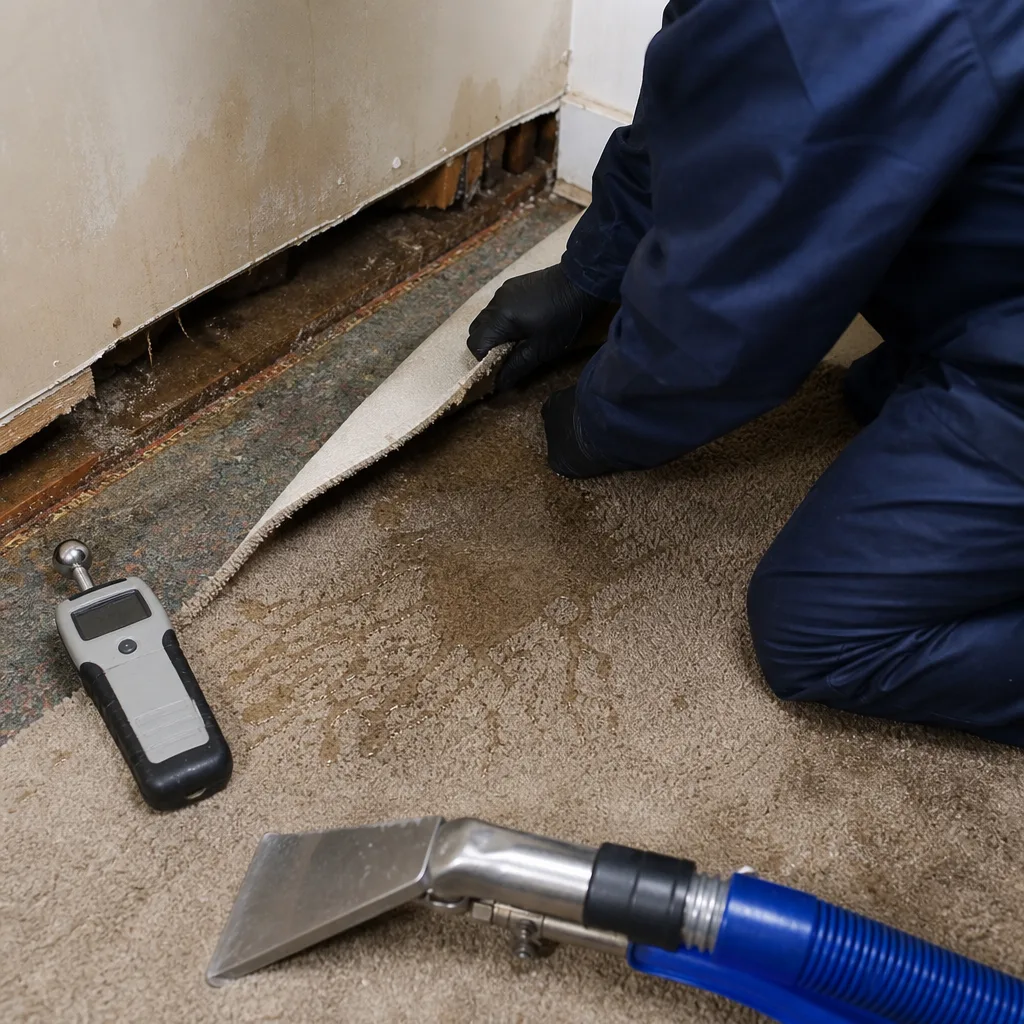
Floodwater in Sugar Land is different. The Brazos River and Oyster Creek don’t produce clean rainwater events. When HOA detention ponds in First Colony or New Territory overtop, the water pushing into your home has river silt, agricultural runoff, and biological material in it. That’s Category 3 black water under IICRC protocol, whether it’s six inches or two feet. We document the source, run ATP testing, and set the drying plan accordingly. Skipping that step is how you end up with pathogens in wall cavities and a family getting sick months later. Our team uses Dri-Eaz dehumidifiers, Phoenix air movers, and Injectidry systems to dry slab edges and multi-layer flooring where water hides.
Storm Damage Cleanup
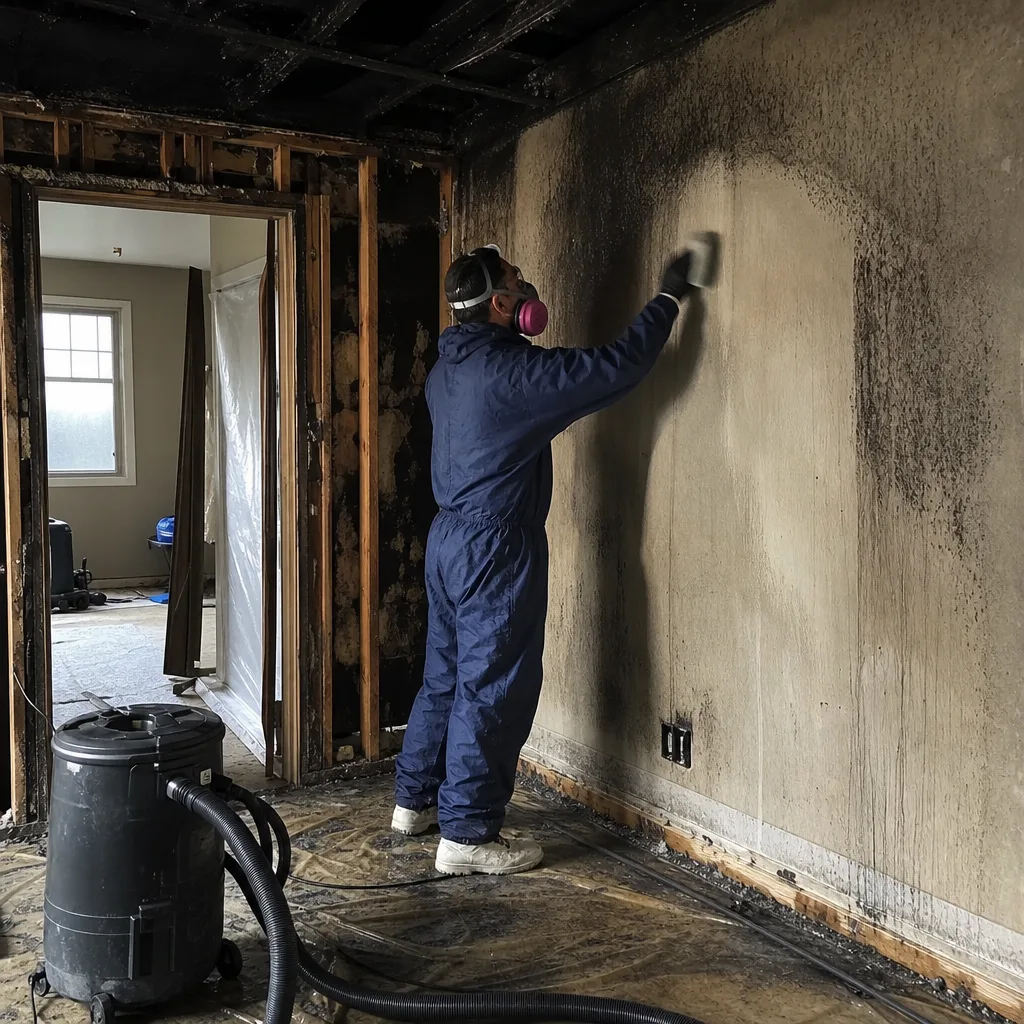
After a storm in Sugar Land, cleanup usually means more than a mop. Wind snaps limbs into windows. Hail bruises rooflines. Debris ends up where it shouldn’t. We handle the full cleanup, from water extraction to structural drying to debris removal, so you’re not juggling three vendors while your ceiling sags. A typical storm cleanup in Sugar Land runs $1,800-$4,500 depending on square footage and how far the water traveled.
Emergency Board-Up
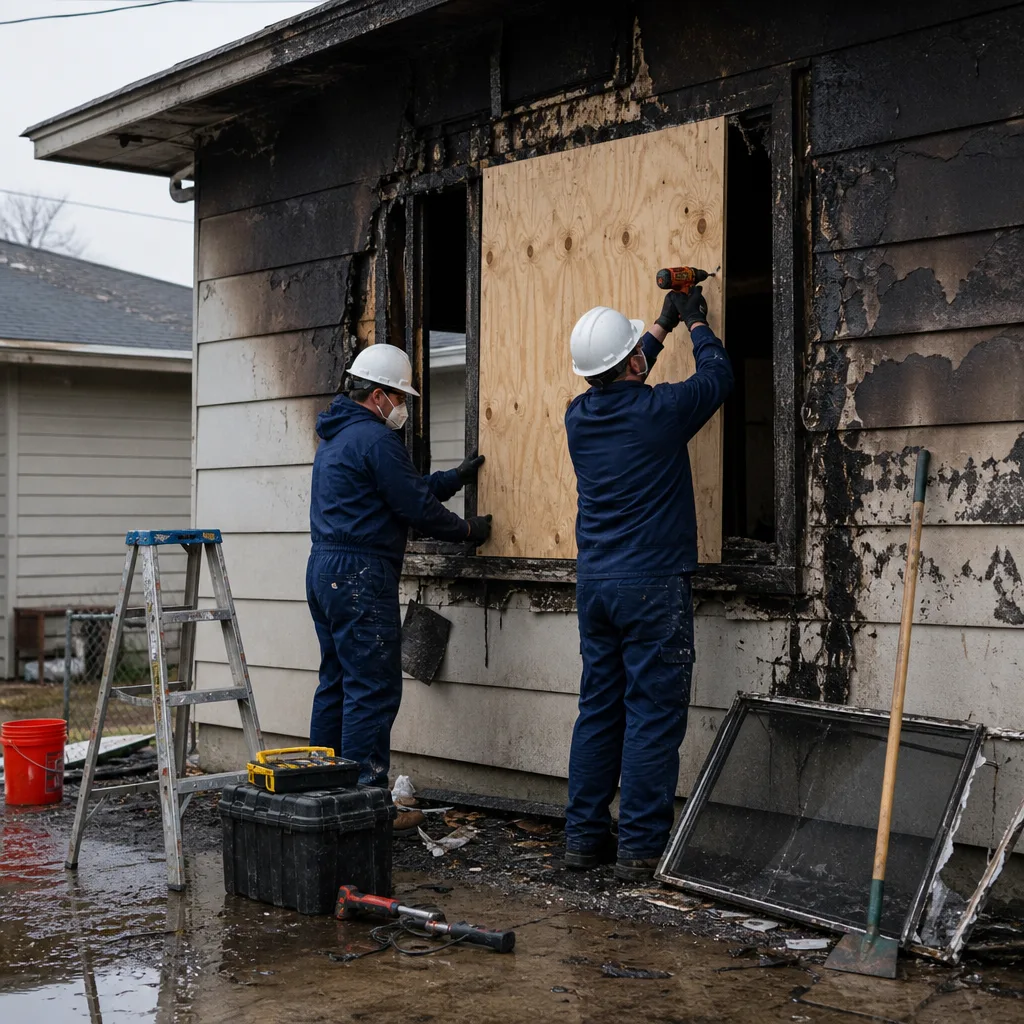
When a window is out or a door is compromised, Sugar Land homeowners have to move fast. Not just to secure the home, but to stay in compliance with HOA standards. An unapproved replacement panel or a mismatched entry door on a First Colony home triggers an Architectural Review Board violation notice, and now a storm repair becomes a fine and a forced redo. We board up the opening same day, document the damage for your insurer, and select replacement materials that match your elevation’s approved palette so the permanent repair doesn’t start a fight with the management company. Emergency board-up in Sugar Land typically runs $450-$900, with permanent door or panel replacement quoted in writing before we order materials.
Roof Tarping
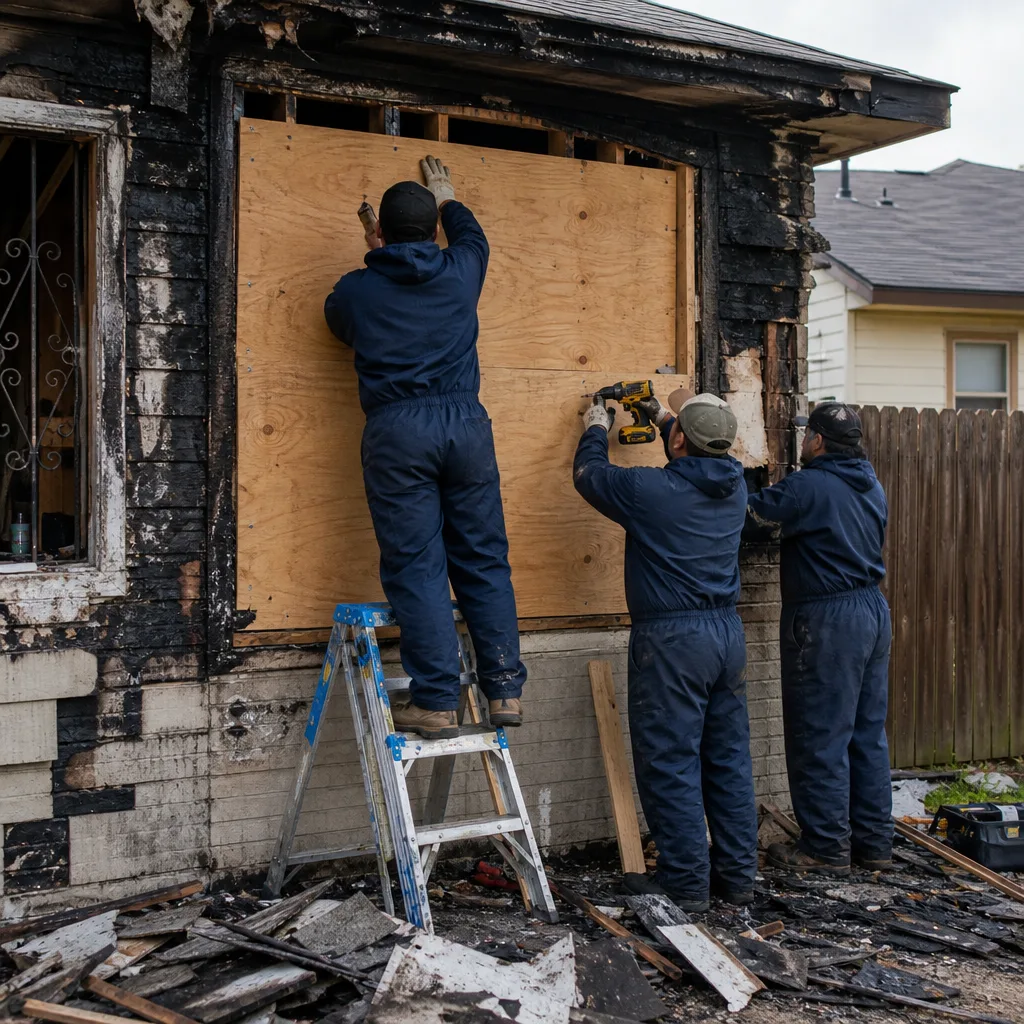
Wind and hail in Fort Bend County are common enough that Sugar Land roofers stay busy, but a tarp from the wrong company can fail in the next storm. We inspect the roof for the actual breach point, tarp the affected slope, and document the damaged underlayment so your adjuster sees what happened, not just what the tarp hides. A roof tarp in Sugar Land runs $400-$750, and we don’t leave raised nails or unsealed edges for the wind to grab.
What happens when you call
- 1
A real person answersNo phone trees - you reach a local pro.
- 2
You get an upfront price rangeHonest numbers before anyone is dispatched.
- 3
A background-checked tech heads outLicensed & insured, dispatched right away.
- 4
You approve before work beginsNothing starts until you say go.
The HOA and ARB Reality Most Sugar Land Restoration Companies Ignore
Here is what nearly every national franchise gets wrong about Sugar Land. In First Colony and New Territory, the detention ponds that overflow into homes during Brazos River backwater events are privately owned and maintained by HOAs, not the city. When those ponds top out and push water into your garage and first floor, the water source is river-connected contaminated water, not rainwater. The distinction changes the entire scope of work: the drying protocol, the demolition, the mold testing, and the insurance documentation. Adjusters know this. Restorers who don’t will call it a clean-water loss, dry it with air movers, leave silt lines unaddressed, and you find out the claim was underpaid a year later when you have to rip out new drywall because mold grew behind it.
We handle this differently. We handled a two-story brick-veneer home in First Colony on Oyster Creek Drive after Brazos River backwater pushed HOA detention pond water through the garage and first floor. Our techs documented silt lines and conducted ATP testing showing biological contamination, then set up containment with Dri-Eaz HEPA 500 air scrubbers, removed wet hardwood and Saltillo tile, and used Injectidry systems to dry the slab edge before we installed replacement materials. Every step was documented for the adjuster, and the homeowner never had to play telephone between us and her insurance company. Wade deals with the adjuster directly. That’s how it should work.
Common Storm & Disaster Restoration Problems We See in Sugar Land Homes
- HOA detention pond overflow treated as rainwater: Water from a First Colony or New Territory pond overtopping is a Category 3 job. Cleaning it without decontaminating the structure leaves pathogens in the cavities, and no amount of fresh paint fixes that.
- Layered flooring trapping moisture on concrete slabs: Hardwood over Saltillo tile over slab is a Sugar Land signature, and it’s a moisture sandwich. Drying only the top layer means mold grows underneath, and we’re back a year later opening walls.
- Prior Harvey remediation that wasn’t fully cleared: Many Sugar Land homes had one round of flood remediation after 2017. We routinely find mold behind new drywall where the prior crew dried too fast and skipped ATP clearance testing.
- Unapproved door or panel replacements triggering ARB violations: Replacing a storm-damaged entry door with the wrong style or color in Riverstone or Telfair will get you a notice from the Architectural Review Board. We match existing elevations and approved palettes so the repair stays compliant.
Pricing for Storm & Disaster Restoration in Sugar Land, TX
Here are honest numbers for Sugar Land. Emergency board-up starts around $450 to $900 depending on openings. Roof tarping runs $400 to $750. Storm cleanup with mitigation typically comes in between $1,800 and $4,500. Flood damage restoration with Category 3 protocols, demolition, and structural drying usually lands between $4,000 and $12,000, and larger backwater losses in First Colony and New Territory can exceed that when we are removing Saltillo, hardwood, and multi-layer floor assemblies down to the slab. What moves the number: square footage, how long the water sat, and whether the water source was river-connected. Every job gets a written scope before we start. No trip charge in our own county. And a Senior & Veteran 10% discount, always. Call (888) 534-8116 for a free estimate, and Wade will walk you through exactly what the job needs.
We Also Serve Cities Near Sugar Land
Wade’s Restoration covers Sugar Land and the surrounding communities, including Storm & Disaster Restoration in Sugar Land as well as New Territory, Stafford, Greatwood, and Richmond. If you’re on the edge of Fort Bend County and worried about whether we’ll come out, call us. We answer the phone 24/7, and Wade heads out himself.
Serving Sugar Land, TX - Our Local Coverage Area
We’re based in the Sugar Land area and know this community well. Use the map below to see our service coverage - if you’re nearby, we can almost certainly help.
FAQs - Storm & Disaster Restoration in Sugar Land
We document the water source and run ATP testing, which detects biological contamination that plain rainwater won’t carry. In First Colony and New Territory, the detention ponds connect to the Brazos River during high-water events, so the water is river-fed and carries silt and pathogens. We photograph the intrusion point, log the silt lines, and record the test results. That documentation is what your adjuster needs to authorize proper Category 3 demolition and drying instead of a cheap clean-water dry that leaves contamination behind. Call (888) 534-8116 and we’ll walk you through what we look for.
Yes, for most master-planned communities in Sugar Land, including First Colony, Riverstone, and Telfair, exterior door and panel replacements require ARC or ARB approval. If the replacement matches the existing elevation, you may qualify for an administrative approval, but we don’t assume that. We match the current door style, color, and material, document it for the board, and handle the approval if your HOA requires it. It’s one more step, but it prevents a violation notice that turns a storm repair into a forced redo. Call (888) 534-8116 and we’ll tell you what your community requires.
We coordinate the drying schedule around your HOA’s quiet hours and notify the management company before we start. Commercial drying equipment runs continuously, but we stage equipment starts and ends to avoid running loud air movers through the night when New Territory’s rules apply. Our techs use Dri-Eaz and Phoenix units that run quieter than older equipment, and we place them where sound doesn’t travel into neighboring units. If you hear a noise complaint is coming, call Wade directly at (888) 534-8116 and we’ll adjust the schedule that day.
Yes. Riverstone homes typically use specific brick veneers that have been out of production for years, so we source matched brick through salvage and specialty suppliers before we remove the damaged section. We document the original mortar color and brick pattern so the replacement doesn’t look like a patch. If your elevation has an owner’s finish or a distinctive trim, we’ll note that before we order anything. The goal is that after the repair, you can’t tell where the water damage was. Call (888) 534-8116 and we’ll bring brick samples to the house.
Yes, and this is one of the most common things we find in Sugar Land homes that were remediated after 2017. The typical failure is a prior crew dried too fast and didn’t run ATP clearance testing, so mold grew behind the new drywall and now you smell it or see discoloration. We open the affected wall, remove the contaminated drywall, treat the framing, and verify with clearance testing before we close it back up. It is not a cheap job, and it should have been done right the first time. Call (888) 534-8116 for a free second opinion if you think the original remediation missed something.
When a Storm Hits Sugar Land, Call Someone Who Actually Answers
Wade Ferris owns this company. He answers his own phone. When you call (888) 534-8116 at 2 a.m. because a tree took out your window and water is coming in, you’ll talk to Wade, not an answering service, and he’ll be on the road to Sugar Land inside the hour. That’s the whole business model. No call centers, no handoffs, no stranger with a badge who’s never been to Fort Bend County. Wade’s Restoration has been in this trade since 2007, and every job is backed by the 90-Day Done Right Promise in writing. If it’s not done right, he makes it right. Call today for a free estimate.
Written by Wade Ferris, Owner at Wade’s Restoration of Houston, serving Sugar Land since 2007.