
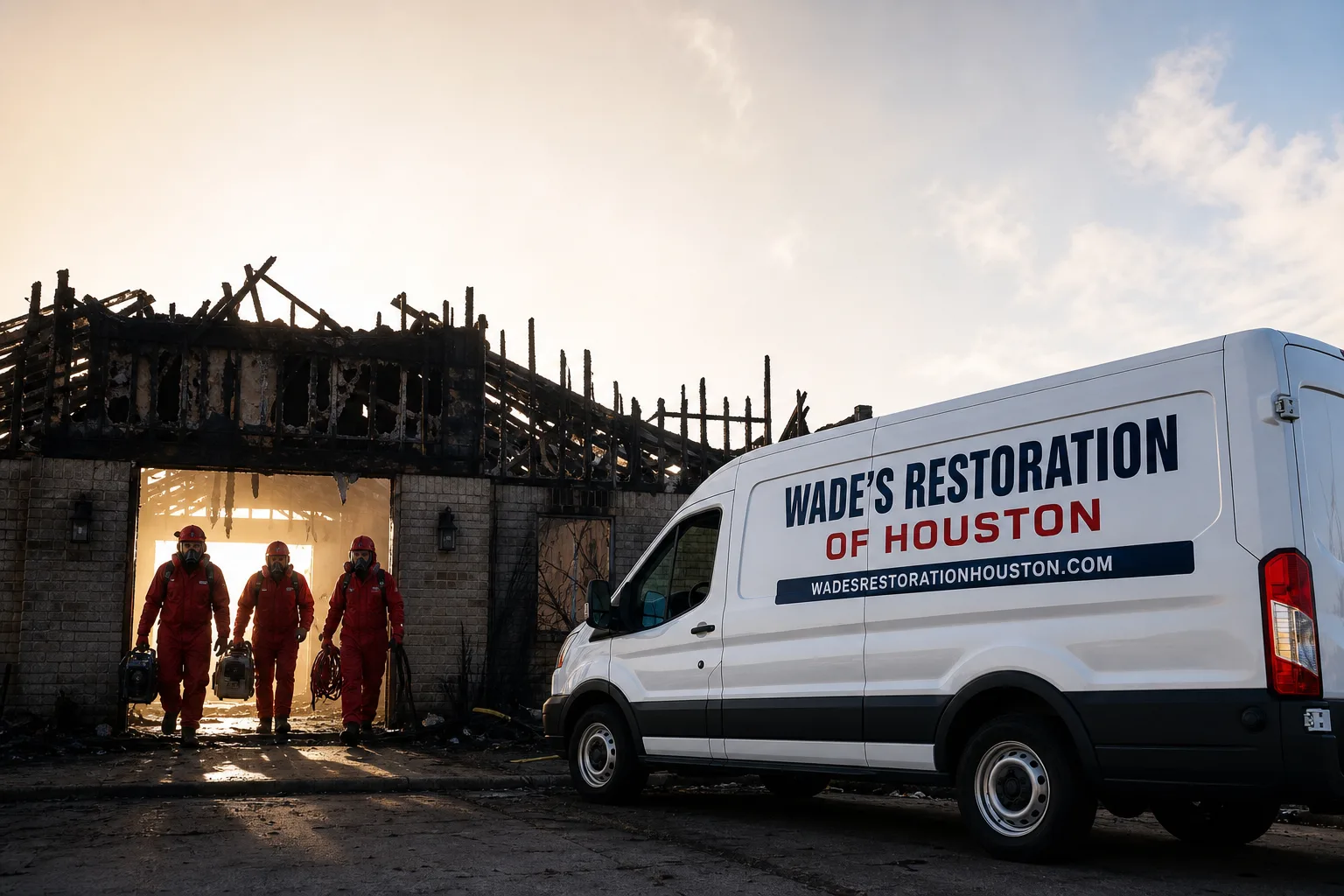
Fast, Reliable Mold Remediation Across Richmond
Mold remediation in Richmond, TX typically runs $1,800 to $6,500 for a full containment-and-removal job, and when Brazos River floodwater is involved, the clock starts ticking before the water even finishes receding. We know this because we’ve gutted Richmond homes down to the studs within 72 hours of Harvey’s backwater settling. Wade’s Restoration of Houston has crews working Richmond neighborhoods every week, and we answer the phone at (888) 534-8116 when you call. If you’ve got mold in a Richmond home, the fastest way to know exactly what you’re dealing with is a phone call and a moisture reading, not a guess.
Why Wade’s Restoration of Houston Is Richmond’s Preferred Mold Remediation Company
Wade Ferris started this company in 2007 because he got tired of watching national franchises send a different crew to every job and a different phone rep to every call. Richmond homeowners have our number, and when they call it, Wade answers. Not a call center. Not a voicemail tree. The owner. He knows the difference between a 2012 tract home in Lakemont and a 1940s bungalow off FM 762, because he’s walked through both with a moisture meter in hand.
Our Richmond customers tend to tell their neighbors about us, which matters more than any star rating. The jobs we do in Pecan Grove, Greatwood, and along the Brazos corridor are done by people who live and work in Fort Bend County. We’re not flying in a crew from another state. When a Richmond homeowner calls at 2 a.m. because the Brazos is rising, someone local picks up and starts moving.
We carry IICRC certification and stay current with RIA standards. Every mold job in Richmond gets documented moisture readings, a written scope before work starts, and a 90-Day Done Right Promise. If mold comes back inside 90 days, Wade comes back. That’s in writing, on every contract.
One more thing: we don’t send a salesperson to your house. We send a remediation lead. The person who shows up at your door in Richmond is the person who’s actually going to do the work or directly supervise it. Ask anyone on your street who’s dealt with us.
Our Mold Remediation Services in Richmond
Mold Inspection & Testing
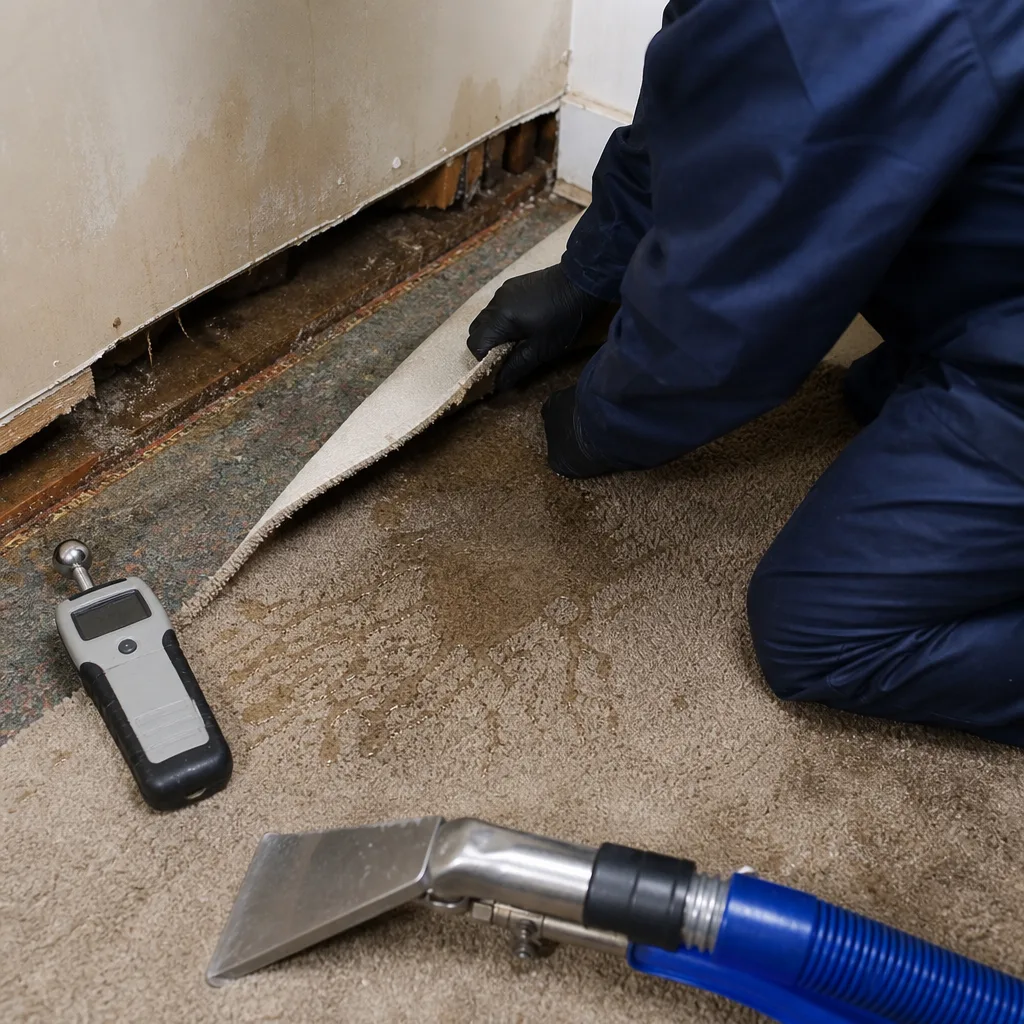
A mold inspection in Richmond starts with moisture readings, not a sales pitch. We walk the house with a pinless moisture meter and an infrared camera, checking slab edges, wall cavities, and subfloor spaces. In Richmond’s 77406 and 77407 subdivisions, the 2000s-era OSB sheathing wicks water fast, so we probe exterior walls near grade and behind baseboards and around window framing. Testing tells you what kind of mold you’re dealing with and whether it’s reached the air. A standard inspection with moisture mapping and air sampling in Richmond runs $300 to $550, depending on square footage and sample count.
Mold Removal
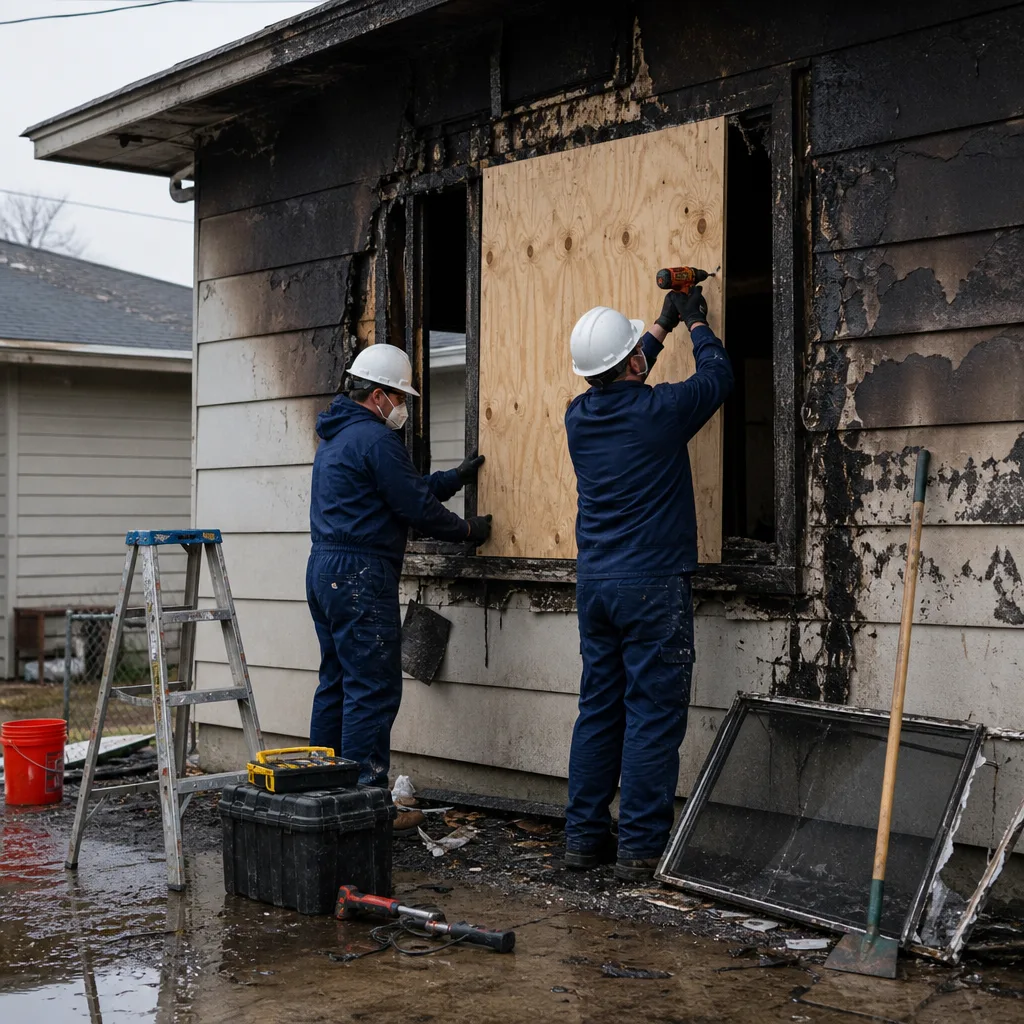
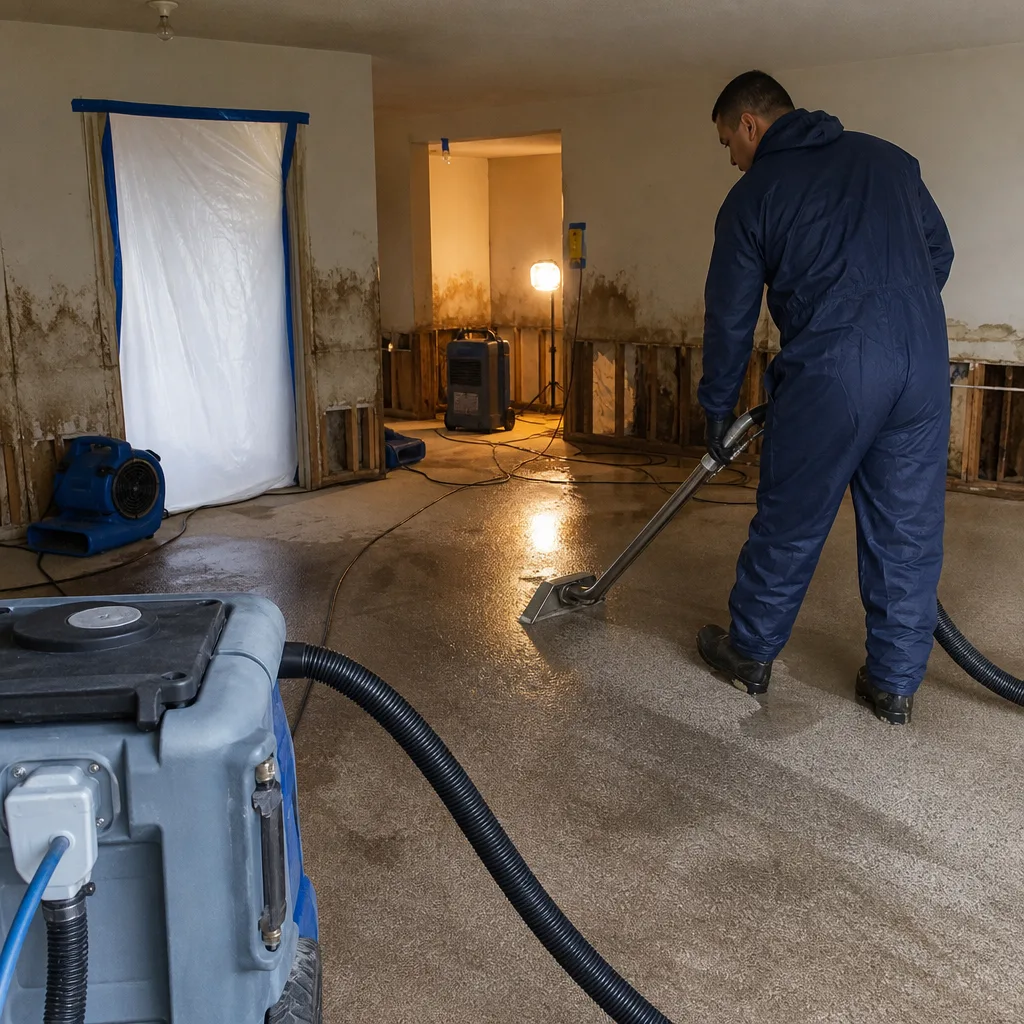
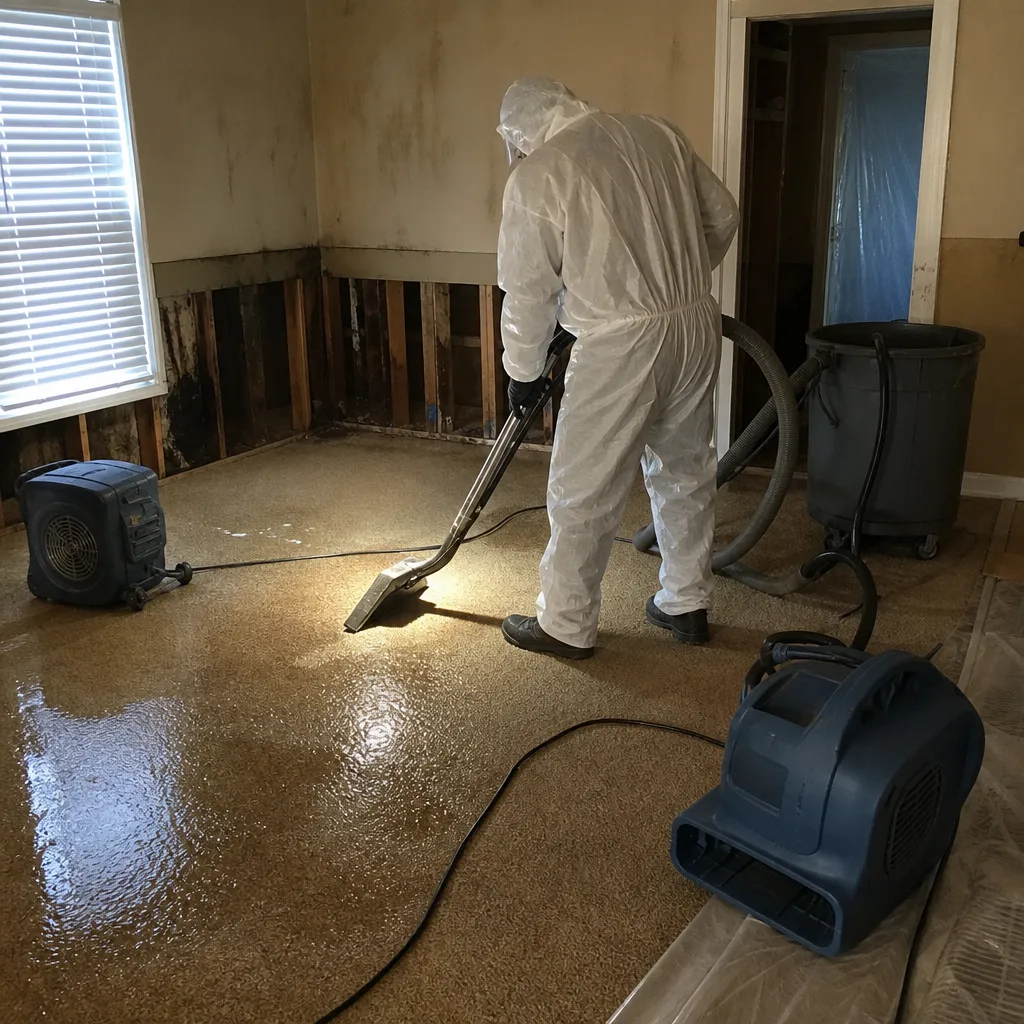
Mold removal in Richmond usually means containment, negative air pressure, removal of affected drywall and insulation, and antimicrobial treatment of the framing. We’re not spraying bleach on a wall and calling it done. A single-room mold removal job in a Richmond tract home runs $1,800 to $3,500. A full gut-down job after Brazos backwater, with Category 3 water remediation protocols, runs $8,000 to $25,000 because it’s a different animal entirely. We’ll show you the moisture log and the written scope before a single piece of drywall comes out.
Black Mold Remediation
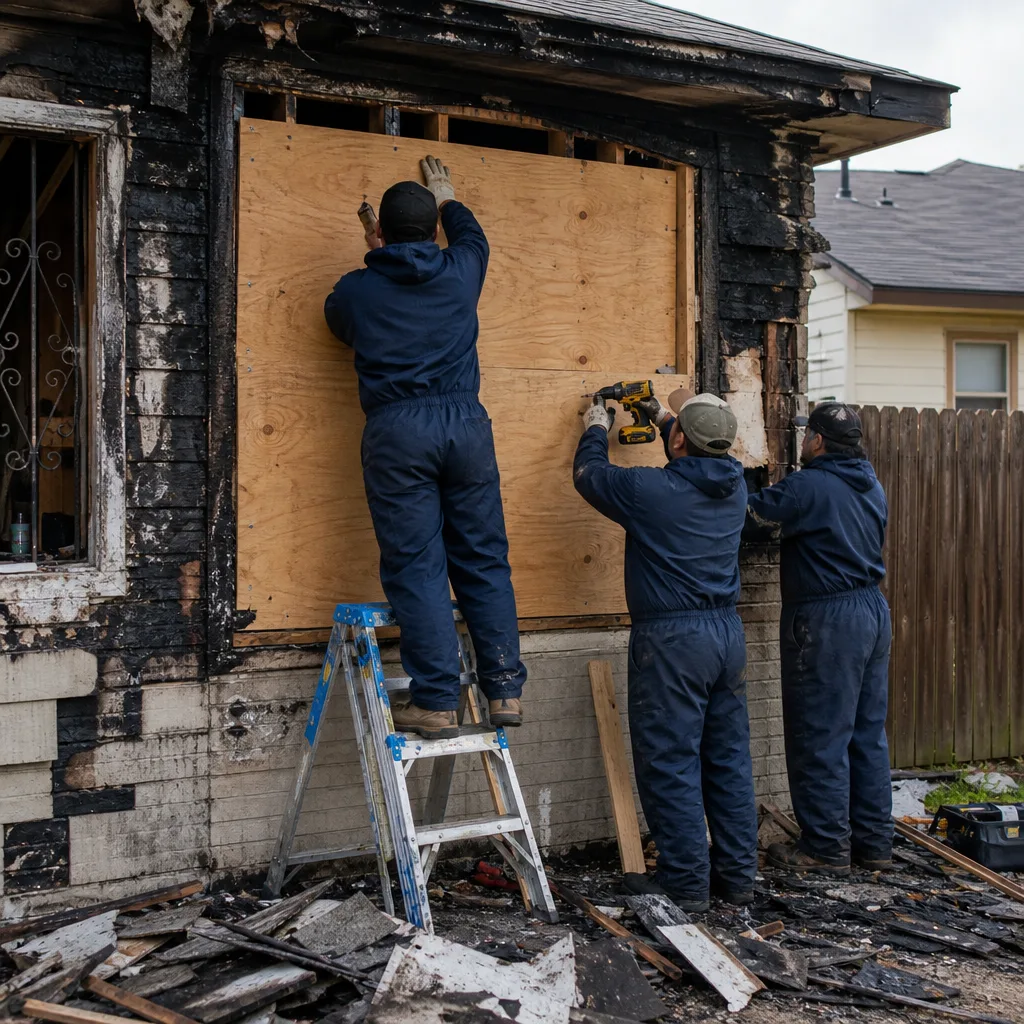
Black mold in Richmond is often the same Stachybotrys species you find anywhere else, but the conditions that produce it here are specific. Fort Bend County’s clay-heavy soils hold water against slab edges for weeks after a flood, and Richmond’s summer heat and humidity turn those damp wall cavities into a mold incubator. Black mold remediation in Richmond homes requires full containment, HEPA air scrubbing, and removal of all porous materials that touched contaminated water. Costs generally run $3,000 to $9,000 for a contained area, but we’ve scoped $20,000+ black mold jobs where the mold moved through HVAC ducting. Get the inspection first. Don’t guess at black mold by color alone.
Air Quality Restoration
After the walls are opened and the mold is removed, the air in a Richmond home still carries spores. We run HEPA air scrubbers during and after remediation, and we seal off affected areas so spores don’t move into living spaces. A post-remediation air clear of mold typically requires 24 to 72 hours of continuous scrubbing, depending on house size and airflow. Air quality restoration in Richmond homes runs $400 to $1,200 on top of the removal cost. It’s the part that keeps mold from showing up again in the master bedroom two months later.
Crawl Space Treatment
In older Richmond neighborhoods, especially the pier-and-beam homes in 77469, the crawl space is where mold problems live. Crawl space encapsulation and treatment in Richmond runs $3,500 to $7,000 for a typical home. We remove standing moisture, treat the subfloor framing, install vapor barrier where needed, and set up dehumidification. Skip this step and the mold under the floor will find its way into the living space on the next humid week.
What happens when you call
- 1
A real person answersNo phone trees - you reach a local pro.
- 2
You get an upfront price rangeHonest numbers before anyone is dispatched.
- 3
A background-checked tech heads outLicensed & insured, dispatched right away.
- 4
You approve before work beginsNothing starts until you say go.
Common Mold Remediation Problems We See in Richmond Homes
- Waiting on an insurance adjuster before starting demolition. In Richmond’s 77406 subdivisions, OSB sheathing and engineered lumber start colonizing mold within 48 to 72 hours after Brazos backwater touches them. If you wait a week for an adjuster to show up, you’ve turned a drying job into a full gut job. Document everything, start mitigation, and deal with the adjuster in parallel. That’s what we do.
- Surface treatment only on pier-and-beam homes in 77469. We’ve walked into older Richmond bungalows where someone sprayed the visible mold on the living room wall and never touched the saturated subfloor underneath. The mold came back in three weeks because the moisture source was never removed. Crawl space work isn’t optional on those homes.
- Slab-edge moisture in Beaumont clay soil. After a flood, the water in Richmond doesn’t just drain away. The clay soil holds it against the foundation perimeter for weeks. If you only dry the interior and ignore the slab edges, the bottom plates of your exterior walls stay damp and mold regrows. We take perimeter moisture readings every single day until the log says dry.
- Treating every room the same. A 2020 master-planned home in 77407 and a 1960s ranch in 77469 have different framing, different sheathing, and different drying curves. A generic mold protocol from a national chain doesn’t account for that. We scope each Richmond home based on what it’s actually built out of.
How Richmond’s Brazos River Flooding Changes Mold Remediation
Richmond sits directly on the Brazos River in Fort Bend County, and when the Brazos crests, the water that comes into Richmond homes isn’t rainwater. It’s river backwater carrying Category 3 contamination, which is the EPA’s classification for grossly contaminated water carrying sewage, agricultural runoff, and whatever else the Brazos picked up upstream. During Hurricane Harvey in 2017, the Brazos hit a then-record stage and subdivisions across 77406 and 77469 flooded for days, not hours. That prolonged saturation means mold remediation in Richmond routinely requires full structural gutting to the studs. You don’t dry out OSB sheathing that’s been soaking in Category 3 water for five days. You cut it out, bag it, and replace it. This is what sets Richmond apart from bayou-flooding patterns in Sugar Land or Missouri City, where the water tends to be storm drainage and the saturation window is shorter.
And then there’s the insurance piece. A lot of subdivisions platted in 77406 during the pre-Harvey building boom carried FEMA flood-zone designations that made flood insurance optional. Plenty of owners skipped it. Harvey proved those maps wrong at scale, and now Richmond contractors regularly scope jobs where the homeowner has homeowner’s insurance only, no flood policy, and a house that needs a full first-floor gut. That’s a coverage fight, not just a mold job. We deal with adjusters directly, every single day, and we know what documentation they need to approve a claim. If your Richmond home flooded and you’re not sure what your policy covers, call us before you sign anything. We’ll help you figure out what’s actually covered and what’s out of pocket, and we’ll do it in plain English.
Pricing for Mold Remediation in Richmond, TX
Here’s what mold remediation actually costs in Richmond, based on the jobs we’ve scoped over the years:
- Mold Inspection & Testing: $300 to $550
- Single-Room Mold Removal (contained): $1,800 to $3,500
- Black Mold Remediation (per contained area): $3,000 to $9,000
- Whole-House Mold Remediation (post-flood gut-down): $8,000 to $25,000
- Crawl Space Treatment & Encapsulation: $3,500 to $7,000
- Air Quality Restoration (post-remediation scrubbing): $400 to $1,200
What moves the number is square footage, how much framing is actually wet, whether HVAC ductwork was affected, and whether we’re dealing with Category 3 floodwater or a slower plumbing leak. We give you a written scope before work starts, with line-item pricing, so you know exactly what you’re paying for. Estimates are free, and there’s no trip charge inside Fort Bend County. Call (888) 534-8116 and we’ll put a number on it in writing.
Trusted Equipment and Standards We Use in Richmond
We don’t show up to a Richmond mold job with a box fan and a jug of bleach. Wade runs Dri-Eaz dehumidifiers, XPOWER air scrubbers, and Injectidry drying systems on Richmond jobs. The moisture meters and thermal imaging cameras we use are the same ones IICRC standards require. We’re RIA-affiliated and our documentation protocols meet the insurance industry’s expectations. What that means for a Richmond homeowner is simple: when your adjuster asks for proof of what we found and what we did, we hand over a complete moisture log, photos of every step, and a written scope. No blank stares. No missing paperwork.
We Also Serve Cities Near Richmond
We serve Richmond and the surrounding Fort Bend County communities, including Mold Remediation work in Pecan Grove, Greatwood, Rosenberg, and Sugar Land. If you’re in any of these communities and dealing with mold after a flood or a slow leak, the same crew that handles Mold Remediation in Richmond will show up at your door. Same standards, same equipment, same written promise.
Serving Richmond, TX - Our Local Coverage Area
We’re based in the Richmond area and know this community well. Use the map below to see our service coverage - if you’re nearby, we can almost certainly help.
FAQs - Mold Remediation in Richmond
Mold remediation in Richmond must start within 48 to 72 hours after Brazos River floodwater recedes, because OSB wall sheathing and engineered lumber in the area’s 2000s-era tract homes begin supporting mold colonies within that window. After the Brazos crested, our crew gutted a 2015 tract home in the Lakemont subdivision of 77406 down to the studs; within 72 hours we had set up Dri-Eaz dehumidifiers and XPOWER air scrubbers, removed saturated OSB and insulation, and treated the framing with IICRC-compliant antimicrobials before any visible mold could take hold on the engineered lumber. If you wait longer than 72 hours, you’re likely replacing framing rather than treating it. Call (888) 534-8116 the day the water recedes, and Wade will tell you honestly whether you’re still in the drying window.
Mold in Richmond’s 77469 pier-and-beam homes most often hides in the subfloor and floor joists beneath the house, where damp soil and trapped humidity create prime conditions for growth even after the living space looks dry. We routinely find mold in the crawl space that’s been silently feeding on saturated subfloor framing while the homeowner only sees a little discoloration on the baseboards. If you own an older pier-and-beam home in the 77469 ZIP and it took on water, the crawl space needs to be inspected and dried, not just the rooms above it. Get a moisture reading down there before you spend money on surface treatment.
Richmond’s flood-damage mold is different because the water source is Brazos River backwater carrying Category 3 contamination, which saturates homes for multiple days and requires full structural gutting rather than surface drying, unlike the storm-drainage flooding patterns more common in Sugar Land and Missouri City. The prolonged saturation window means mold has already formed behind walls and under floors by the time the water recedes, which is why Richmond remediation jobs so often involve removing drywall, insulation, and sometimes cabinetry down to the framing. It’s a more aggressive scope than a typical leak-driven mold job, and it has to be handled with Category 3 protocols.
Richmond mold jobs often run into insurance disputes because a large share of 77406 subdivisions platted before Harvey carried FEMA flood-zone designations that made flood insurance optional, and many homeowners skipped it, leaving them with homeowner’s policies that exclude flood-related mold damage. When the Brazos floods and the house needs a full first-floor gut, the adjuster has to determine what’s covered by the standard policy versus what’s excluded as flood damage, and that fight can delay remediation. We deal with adjusters directly and provide the moisture logs, Category 3 documentation, and photo records they need to process a claim. You shouldn’t have to be the one relaying information between two sides.
Richmond’s Beaumont clay soil holds water against slab edges and perimeter foundation walls for weeks after surface water has receded, keeping the bottom plates of exterior walls damp and creating conditions for secondary mold growth long after the house looks dry. We’ve taken moisture readings in Richmond homes three weeks after a flood where the slab edge was still at 28% moisture content, which is more than enough to support mold in the wall cavities above. That’s why we take daily moisture readings during every Richmond job and hand the homeowner the full log at the end. It’s not a guess. It’s a number.
Contact Wade’s Restoration for Mold Remediation in Richmond
If you’ve got mold in a Richmond home, or you suspect it after a flood or a slow leak, call (888) 534-8116. Someone will answer. Probably Wade. We’ll walk you through what to look for, what it’s likely to cost, and whether you need us out there the same day. Estimates are free, there’s no trip charge in Fort Bend County, and if you’ve got a written estimate from someone else, we’ll give you a free second opinion. To wade is what you do through a flooded basement at two in the morning, and it happens to be his name.
Written by Wade Ferris, Owner at Wade’s Restoration of Houston, serving Richmond and Fort Bend County since 2007.