
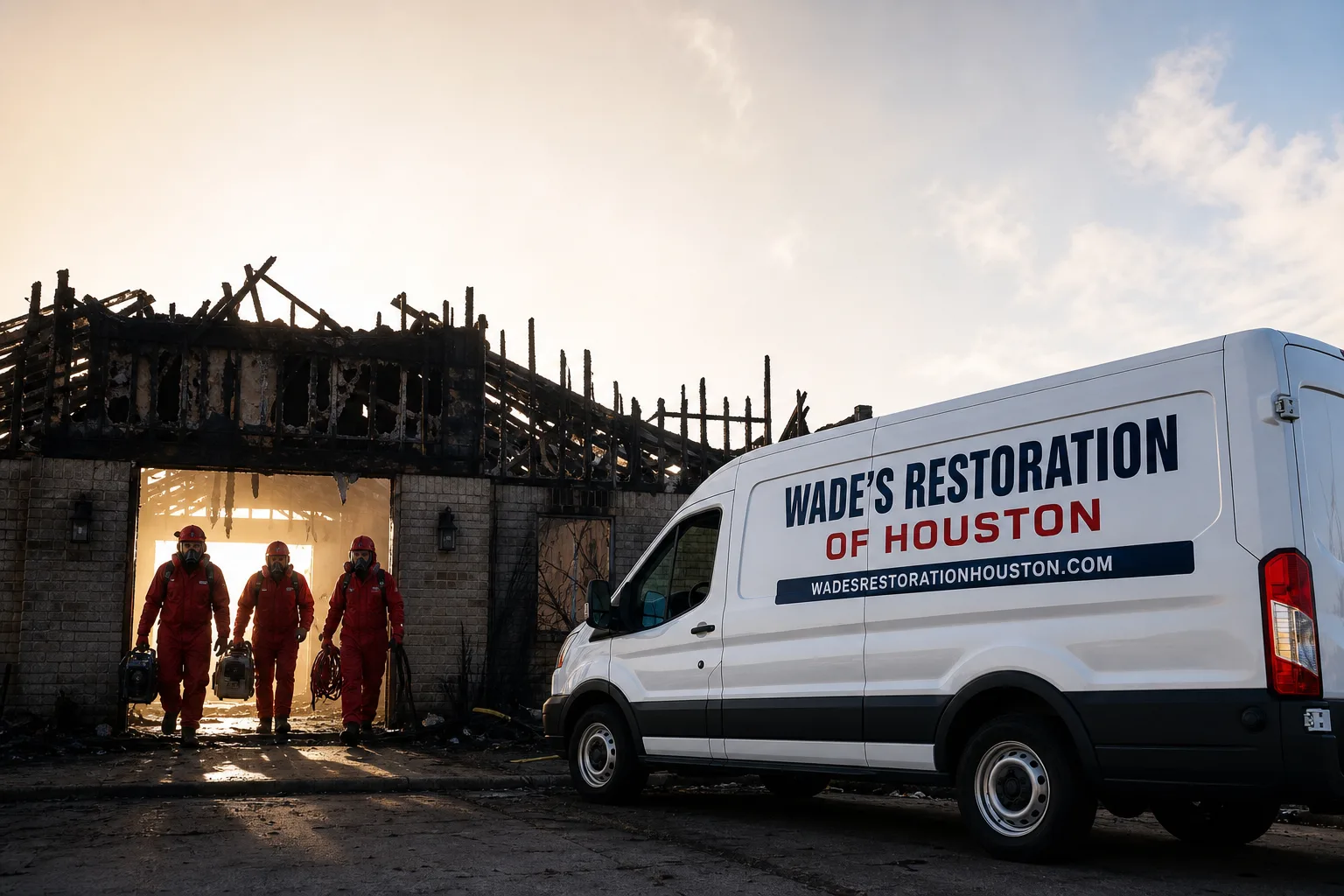
Fast, Reliable Storm & Disaster Restoration Across Highlands
Storm and flood damage in Highlands doesn’t wait, and neither should you. Most calls we get from Highlands come in the middle of the night, when the San Jacinto is rising or a squall line just ripped through off the Gulf. We answer the phone at (888) 534-8116 and can have Wade’s crew on the road to your part of 77562 within the hour. That matters because in Highlands specifically, floodwater doesn’t behave like typical storm runoff. More on that below, but know this: if you’re staring at water in your living room or a roof peeled back over your kitchen, call now and talk to a real person.
We know Highlands. We know the river, the older wood-frame homes, the pier-and-beam foundations, and the gray silt that shows up where it shouldn’t. This page explains what we do, what it costs, and why restoration here is genuinely different from restoration in Channelview or Baytown.
Why Wade’s Restoration of Houston Is Highlands’s Preferred Storm & Disaster Restoration Company
Wade Ferris founded Storm & Disaster Restoration in 2007 with a simple rule: he answers his own phone. That’s not marketing copy. It’s how the company runs. When a Highlands homeowner calls at 2 a.m. with water rising toward their front step, the person on the line is Wade, not a call center in another state. He’ll ask about your street, your foundation, whether you’re in the river floodplain, and he’ll tell you straight what he can do and when he can get there.
We’re the local alternative to national outfits that send a rotating cast of crews who’ve never seen the San Jacinto at flood stage. Wade’s published his address and license number for 29 years. He keeps the 90-Day Done Right Promise in writing on every restoration job: if it’s not done right, he makes it right. No fine print, no runaround. And on storm jobs in Highlands, Wade heads out himself whenever he can.
Response time to Highlands is usually under an hour for emergency board-up, roof tarping, and extraction. That’s not a slogan; it’s a logistics reality. Our Houston office coordinates dispatch, but the crews and trucks are staged to reach the east side fast. When a big storm event hits, we prioritize the homes nearest the river because we know what 20-plus feet of river stage does to a 1950s pier-and-beam house.
Our Storm & Disaster Restoration Services in Highlands
Here’s what we actually do on storm jobs in Highlands, from the moment you call to the day you’re back in your house, including Reconstruction & Cleanup - Highlands.
Flood Damage Restoration
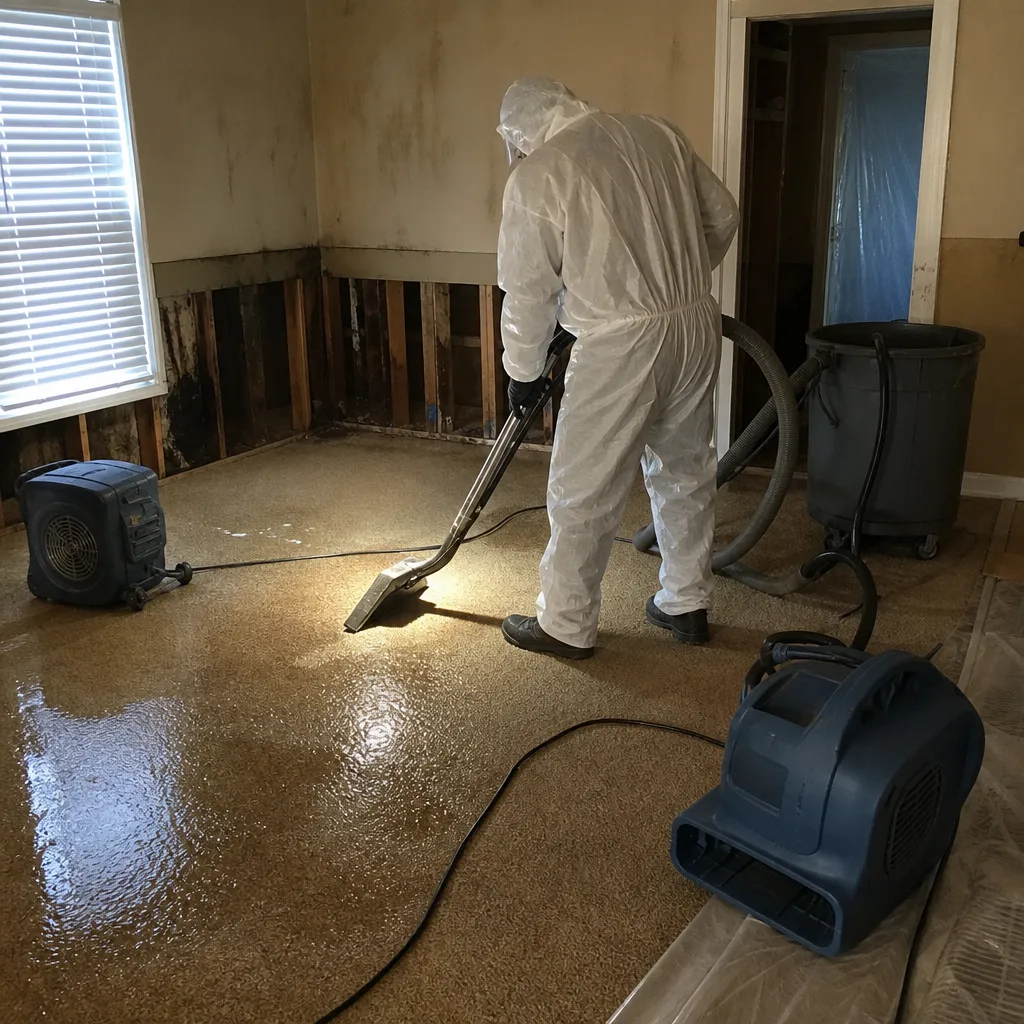
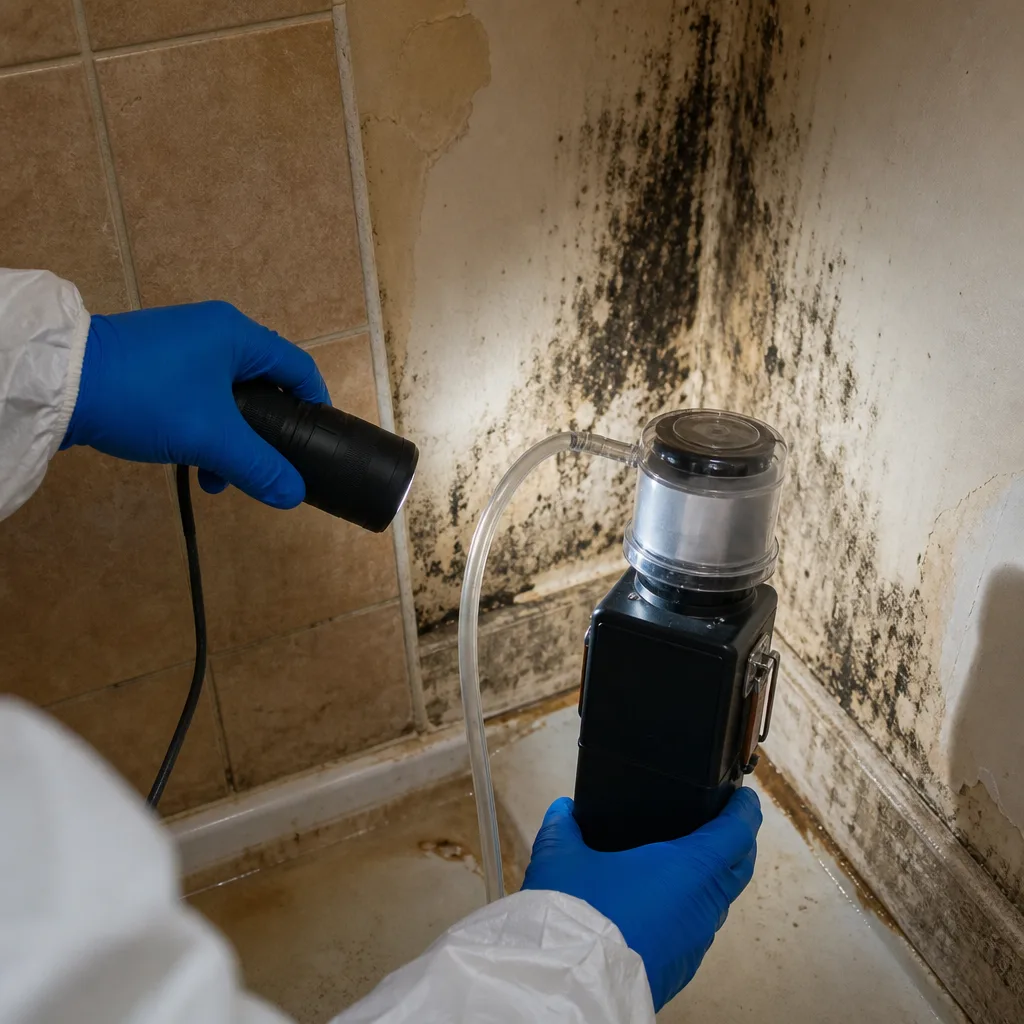
Flood restoration in Highlands is not the same as flood restoration in Deer Park. Our Storm & Disaster Restoration in Highlands work starts with an honest assessment of what kind of water got in. San Jacinto river water carries sediment, and sediment from upstream of the Waste Pits carries dioxin concerns that USDA-standard water extraction never accounts for. We test, we contain, we document. Then we extract, dry, and rebuild with equipment rated for exactly this kind of wet, heavy work: Dri-Eaz dehumidifiers, Phoenix axial fans, Injectidry drying mats for hard-to-reach subfloor cavities.
Storm Damage Cleanup
Wind-driven rain, downed limbs, flying sheet metal from outbuildings, hail that peels shingles and skylights. We handle the full cleanup: debris removal, water-logged drywall and insulation removal, structural drying, and dehumidification, plus our Water Damage Restoration in Highlands when flooding is involved. In Highlands, where lots are big and outbuildings are common, storm cleanup often means clearing fallen trees off driveways and roofs before water even gets inside. We do that too.
Emergency Board-Up
When a window blows out or a tree limb punches through your roof at midnight, your home is open to weather, animals, and looters. Wade’s crew boards up openings with heavy plywood and fasteners, usually within hours of your call. We don’t make you wait until morning for a quote. We get the hole covered, then send the insurance adjuster photos and measurements. In Highlands, where the next thunderstorm is never far off, a fast board-up is the difference between minor water intrusion and a gut job-or worse, needing Biohazard & Crime Scene Cleanup in Highlands.
Roof Tarping
Hail and straight-line winds are the usual culprits here. Roof tarping keeps more rain from getting in while you deal with insurance and schedule a permanent repair. We use reinforced poly tarps and cap nails, sealed at the edges. A temporary roof tarp is not a roof; it buys you time. We’ll tell you that plainly. What it does do is stop active leaking into a home that’s already wet, which in Highlands’s humidity is the difference between a difficult dry-out and a full mold remediation.
What happens when you call
- 1
A real person answersNo phone trees - you reach a local pro.
- 2
You get an upfront price rangeHonest numbers before anyone is dispatched.
- 3
A background-checked tech heads outLicensed & insured, dispatched right away.
- 4
You approve before work beginsNothing starts until you say go.
Trusted Brands We Service in Highlands
We stock and work with professional-grade equipment from Dri-Eaz, Phoenix, and Injectidry, because buying cheap drying equipment shows up in your air quality later. Our IICRC and RIA certifications mean the work is documented the way an insurance adjuster or a future home inspector needs it documented. For Highlands homeowners, that documentation is the only proof that floodwater was dried properly and that debris was disposed legally. We keep floor mats, axial fans, and dehumidifiers on the truck when we roll east, so the first trip is usually the only trip.
Common Storm & Disaster Restoration Problems We See in Highlands Homes
- Contaminated river silt in crawl spaces. Many Highlands homes sit on pier-and-beam foundations. When the San Jacinto overflows, that fine gray silt settles under the house. If the silt came from upstream of the Waste Pits, we bag it and sample it before disposal. Standard debris removal can bury a hazmat problem under your own floor.
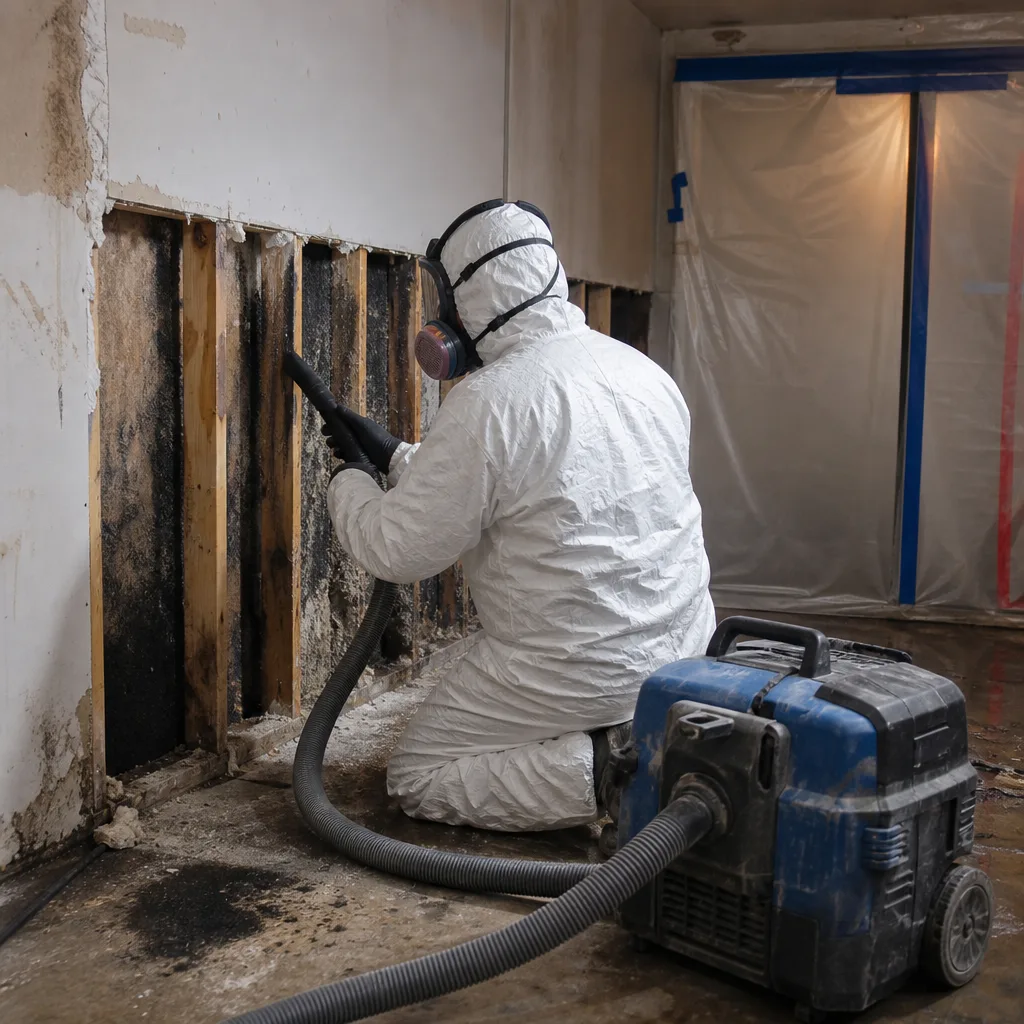
- Hidden rot behind old drywall and wood paneling. Most houses here were built between the 1940s and 1970s, with single-layer drywall or wood paneling that wicks water deep into studs and sills. What looks like a damp wall can hide rotted framing, an undercut sill plate, and a joist that won’t hold weight for much longer.
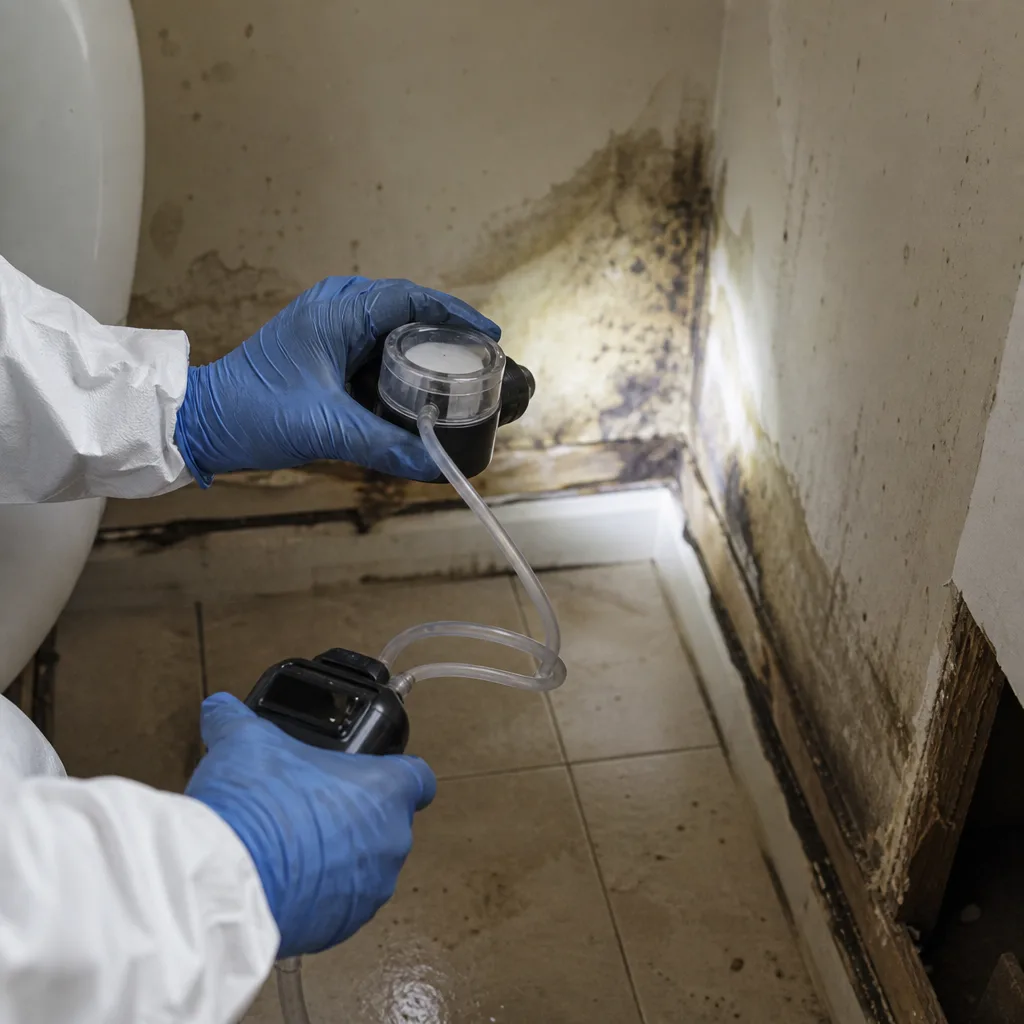
- Mold establishing in under 48 hours. Gulf Coast heat and humidity don’t give you a week to decide. Mold colonies in saturated wall cavities can form in 24 to 48 hours after a flood recedes. In older Highlands homes without vapor barriers or modern insulation, the window is often even shorter.
- Pier-and-beam foundations undermined by repeated flood cycles. We see homes on River Road and nearby streets that have flooded three or four times since 2015. Each flood cycle undercuts supports, shifts load paths, and traps water under the subfloor. A structural check before drying is not optional here; it’s mandatory.
Pricing for Storm & Disaster Restoration in Highlands, TX
You deserve actual numbers. Here they are for the Highlands market, as of 2026:
- Emergency board-up (one window or door): $180-$350, depending on opening size.
- Roof tarping (up to 200 square feet): $300-$600, including materials and fasteners.
- Flood water extraction and drying (single room, no structural damage): $650-$1,600.
- Full crawl space cleanup and drying (pier-and-beam, includes silt bagging and EPA-compliant sampling): $1,200-$4,500, depending on square footage and contamination level.
- Storm debris removal (single lot, standard volume): $300-$1,100.
- Contaminated sediment testing and disposal (Superfund-adjacent silt): $800-$2,500, depending on lab scope and volume.
Those are honest ranges for Highlands. What moves the price: square footage, how long the water sat, whether silt sampling comes back clean, and how much framing needs to come out. We give a written scope before work starts, every time. Estimates are free. Call (888) 534-8116 and Wade will walk you through it.
The Highlands-Specific Complication: Dioxin and the San Jacinto Waste Pits
Here’s what makes Highlands genuinely different, and it’s not something a national restoration chain will ever tell you. Highlands sits in the San Jacinto River floodplain, downstream of the San Jacinto River Waste Pits Superfund site. When the river floods, water entering homes can carry dioxin-contaminated sediments. That’s not a hypothetical; it’s a documented EPA concern tied to this specific stretch of river. Standard flood restoration in Baytown or Deer Park means pumping water out and drying the place. In Highlands, it can mean EPA-compliant contaminant testing, bagged and labeled debris disposal, and decontamination of every tool and boot that touched the silt. If you skip that step, you’re not cleaning your house. You’re spreading contamination across your living room floor.
We learned this the hard way. When the San Jacinto river stage rose 20-plus feet overnight, our crews reached a 1950s wood-frame home on River Road where fine gray silt had settled deep into the pier-and-beam crawl space. Since the sediment came from upstream of the Superfund site, we bagged and sent samples for EPA-compliant analysis before any structural drying, then used our Dri-Eaz and Phoenix equipment to pull moisture from the subfloor without cross-contaminating the living space. It added time and cost. It also kept that family out of a contaminated house. There’s no shortcut for that.
This page is the only Storm & Disaster Restoration resource in the Houston metro that addresses the Superfund-sediment protocols, pier-and-beam subfloor drying, and rapid mold response specific to Highlands rather than generic Gulf Coast flood damage. We wrote it because Highlands homeowners deserve to know what they’re actually dealing with.
We Also Serve Cities Near Highlands
Wade’s Restoration covers the east side, from Highlands out to Channelview, Baytown, Mont Belvieu, and Cloverleaf. If you’re a few minutes up 146 or over toward I-10, we’re still your local crew. Same owner on the truck, same live person on the phone, same 90-Day Done Right Promise. Call (888) 534-8116.
Serving Highlands, TX - Our Local Coverage Area
We’re based in the Highlands area and know this community well. Use the map below to see our service coverage - if you’re nearby, we can almost certainly help.
FAQs - Storm & Disaster Restoration in Highlands
We treat any silt that could have come from the San Jacinto River as potentially contaminated until lab results say otherwise. That means bagging the sediment in sealed containers, taking samples for EPA-compliant analysis, and coordinating disposal through licensed channels. We don’t throw it in a dumpster. We don’t blow it out with a leaf blower. We document every step so you and your insurer have a paper trail. If you think river silt got into your house, call (888) 534-8116 before you start shoveling.
Before we set up any drying equipment, we go under the house. We check sill plates for rot, joist ends for soft spots, and piers for shifting or undercutting. On older Highlands homes with repeated flood history, we look specifically for load-bearing members that are still wet under dry-looking surface wood. If we find structural compromise, we document it, put it in writing, and tell you what needs to happen before drying makes sense. Hidden rot behind old paneling is the failure we see most often, and we won’t dry a floor that someone will walk through in six months.
Yes, if we start within the first 24 to 48 hours after water recedes. In Highlands’s heat and humidity, mold can establish in saturated wall cavities in as little as 24 hours on older single-layer drywall or wood paneling. We run Dri-Eaz and Phoenix drying equipment at full capacity from day one, and we take moisture readings daily. Wade hands every homeowner the full moisture log at job’s end. Call (888) 534-8116 the hour the water goes down; don’t wait until the weekend.
In Highlands, yes, often you do. That fine gray silt near the riverbank can contain sediment from upstream of the San Jacinto River Waste Pits Superfund site. Standard debris removal is fine for tree limbs and shingles, but river silt that settles under a pier-and-beam house or onto a slab should be sampled before disposal. We handle the sampling, bagging, and disposal paperwork so you’re never caught with contaminated debris in a roll-off meant for construction waste.
For pier-and-beam crawl spaces, we use Injectidry drying mats laid directly over wet subfloor sections, Phoenix axial fans to move air through the cavity, and Dri-Eaz dehumidifiers rated for high-humidity, high-heat environments. The combination pulls moisture out of framing that simple box fans and open-air drying never reach. On a 1960s house with 1,200 square feet of crawl space, we can typically stabilize the drying environment in three to four days. Call (888) 534-8116 for a free assessment and a written scope before any work starts.
Call Wade’s Restoration of Houston Now
If you’re in Highlands and you’ve got storm damage, flood water, or river silt where it shouldn’t be, call (888) 534-8116 now. A live person answers. Wade will tell you what he thinks, what it’ll cost, and whether you need us at all. That’s the way we’ve done it since 2007, and it’s why Highlands homeowners keep our number saved. Estimates are free, quotes are written before work starts, and every job is backed by the 90-Day Done Right Promise.
Written by Wade Ferris, Owner at Wade’s Restoration of Houston, serving Highlands and the east Houston metro since 2007.