

Fast, Reliable Mold Remediation Across El Campo
Mold remediation in El Campo typically runs $1,800 to $6,500 for a full containment job on a slab home, and most crews can be on site within 24 to 48 hours after your call. We know that timeline matters here, because the black clay doesn’t drain and neither do your wall cavities. Wade’s Restoration answers the phone at (888) 534-8116 and we show up ready to map moisture, contain the problem, and write you a scope you can read before any work starts.
We work throughout the 77437 zip code, from the older brick-veneer bungalows near downtown to the ranch homes off FM 2765 and the newer subdivisions on the north side. El Campo’s flat ground and hard clay create a mold problem most national franchises don’t understand until they’re standing in it. We do.
Why El Campo Picks Wade’s Restoration for Mold Remediation
Most mold companies show up, spray something that smells strong, and leave. We don’t. Wade Ferris built this business in 2007 on a simple idea: write down what you promised, do what you wrote, and hand the homeowner the proof. Every Mold Remediation job we take in El Campo gets a daily moisture log, photo documentation for your adjuster, and our 90-Day Done Right Promise in writing. If it’s not right, Wade comes back. No argument, no invoice.
We’re IICRC-certified and RIA-affiliated, which matters when your insurance company asks who did the work. More importantly, we live with the same humidity you do. We know what the inside of a 1960s slab ranch smells like after a week of closed windows and a leaking pipe. Our background-checked crews arrive in uniform with Dri-Eaz and Phoenix equipment, and Wade himself answers calls 24/7. That’s not a call center. That’s a person who knows your street.
Ask anyone on your street. In a town like El Campo, reputation travels through the feed store and the church parking lot faster than any website. We’ve earned ours one flooded kitchen and one moldy hallway at a time.
Our Mold Remediation Services in El Campo
Mold Inspection & Testing
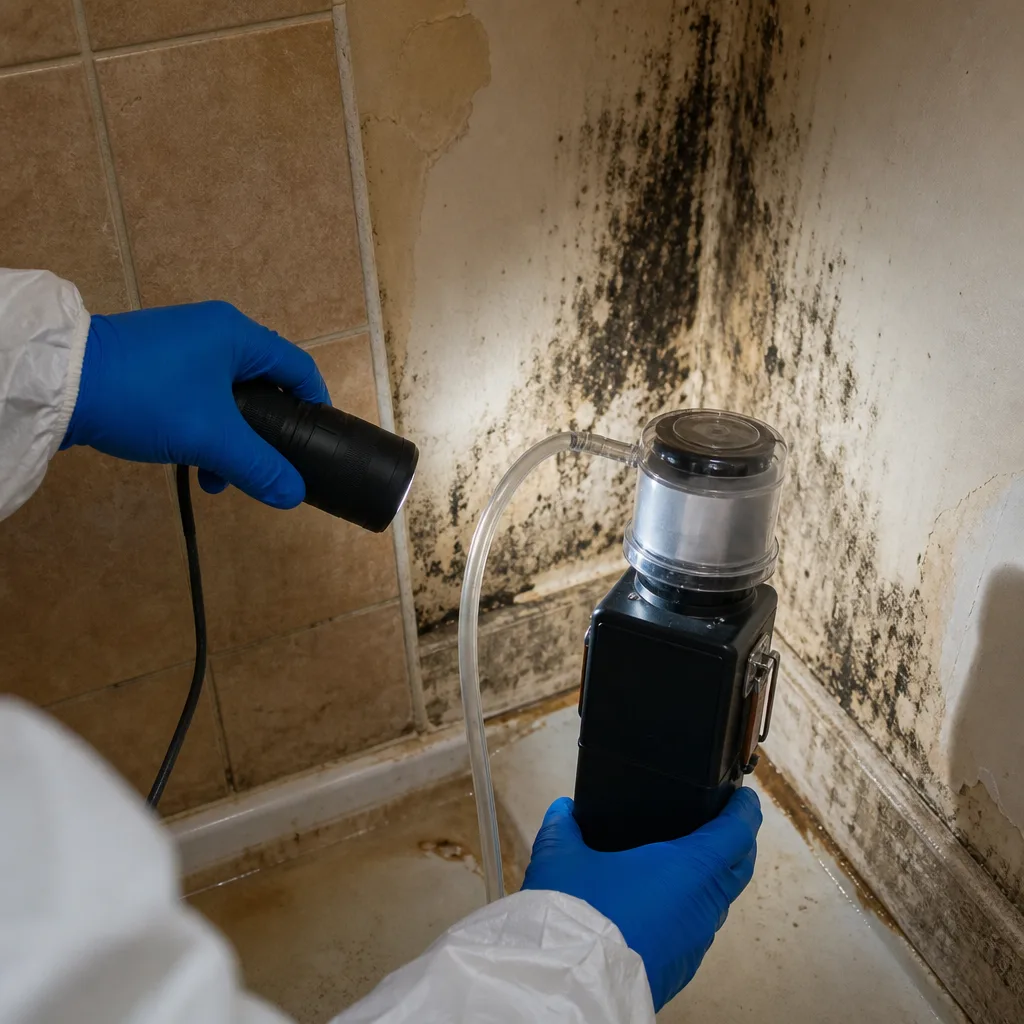
A mold inspection in El Campo isn’t just looking for black spots on sheetrock. We check slab edges, weep holes, HVAC plenums, and the underside of pier-and-beam floors, because that’s where this climate hides moisture. We take air samples where needed and tell you honestly whether you have a mold problem or just a moisture problem and a stain. If you’ve already got a written estimate from another company, bring it over. We’ll give you a free second opinion, and there’s no trip charge inside our county.
Mold Removal
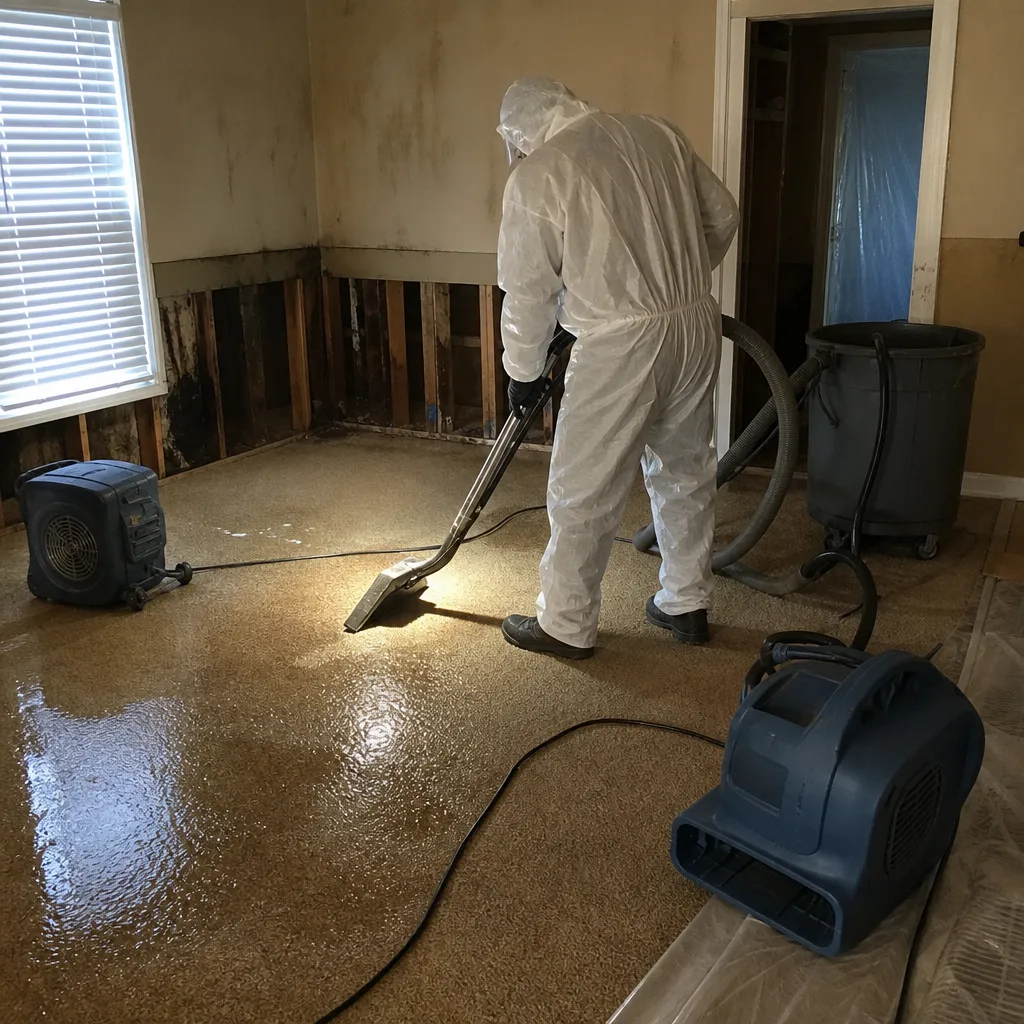
Proper removal means containment, negative air, and physical removal of colonized material, not a fogger and a promise. In El Campo homes, we routinely pull drywall that looks fine from the outside but is colonized behind the surface. Clay-silt from rice-field runoff complicates this, because that fine sediment embeds in drywall and subflooring and acts as a fungal food source long after the visible mold is gone. We remove the material, treat the cavity, and document every step.
Black Mold Remediation
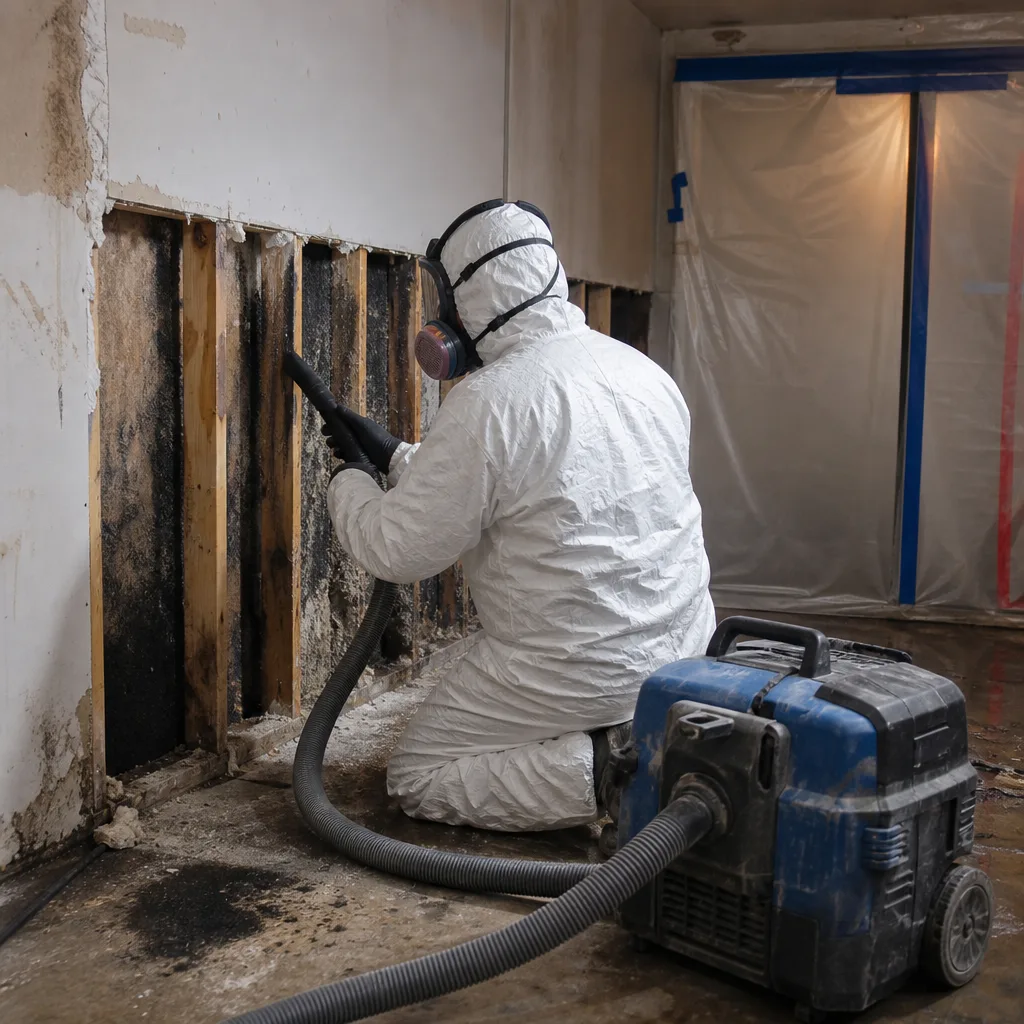
Stachybotrys is real, and it shows up more often in El Campo than people want to admit, especially after storm flooding that sat for days. Black mold remediation here requires full containment because disturbing those colonies releases spores into air your family is breathing. Our crews use the same protocols as hospital-grade jobs: HEPA-filtered negative air machines, sealed containment barriers, and EPA-registered antimicrobial treatment on all affected framing. You get clear air readings at the end, not just a technician’s word.
Air Quality Restoration
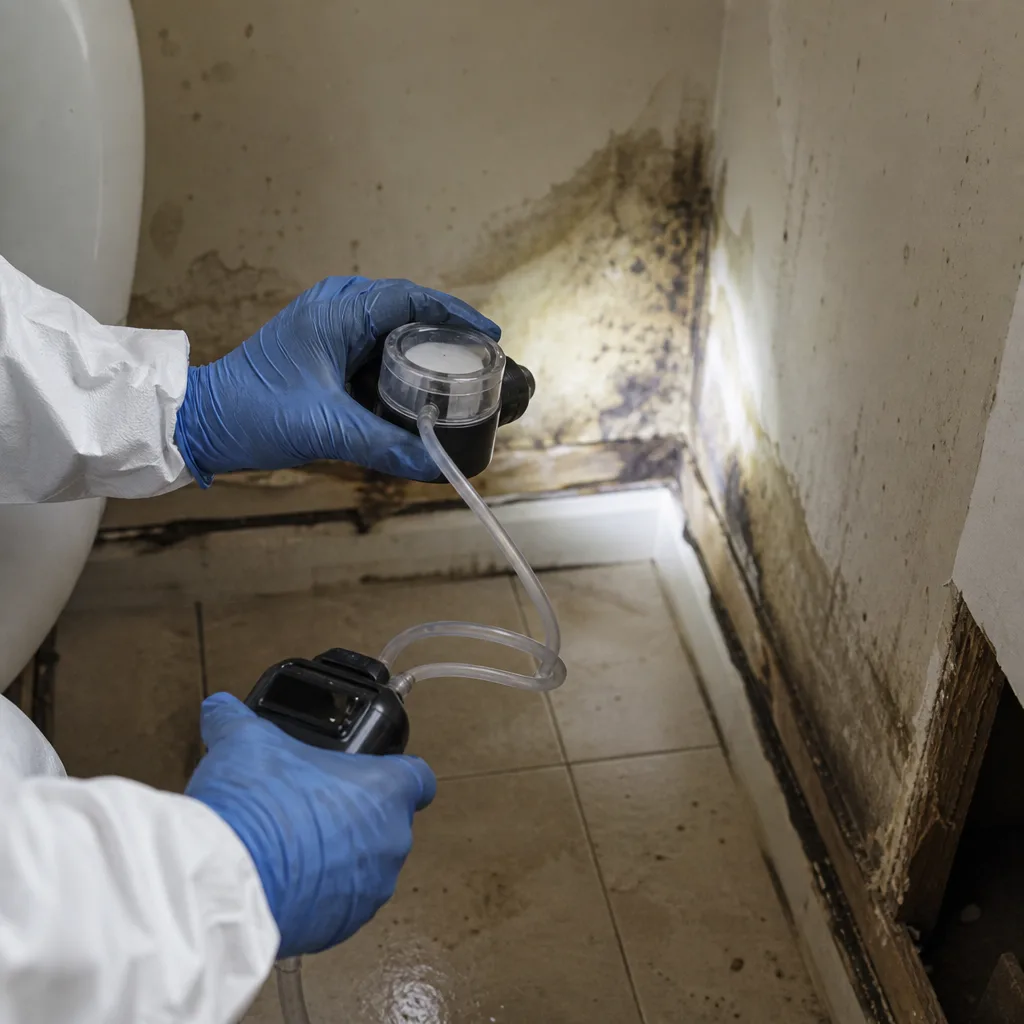
After a mold job, the air in your house can carry more spore load than the walls did. We run HEPA air scrubbers during and after remediation, then verify with post-remediation air sampling. For El Campo homeowners with allergies, asthma, or kids at home, this is the difference between a job that looks done and a job that is done. We also address the source, usually crawl space humidity or a slab-edge intrusion point, so the air stays clean once we leave.
What happens when you call
- 1
A real person answersNo phone trees - you reach a local pro.
- 2
You get an upfront price rangeHonest numbers before anyone is dispatched.
- 3
A background-checked tech heads outLicensed & insured, dispatched right away.
- 4
You approve before work beginsNothing starts until you say go.
Common Mold Problems We See in El Campo Homes
- Water entering through slab-edge gaps and weep holes. The Houston Black Clay under El Campo expands and contracts with every wet-dry cycle. Over decades, that movement opens gaps at slab edges and utility penetrations. During heavy rains or sheet flooding, water follows those gaps into wall cavities and never fully dries.
- Clay-silt contamination from rice-field runoff. When the irrigation canals north and east of town overtop, they push fine agricultural silt into streets and homes. That silt gets embedded in flooring and lower wall assemblies. If it’s not physically removed, mold returns in months, no matter how much antimicrobial you spray.
- Hidden mold behind brick veneer. Brick veneer looks solid but it’s a reservoir. Water wicks into the cavity between brick and framing and sits there. By the time you see staining on baseboards, the studs behind the brick have been wet for weeks and mycelium has spread through the insulation.
- Crawl space humidity in older pier-and-beam bungalows. Downtown El Campo has wood-frame bungalows over crawl spaces, and in a climate with 75% humidity year-round, those crawl spaces breed mold that migrates up through floorboards and into living areas. Crawl space treatment is a separate discipline, and we apply it here specifically.
Why El Campo’s Slab Homes Need a Different Kind of Mold Remediation
El Campo sits in the heart of the flat Texas coastal rice-farming belt, where near-impermeable black clay soils and essentially zero topographic relief cause widespread ground saturation and sheet flooding during tropical events. Hurricane Harvey stalled over Wharton County in 2017 and dumped catastrophic rainfall that had nowhere to go. Unlike riverine flood markets where water rises and recedes from a channel, water here simply filled the land around homes until it found a way in through foundation perimeters and weep holes.
That changes the mold remediation job completely. In a riverine flood, you’re dealing with water that came up through doorways and windows. In El Campo, you’re dealing with water that entered through the slab edge and wicked upward into wall cavities that were never designed to drain. Our moisture mapping has to account for clay-silt layers under the slab, elevated humidity trapped in brick veneer cavities, and subfloor assemblies that dried on the surface but stayed saturated underneath. If a contractor treats it like a standard wall-cavity job, they leave a fungal reservoir behind and you get a callback no one wants.
Our crew remediated a 1970s ranch home on West Jackson Street after Hurricane Harvey’s stagnant floodwaters wicked through slab-edge gaps and into wall cavities. Using our Dri-Eaz LGR dehumidifiers and thermal imaging, we mapped moisture trapped behind the brick veneer, removed colonized drywall and fiberglass insulation, and treated the stud cavities with an EPA-registered antimicrobial before rebuilding with mold-resistant materials. That house hasn’t had a recurrence, because we addressed the clay-silt layer under the slab perimeter, not just the visible mold inside the walls.
Pricing for Mold Remediation in El Campo, TX
A mold inspection in El Campo with air sampling typically runs $300 to $550. Basic mold removal on a single wall section, including containment and antimicrobial treatment, usually falls between $1,200 and $2,800. A full remediation job after flood damage in a slab home, with multiple wall cavities, clay-silt removal from flooring, and air scrubbing, generally lands between $4,500 and $9,500 depending on square footage and how deep the contamination goes. Crawl space mold treatment for a pier-and-beam bungalow runs $1,800 to $4,200.
Those are honest ranges for this market. You’ll get a written scope with line items before anyone touches a wall, and Wade will walk you through it himself. Estimates are free, and if another company quoted you a written estimate, we’ll give you a free second opinion on it. Call (888) 534-8116.
Serving El Campo and the Surrounding Communities
We work across El Campo and the nearby communities where our neighbors live: Wharton, Bay City, Rosenberg, and Greatwood. If you’re outside town on a county road or in an outlying subdivision, call us. There’s no trip charge inside our own county, and Wade’s truck is already on these roads most weeks.
Serving El Campo, TX - Our Local Coverage Area
We’re based in the El Campo area and know this community well. Use the map below to see our service coverage - if you’re nearby, we can almost certainly help.
FAQs - Mold Remediation in El Campo
Within 24 to 48 hours, given our climate. El Campo averages over 50 inches of annual rainfall and relative humidity above 75% year-round, which means mold colonization in flood-affected wall cavities can begin almost as soon as the water stops moving. Delay is your biggest enemy here. If you had water in the house even for a few hours, call (888) 534-8116 and we’ll get moisture readings before visible mold ever appears.
Yes. The mold you can see on baseboards is a late-stage symptom. By then, mycelium has likely spread through saturated wall cavities behind brick veneer, especially in the 1950s-1980s slab ranches that make up most of El Campo’s housing stock. A thermal inspection and moisture mapping can find hidden colonies before they become a structural and air-quality problem. We’ll come out, take readings, and if you don’t have mold, we’ll tell you that too. No charge for the inspection inside the county.
El Campo is ringed by active rice fields and irrigation canals engineered to hold water. When those canals overtop during major tropical events, they push fine agricultural silt into residential streets and structures. That silt embeds in drywall, subflooring, and lower wall assemblies. It acts as a fungal food source, so if remediation doesn’t physically remove it, mold returns even after antimicrobial treatment. This is a complication we deal with on a regular basis in El Campo, and it changes how we scope the job and how long drying actually takes.
Yes, and it does so through the path of least resistance, which is your floor. Older downtown bungalows sit over crawl spaces that stay humid year-round in this climate. Mold in the crawl space releases spores that rise through gaps around plumbing penetrations and floorboards. If you smell must in a downtown bungalow but see nothing on the walls, the crawl space is the first place we look. Crawl space treatment here involves drying, antimicrobial application, and often a vapor barrier upgrade to interrupt the moisture source.
On Houston Black Clay, the ground itself moves more than the house does. Expansive Vertisol shrinks during dry periods and swells when wet, opening persistent gaps at slab edges and utility penetrations. Those gaps become direct water-intrusion pathways during flooding events. Sandy soil drains. Black clay doesn’t. So a home in El Campo that flooded has water trapped under and around the slab long after the surface looks dry, and our remediation has to account for that subsurface moisture with extended drying, targeted containment, and careful re-inspection before we close a job. This is the single biggest reason generic mold guides don’t apply here.
Written by Wade Ferris, Owner at Wade’s Restoration, serving El Campo since the company was founded in 2007.
Ready to Get Started? Call Us Now
If you’ve got a musty smell, visible mold, or water that sat in your El Campo home after the last storm, don’t wait for it to spread through the walls. Call Wade’s Restoration at (888) 534-8116 for a free estimate. Wade answers his own phone. He’ll tell you what he thinks before he ever charges a dollar, and he’ll put his promises in writing.