

Fast, Reliable Water Damage Restoration Across Sugar Land
Water damage restoration in Sugar Land, TX typically costs $1,800-$6,500 for a standard room flood and is often started the same day you call. The bigger variable here isn’t price, it’s whether the crew knows the difference between rainwater and Brazos River backwater. In Sugar Land’s master-planned communities, that distinction changes everything about demolition, drying, and what insurance will actually cover.
We’ve worked homes from First Colony to New Territory to Riverstone. We know the housing stock, the humidity, and the HOA rules. If you’ve got water where it shouldn’t be, call (888) 534-8116 and a live person answers. Wade Ferris himself picks up when he can, and he’s been answering his own phone since 2007.
Why Wade’s Restoration of Houston Is Sugar Land’s Preferred Water Damage Restoration Company
Wade’s is not a franchise. It’s Wade Ferris, his crew, and a published address you can drive past. That matters in Sugar Land, where homeowners have already been burned by national outfits that quoted one number on the phone and a different one at the door. Ask anyone on your street who’s been through a flood loss here. You’ll hear the same thing: the company that shows up matters more than the one you called.
Sugar Land customers call us because we hold IICRC certification, we’re RIA-affiliated, and we hand over a full moisture log at the end of every job. Not a summary. The actual daily readings. Wade takes moisture readings every single day and gives you the log, which almost nobody in this trade does. When your adjuster asks why a wall came out, you’ve got documentation instead of an argument.
Response time to Sugar Land from our Houston office is typically under an hour for emergency extraction. We dispatch crews to 77498, 77478, 77479, and 77487 regularly, and Wade heads out himself on big losses. That’s not a slogan. He’s on the road.
Our Water Damage Restoration Services in Sugar Land
Every job starts the same way: a live person answers, Wade or his lead tech arrives, and we write a scope before any work begins. No surprises. Here’s what we actually do in Sugar Land homes. For the full range, see our Water Damage Restoration services.
Emergency Water Extraction
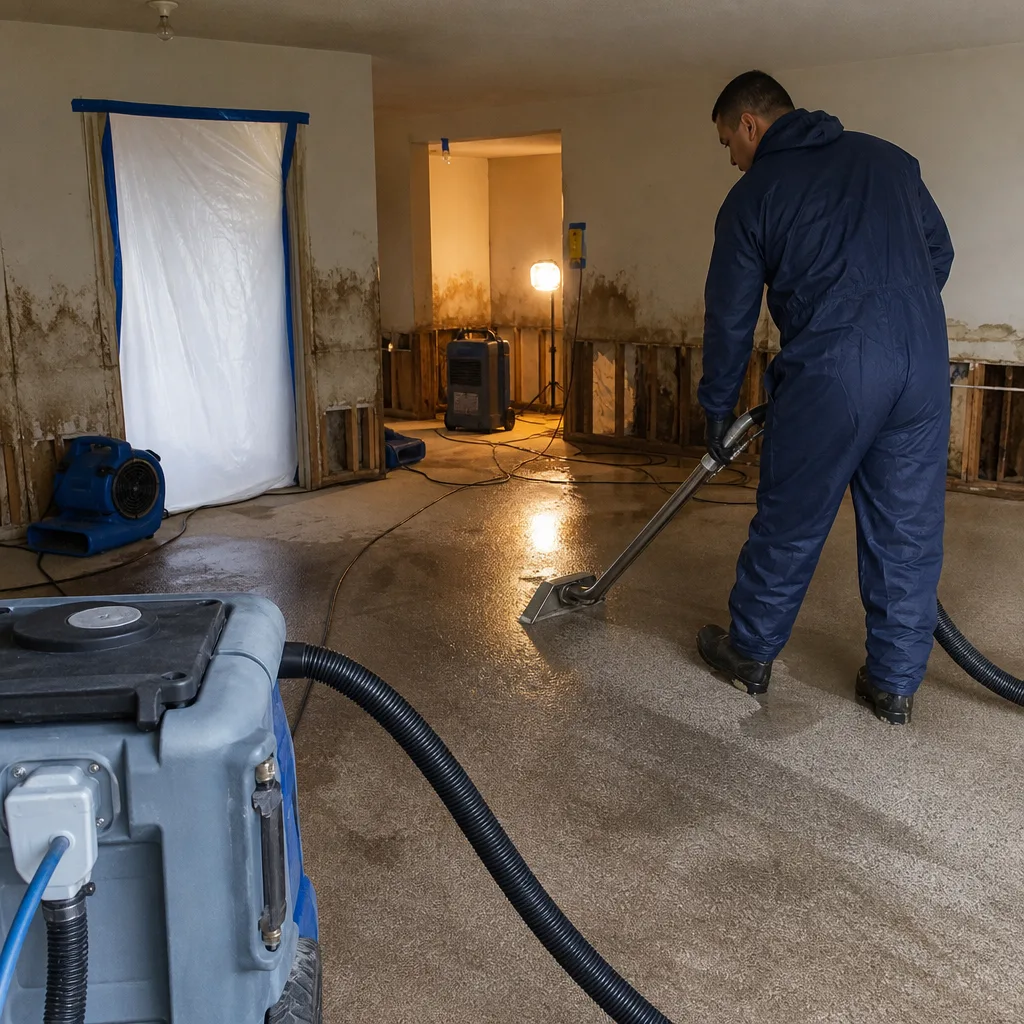
Standing water in a Sugar Land slab-on-grade home doesn’t just ruin flooring. It wicks into drywall, saturates insulation, and gets under Saltillo tile. We run Dri-Eaz extraction pumps and truck-mounted units to pull water out fast, usually within the first hour of arrival. In a climate averaging 70-75% humidity year-round, every hour of standing water pushes you closer to mold growth.
Flood Cleanup
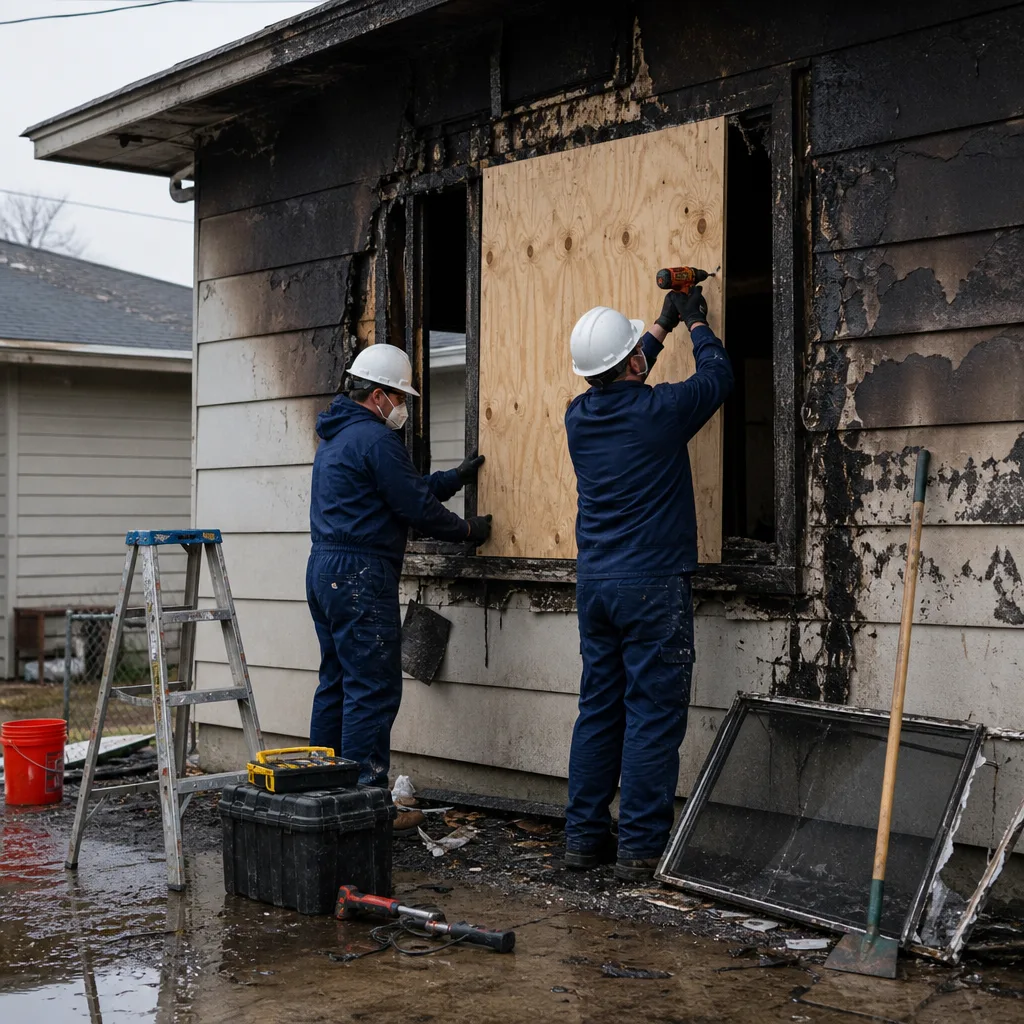
Flood cleanup in Sugar Land is different because the water is often river-connected. When HOA detention lakes overtop during Brazos River backwater events, the intrusion carries silt and biological contamination. That’s Category 3 black water, even if it looks like clean rain. We treat it accordingly: full demolition of wet materials, antimicrobial application, and documented disposal. Cutting corners here leaves sewage-laden silt behind baseboards and under slab flooring, and you’ll be re-remediating within months.
Structural Drying & Dehumidification
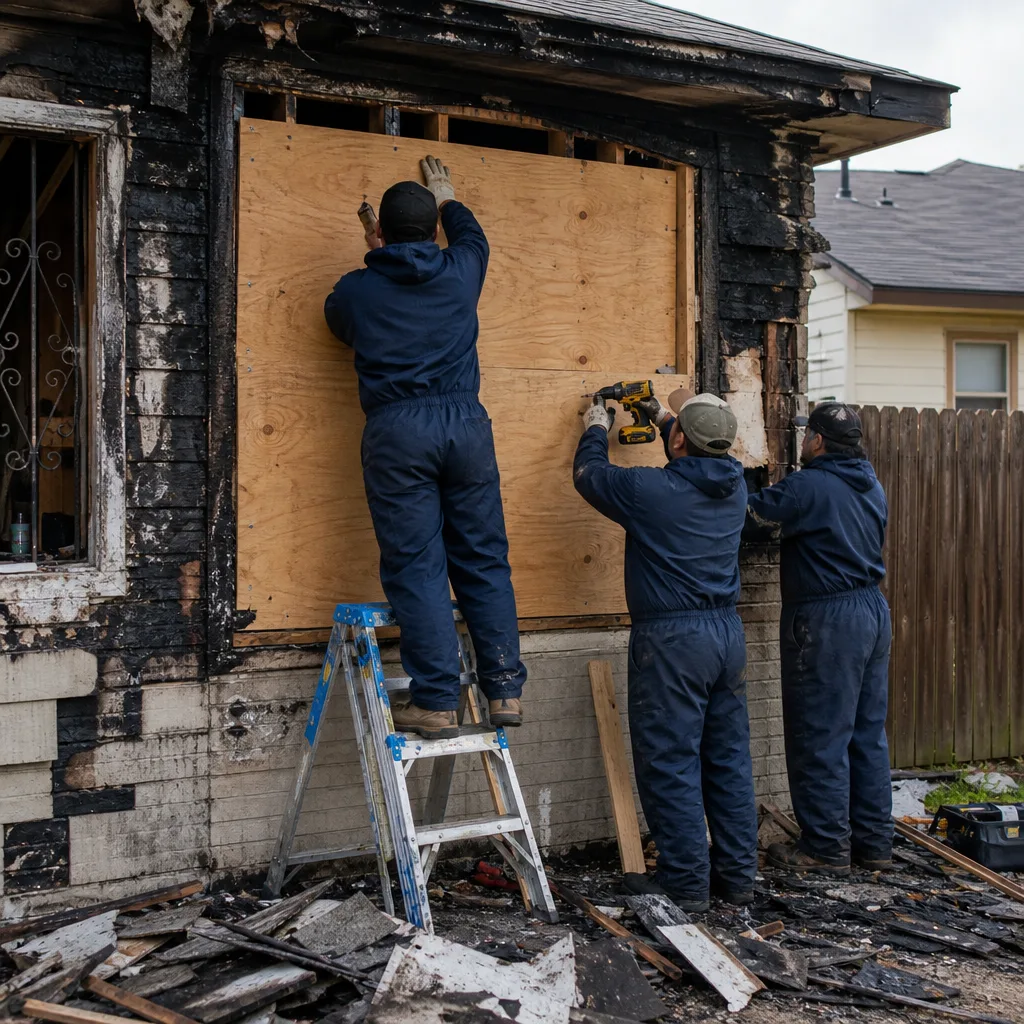
Sugar Land’s humidity is relentless. An unmitigated water-damaged interior can hit mold-growth thresholds within 24-48 hours. We set Phoenix dehumidifiers, Injectidry drying systems, and B-Air air movers in a calculated layout, then take daily moisture readings until the structure meets dry standard. Wade hands you the log at the end. If the adjuster questions the dry time, you’ve got the data.
Burst Pipe Restoration
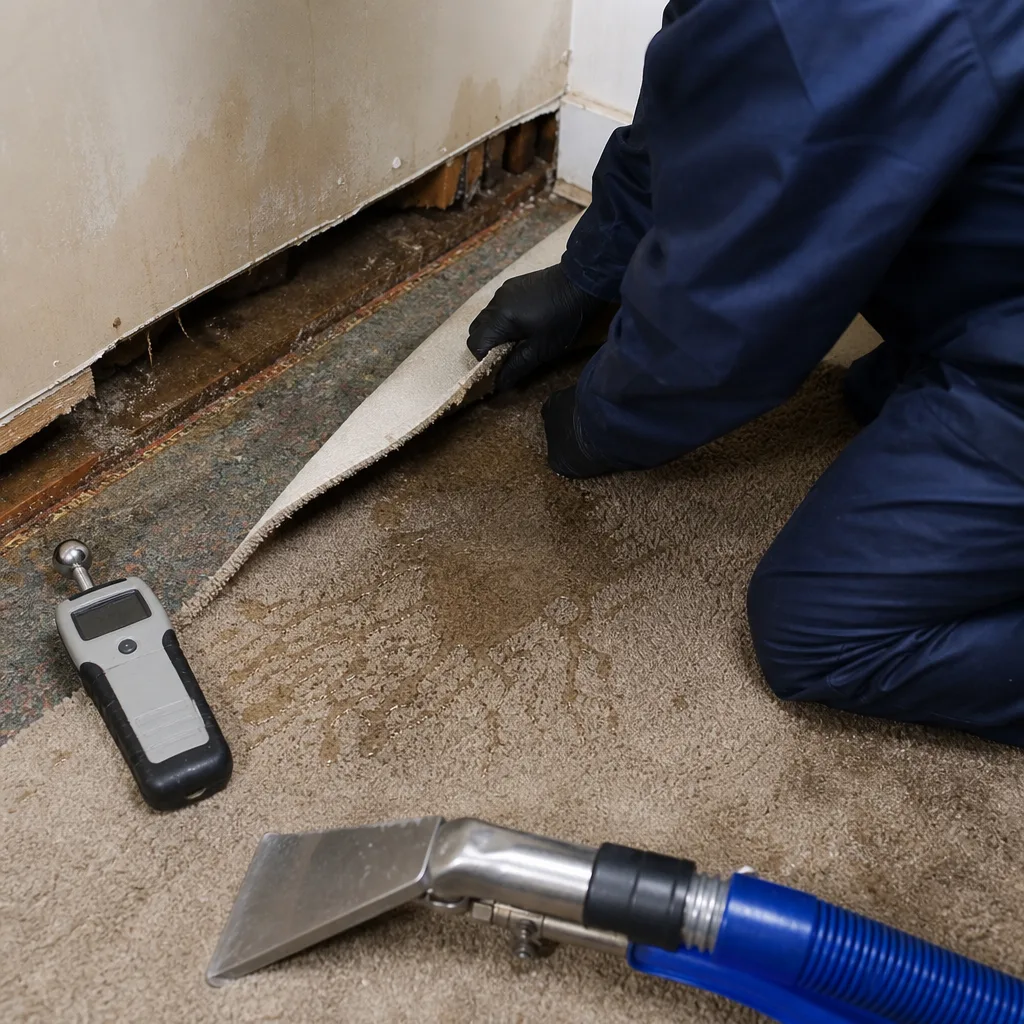
A burst pipe in a 1990s brick-veneer Sugar Land home often floods multiple rooms before anyone notices, because the water runs under slab-on-grade flooring and travels. We trace the water path with moisture meters, not guesswork. Then we extract, dry in place where possible, and demo where drying won’t work. Post-Harvey, many Sugar Land homes have had one round of remediation already, so we look for hidden prior mold behind new drywall patches before we trust the numbers.
What happens when you call
- 1
A real person answersNo phone trees - you reach a local pro.
- 2
You get an upfront price rangeHonest numbers before anyone is dispatched.
- 3
A background-checked tech heads outLicensed & insured, dispatched right away.
- 4
You approve before work beginsNothing starts until you say go.
Trusted Brands We Service in Sugar Land
We run professional-grade equipment from Dri-Eaz, Phoenix, Injectidry, XPOWER, and B-Air on Sugar Land jobs. Our trucks carry stock for immediate starts, and because we serve Sugar Land regularly, we know which supply houses on Highway 6 and 59 have what we need when we need more. RIA and IICRC credentials back the work, but the equipment does the heavy lifting. When you call at 2 a.m., we’re not waiting for a rental yard to open.
Common Water Damage Restoration Problems We See in Sugar Land Homes
- HOA detention pond overflows treated as clean rainwater. When a First Colony or New Territory HOA lake overflows into a home, the water is river-connected and contaminated. A crew that skips Category 3 protocols leaves biological material under baseboards and inside slab flooring gaps. The resulting mold is not covered by a second insurance claim.
- Drying in place on post-Harvey remediated homes. Many Sugar Land homes built in the mid-1980s through early 2000s already went through a flood loss during Harvey, and some remediation was done poorly. Hidden mold behind new drywall patches reactivates in high humidity. We check for prior patches and moisture behind finishes before writing the scope.
- HOA architectural violations during rebuild. New Territory and Telfair have strict ARB rules for door styles, exterior panel colors, and even visible hardware. A water damage rebuild that replaces a door with the wrong style can trigger a violation and forced rework. We match existing panels and confirm HOA compliance before ordering materials.
- Quiet operation restrictions during emergency work. Several Sugar Land communities enforce noise limits, especially at night. Industrial-grade drying equipment can violate those rules. We sequence noisier extraction earlier and set smaller, quieter units for overnight drying where an HOA has quiet rules on the books.
Pricing for Water Damage Restoration in Sugar Land, TX
A standard clean-water room extraction with structural drying in Sugar Land runs $1,800-$3,800. Flood cleanup involving Category 3 black water from a detention pond or Brazos backwater event runs $4,500-$12,000+, because the scope includes demolition, antimicrobial treatment, and microbial testing before rebuild. A burst pipe restoration typically lands $2,500-$6,500 depending on how many rooms the water traveled through. Ceiling and roof leak water damage runs $800-$2,500 for a contained area, unless the leak caused insulation saturation, which pushes cost up. Free second opinion on any written estimate, always. Call (888) 534-8116 and Wade will give you a straight number.
We Also Serve Cities Near Sugar Land
Wade’s crew works regularly in Sugar Land and the surrounding communities. If you’re in New Territory, Stafford, Greatwood, or Richmond, we cover those too. Same live-answer phone, same written scope before work starts, no trip charge inside our own county. Call (888) 534-8116 and we’ll be on the road.
Serving Sugar Land, TX - Our Local Coverage Area
We’re based in the Sugar Land area and know this community well. Use the map below to see our service coverage - if you’re nearby, we can almost certainly help.
FAQs - Water Damage Restoration in Sugar Land
A standard pipe burst is Category 1 clean water, so drying in place is often viable, but a detention pond overflow in First Colony or New Territory is Category 3 black water because the ponds are river-connected through the Brazos system. That means full demolition of wet drywall, insulation, and flooring, plus antimicrobial treatment and post-remediation testing. The scope difference is typically 2-3 times the cost and a much longer dry time. Call (888) 534-8116 and we’ll explain exactly what your situation requires.
Take timestamped photos and video of the water at its highest point, note which pond overtopped, and request the HOA’s stormwater records for that date. Then have your restoration company document in writing that the water source is river-connected, not rainwater. This is the fight that comes up on nearly every major flood loss in First Colony and New Territory, and adjusters will deny coverage if the source is misclassified. We photograph the pathway, reference the HOA-owned pond, and send direct documentation to the adjuster so you’re not stuck relaying information.
Yes. We regularly rebuild in New Territory, Telfair, and First Colony, where ARB rules dictate approved door styles and exterior colors. We pull the HOA’s current standards, match existing panels, and confirm compliance before ordering materials. That avoids the violation letter and the forced rework. Call (888) 534-8116 and tell us which community you’re in; we probably already know the rules.
With Sugar Land’s 70-75% average humidity, mold can reach growth thresholds in 24-48 hours on wet drywall and saturated carpet pad. On slab-on-grade 1990s homes with multilayer flooring assemblies, the underside of the flooring holds moisture longer than the surface suggests. If you’re past 48 hours, the scope shifts from dry-in-place to demo. Call (888) 534-8116 and we’ll assess before it gets worse.
Yes. Some Sugar Land HOAs restrict noise during overnight hours. We run the high-volume extraction equipment earlier in the day and switch to smaller, quieter drying units for overnight. The drying timeline may extend slightly, but we keep you inside your community rules without sacrificing documentation. Wade can explain the tradeoff in plain terms when he arrives.
How HOA Detention Ponds Turn Rain into Black Water: The Sugar Land Reality
Sugar Land sits squarely in the Brazos River floodplain, threaded with master-planned communities where HOA-owned detention lakes manage stormwater. In First Colony and New Territory, those ponds are privately owned and maintained, not city infrastructure. When the Brazos backs up during high-rain events, as it did during Hurricane Harvey in 2017 when the river crested at record levels, those ponds overtop into finished lower levels. The water that comes in is not rainwater. It’s river-connected backwater carrying silt, sewage, and biological contamination. That’s Category 3 by definition, and it changes the entire scope: full demolition, microbial testing, and HOA documentation on nearly every major loss.
This is the piece generic restoration companies miss. They see shallow water and treat it as a clean-water pipe burst. They dry in place, skip the antimicrobial work, and leave contaminated silt under Saltillo tile and behind baseboards. Six months later, the mold blooms and the homeowner discovers the insurance company denied the original claim because the water source was never documented correctly. We know this pattern because we’ve untangled it for Sugar Land homeowners repeatedly.
The HOA angle matters for documentation too. Adjusters need proof that the intrusion came from a river-connected source, not a burst pipe, and the HOA’s stormwater records for the date are often the missing piece. We help homeowners request those records and include them in the adjuster packet. That’s not a service you’ll get from a call-center restoration chain.
A First Colony Flood Loss We Won’t Forget
Our crew worked a flood loss in First Colony after an HOA detention lake backed into a two-story brick-veneer home built in 1998. The finished lower level had Saltillo tile over slab with hardwood on the upper floor. Because the pond was privately owned and river-connected, we documented the black-water pathway, extracted with Dri-Eaz pumps, removed waterlogged walls and insulation, and set Phoenix dehumidifiers and air movers for structural drying while coordinating with the HOA and adjuster. The homeowner avoided the costly mold re-remediation that often follows these events, because we treated the water for what it actually was from hour one.
If you’ve got water in your Sugar Land home, or you suspect a past remediation didn’t fully dry your slab, call (888) 534-8116. Wade or one of his crew answers live, day or night, and extraction can be running inside the hour. No charge for a second opinion on any written estimate, and a permanent 10% discount for seniors and veterans. Wade’s Restoration of Houston serves Sugar Land, TX, with owner-operated accountability and a 90-Day Done Right Promise stamped in writing on every job.
Written by Wade Ferris, Owner at Wade’s Restoration of Houston, serving Sugar Land since 2007.