
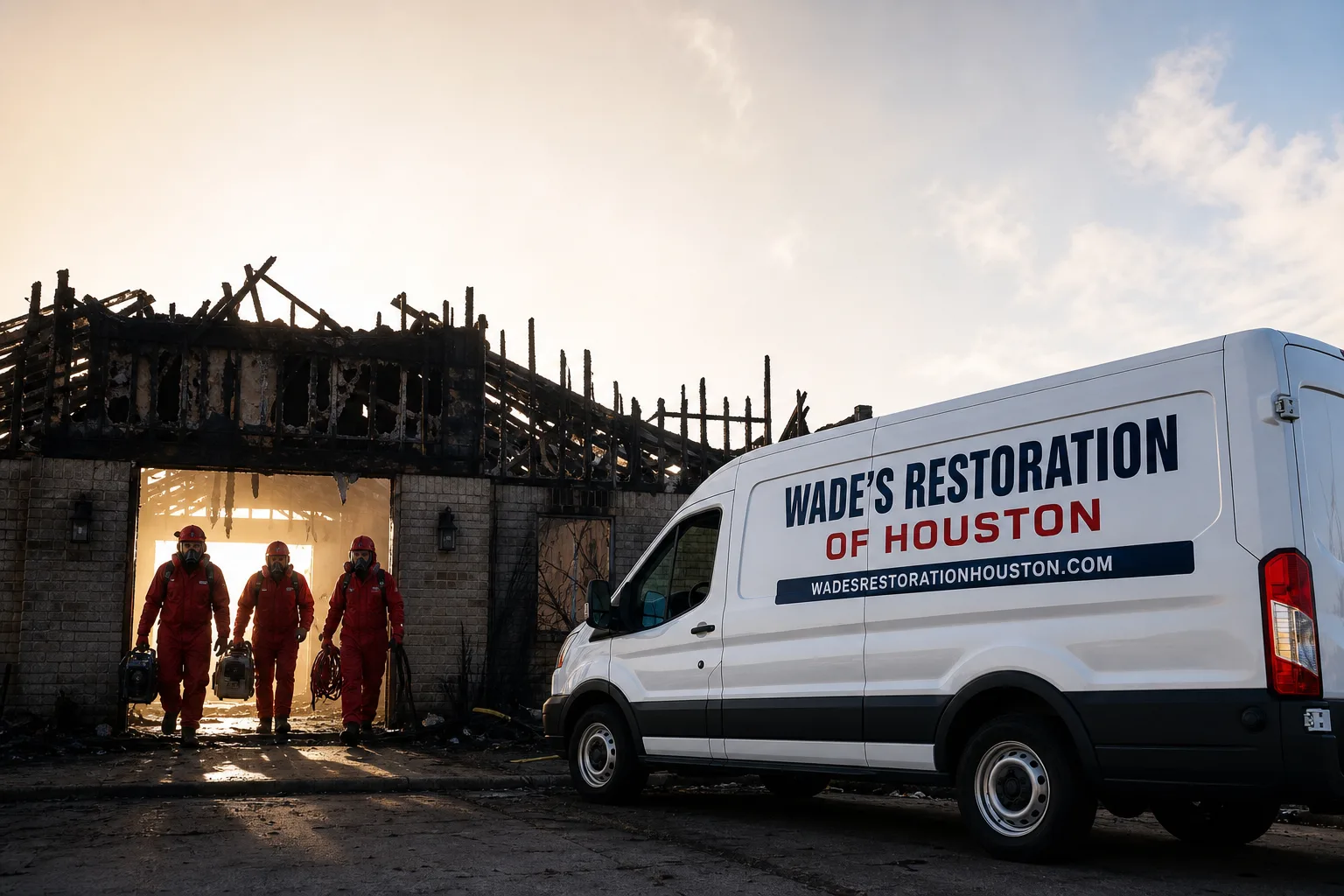
Fast, Reliable Water Damage Restoration Across Cleveland
Water damage restoration in Cleveland, TX typically costs between $2,800 and $7,500 depending on the extent of the damage, with emergency water extraction alone running $900 to $2,400 on average. In a town where the Trinity River and Tarkington Bayou can rise fast, the first 24 to 48 hours decide whether you are looking at a dryout or a full tear-out. Wade Ferris answers his own phone day and night, and when you call (888) 534-8116, you are talking to the man whose name is on the truck, not a call center in another state. We have spent years working homes from the floodplain near downtown Cleveland to the manufactured-home tracts off Fostoria Road, and we know what this specific corner of Liberty County does to a wet house.
Why Wade’s Restoration of Houston Is Cleveland’s Preferred Water Damage Restoration Company
Wade Ferris started this company in 2007 with a simple rule: put your name and address on the work, and stand behind every job like you are going to see that customer at the feed store on Saturday. Cleveland is a town where that still matters. When a pipe bursts in 77327 at two in the morning, the person who shows up is Wade himself or a background-checked technician from his crew, running Dri-Eaz dehumidifiers and XPOWER air movers, not a subcontractor pulling up in a rented van.
Ask anyone in Cleveland who has been through a flood. They can tell you the difference between a crew that drys a wall properly and one that hides moisture behind new baseboard. Wade reads moisture levels every single day and hands you the full log when the job is done. Almost nobody else in this trade does that. It is the kind of thing that matters when you are the one living in the house. And when the insurance adjuster calls, Wade gets on the line with them directly. You are never stuck in the middle relaying numbers between a desk adjuster and a crew.
Response time to Cleveland is fast because we dispatch from our Houston office and our crews work this part of Liberty County routinely. Wade publishes his license number and address. He carries IICRC certification and RIA affiliation, and every water damage job gets the 90-Day Done Right Promise in writing. If it is not done right, he makes it right. One call brings him back.
Our Water Damage Restoration Services in Cleveland
Water damage in Cleveland does not look like water damage in Kingwood or Atascocita. The floodplain geography, the red dirt, the older pier-and-beam stock, and the high concentration of manufactured homes all shape the work. Here is what we do most often in this area.
Emergency Water Extraction
When the Trinity River backs up or a storm line fails, the first thing a Cleveland home needs is standing water gone, fast. We run truck-mounted extraction units and submersible pumps that pull water out of carpet, hardwood, subfloor, and crawlspaces. In homes off of FM 2025 and around the 105 corridor, we are usually running extraction within the hour of your call. The faster the water comes out, the less framing, drywall, and insulation has to be torn out and replaced.
Structural Drying & Dehumidification
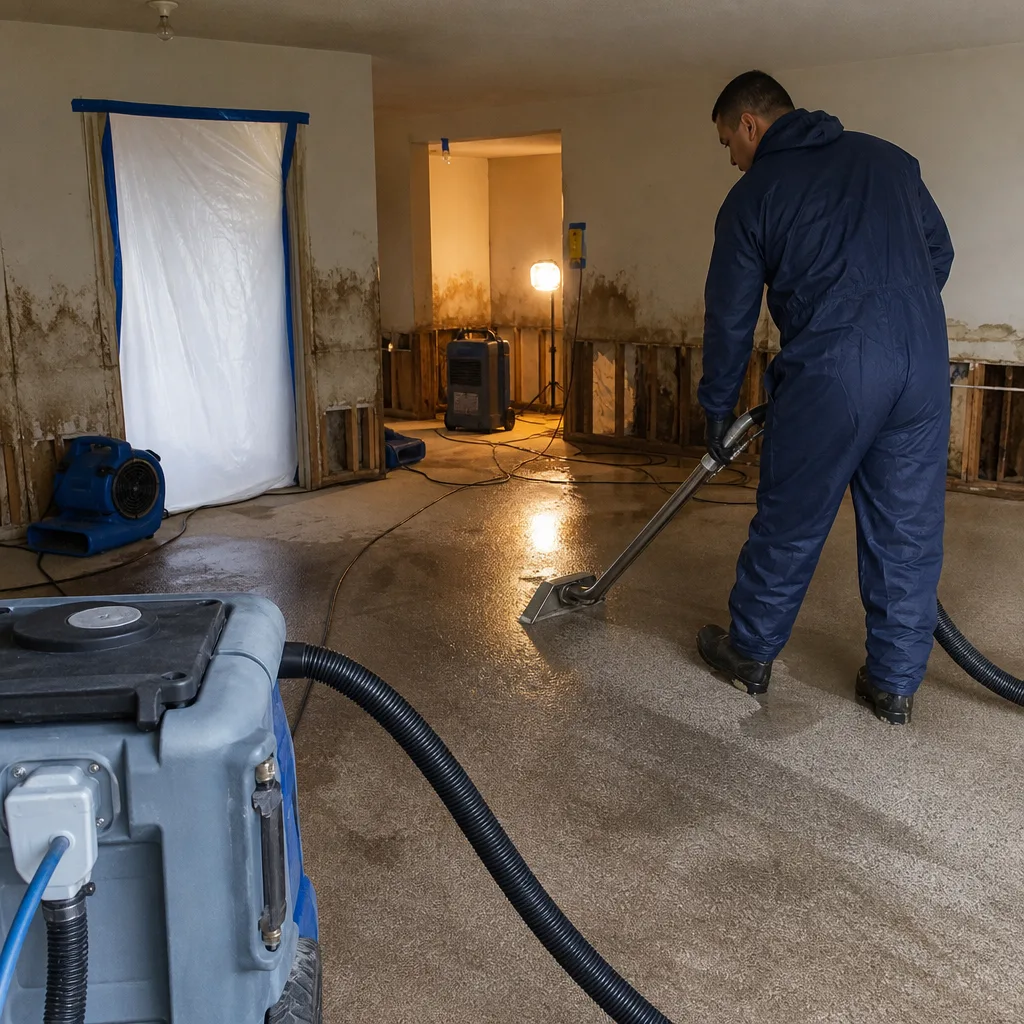
Cleveland’s Piney Woods humidity means a house can stay wet for weeks after the standing water is gone if nobody actively dries the structure. We set up professional-grade drying systems, take moisture readings every day, and track the numbers in a written log you get at the end. For pier-and-beam homes in 77328, we check crawlspaces carefully. Damp joists and subfloor fed by wind-blown rain through skirting gaps are a slow-rot problem most people never see until the floor starts to bounce.
Flood Cleanup
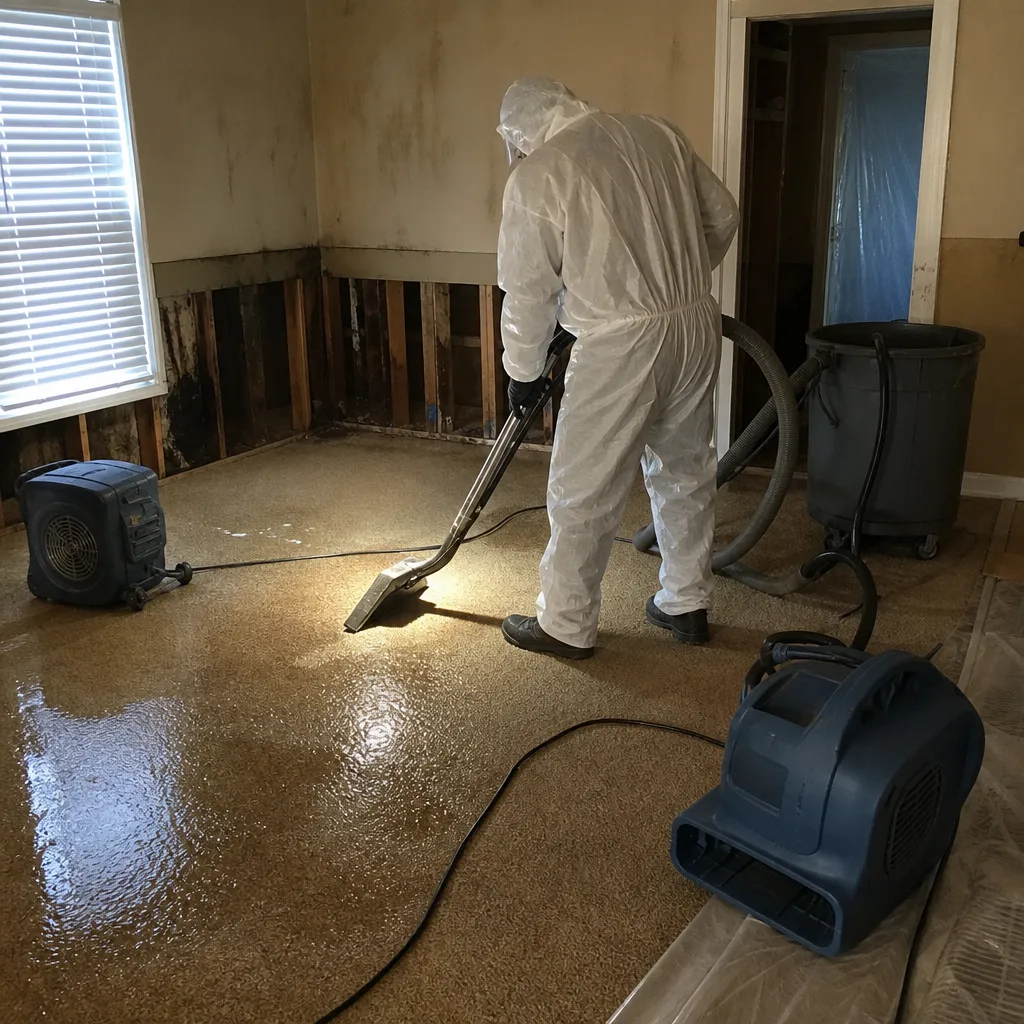
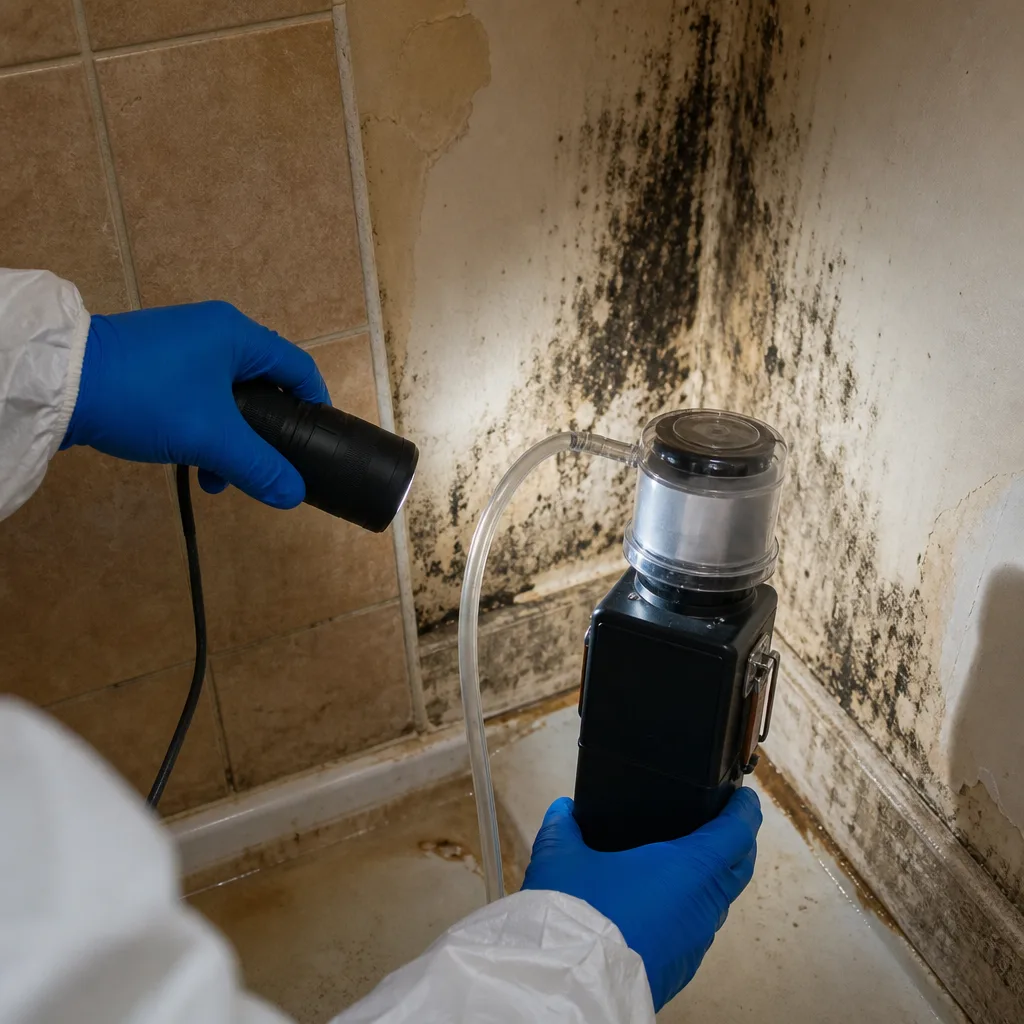
Hurricane Harvey put a lot of Cleveland under water, including the areas along the Trinity River floodplain. Floodwater is not clean water. It carries silt, sewage, and whatever it picked up on the way into your house. Our Water Damage Restoration team handles flood cleanup as a full-scope job: extraction, decontamination, drying, and removal of saturated materials. We also look for what is hidden. Many Cleveland homes that were “restored” after Harvey had wall cavity mold encapsulated or painted over instead of removed. A new flood event turns that buried problem into a health issue.
Burst Pipe Restoration
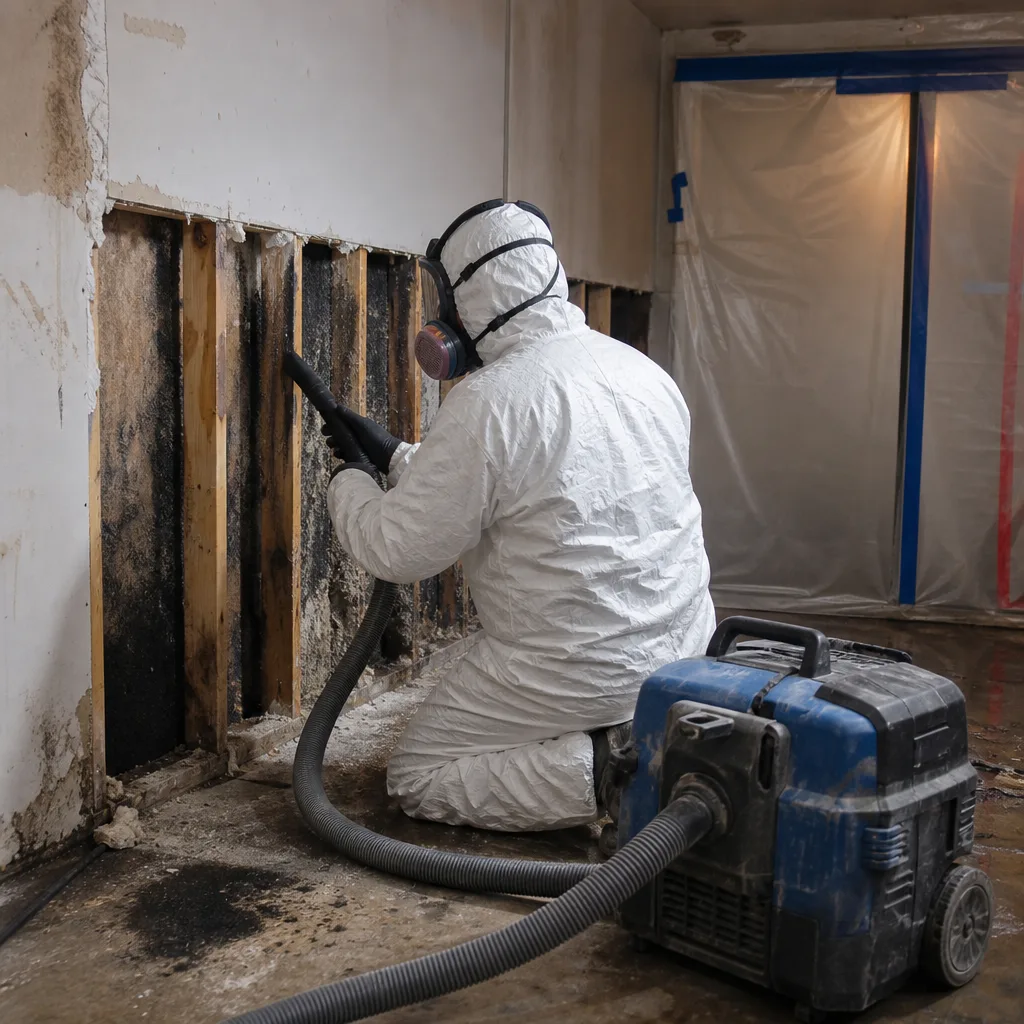
A burst supply line or a freeze-cracked pipe behind a wall in Cleveland is a different animal than a slow leak. Water under pressure saturates insulation, drywall, and framing in minutes. We isolate the break, stop the source, extract the water, and dry the cavity with Injectidry systems that pull moisture out from inside the wall. Then we open the wall, inspect the framing, treat any mold, and rebuild the cavity with proper vapor barrier before closing it back up. If your house predates modern vapor barriers, this step matters a lot more than most contractors admit.
What happens when you call
- 1
A real person answersNo phone trees - you reach a local pro.
- 2
You get an upfront price rangeHonest numbers before anyone is dispatched.
- 3
A background-checked tech heads outLicensed & insured, dispatched right away.
- 4
You approve before work beginsNothing starts until you say go.
Trusted Brands We Service in Cleveland
We have worked on just about every type of home in the Cleveland area: older wood-frame pier-and-beam houses, brick ranchers, and a whole lot of HUD-code manufactured homes. That includes the brands you see all over Liberty County: Clayton, Palm Harbor, Fleetwood, and older models from the 1990s and early 2000s. We stock common fittings, seals, and repair materials so we are not waiting on a parts run when you are already looking at wet drywall. Our equipment is Dri-Eaz, Phoenix, Injectidry, XPOWER, and B-Air, and Wade’s crew holds IICRC, RIA, and IFA credentials. We do not send a guy with a box fan to a flood job.
Common Water Damage Restoration Problems We See in Cleveland Homes
- Encapsulated mold from Harvey-era patch jobs. A homeowner gets water in the wall during Harvey, a crew comes in and “fixes” it by painting over mold or sealing it behind new baseboard. Years later, a small leak reactivates the mold, and the remediation scope doubles or triples. We flag this during every initial assessment in 77327 and 77328.
- Subfloor rot in manufactured homes on unsealed ground. HUD-code homes in Liberty County often sit on piers with open skirting. Wind-driven rain pushes water under the home, and the subfloor wicks it up for months. By the time the flooring buckles, the rot is already through the decking. We see this constantly around Cleveland.
- Wind-blown rain entering through pier-and-beam skirting gaps. The gap between the ground and the bottom of an older wood-frame home is a funnel for storm water. Saturated insulation in the crawlspace feeds mold in the floor cavity within 48 hours of a storm. Drying the crawlspace properly requires more than a fan in a vent hole.
- Roof decking failure after wind-driven storms. Cleveland sits in a part of Texas that catches hard spring storms and hurricane remnants. When a section of roof decking goes, rain pours straight through the ceiling. The real damage is often in the wall cavities below, where water travels before you see a stain.
Pricing for Water Damage Restoration in Cleveland, TX
Here are honest numbers for Cleveland’s market. Emergency water extraction in a standard 1,500-square-foot home runs $900 to $2,400, depending on how much standing water is present and how many rooms are affected. Structural drying and dehumidification for a typical single-room water event runs $600 to $1,800, while whole-home flood drying usually lands between $3,000 and $6,000. Burst pipe restoration involving wall cavity opening, drying, mold treatment, and rebuild typically runs $2,200 to $5,500. Flood cleanup on a Harvey-era repeat-flood property with hidden mold and subfloor rot can push past $7,500, and the honest answer is that some Cleveland homes are dealing with two layers of damage: the new surface water and whatever was buried in 2017. We give you a written scope before work starts. Call (888) 534-8116 and Wade will walk you through your exact situation at no charge. There is no trip charge inside our own county.
We Also Serve Cities Near Cleveland
Our Water Damage Restoration in Cleveland crews also cover the surrounding communities regularly. If you are in Conroe, Willis, Atascocita, or West Livingston, the same owner-operator crew and the same written promise apply. Wade heads out from the Houston office and gets to most of these areas within the hour, depending on where the water is and who is already on a job.
Serving Cleveland, TX - Our Local Coverage Area
We’re based in the Cleveland area and know this community well. Use the map below to see our service coverage - if you’re nearby, we can almost certainly help.
FAQs - Water Damage Restoration in Cleveland
Cleveland sits directly in the Trinity River floodplain, which means floodwater here is not just rain runoff. It is river water carrying silt, sewage, and agricultural runoff. Homes in lower-lying parts of 77327 and 77328 take on water that is significantly more contaminated than the sheet-flow water typical in higher-elevation Houston suburbs 45 miles south. That means decontamination is a mandatory step, not an option, and the drying protocol has to account for months of elevated ground moisture, not just the water inside the house. Call (888) 534-8116 and we will explain what your specific property needs.
Because a lot of the Harvey-era “restoration” work in Liberty County did not actually remove the mold. Wall cavities and subfloor spaces were encapsulated, painted over, or simply closed up with mold still alive and dormant inside. Insurance checks were stretched thin, and some contractors cut corners. Now, when a minor leak adds new moisture, the dormant mold reactivates and spreads fast. In Cleveland, a small leak can reveal a remediation scope two to three times larger than the new surface damage alone would indicate. Wade’s crew opens these walls and finds what the first crew left behind. Call us for a free second opinion on any written estimate.
First, wind-rated doors and windows keep wind-blown rain out of your house during a storm, which is the primary source of water intrusion in Cleveland apart from river flooding. Second, after a storm damages a door or window frame, the opening becomes a direct path for rain until it is properly repaired and that repair must meet Liberty County code for wind ratings. Wind-rated and impact-rated doors with proper flashing and seal details prevent the kind of slow water intrusion that saturates drywall and feeds mold inside wall cavities. We inspect the entire opening, not just the panel.
In Cleveland’s Piney Woods humidity, mold colonization can begin within 24 to 48 hours of a water intrusion event. The humidity here stays high year-round, which means materials that stay damp for more than two days are almost certainly growing mold, even if you cannot see it yet. This is why we respond to water damage calls in Cleveland the same day and start drying immediately. The clock runs faster here than it does in drier parts of Texas. Call (888) 534-8116 as soon as you see water.
Yes. Liberty County enforces wind-load requirements for exterior openings, particularly for homes in FEMA-designated high-risk zones. When storm damage forces replacement of a door or window, the new unit and its installation must meet the same wind-rating standard as the original, and in many cases the current code is stricter than what was in place when older Cleveland homes were built. We coordinate directly with the local building office and your insurance adjuster to make sure the repair is code-compliant and covered. Wade handles that conversation so you are not the one going back and forth.
The Cleveland Two-Layer Problem
Here is what generic restoration pages miss about Cleveland. This town was hit harder by Hurricane Harvey than almost anywhere in Liberty County. Hundreds of homes were repaired fast, with insurance money stretched thin and crews working around the clock. In a lot of those homes, mold was not removed. It was buried. Drywall was patched over wet framing. Baseboards went up over colonies that were still alive underneath. The house looked fine for a few years, and then the first minor leak, the first backed-up bayou, the first wind-driven rain through an old window, and the mold reactivated on top of the older rot.
Our crew was called to a pier-and-beam home off of Fostoria Road after a wind-driven storm ripped a section of roof decking and allowed rain to pour through the ceiling. We used Dri-Eaz dehumidifiers and an Injectidry system to dry the wall cavities, discovering that a previous Harvey-era repair had encapsulated mold behind the baseboards. After removing the affected drywall, we treated the framing and rebuilt the cavity with proper vapor barrier before rehanging the wall. That is the two-layer profile. The new surface damage was a roof patch and some wet drywall. The real job was undoing what 2017 left behind.
The housing stock here makes it worse. Many Cleveland homes are older wood-frame pier-and-beam structures built before modern vapor barriers, and a notable share are manufactured homes on unsealed ground. Both types are highly vulnerable to subfloor rot and cavity mold in sustained Southeast Texas humidity. When a manufactured home’s skirting lets wind-blown rain underneath, the subfloor wicks that moisture for months. The floor starts to bounce, then buckle, and by then the decking is gone. This is not a problem you see in master-planned subdivisions on slab foundations. It is a Cleveland problem.
What We Do About It
Our process in Cleveland starts with a full assessment that assumes the house may have flood history even if it is not obvious. We ask about Harvey. We check the crawlspace, the skirting, the wall cavities, and the subfloor. We take moisture readings everywhere, including places other crews do not think to check. Then we give you a written scope that separates the new damage from the old damage. If your insurance adjuster questions the scope, Wade talks to them directly with the moisture log and photo documentation in hand. We are IICRC-certified and RIA-affiliated, and we have been doing this work long enough to know what a buried Harvey patch looks like from across the room.
Wade’s Restoration of Houston serves Cleveland with the same crew and the same promise on every job. The 90-Day Done Right Promise is in writing. If it is not done right, Wade comes back and makes it right. No charge for a second opinion on any written estimate. No trip charge inside our own county. And a permanent Senior and Veteran 10% discount, because this town has plenty of both, and they deserve straight dealing.
Call Us Before the Water Sets the Timeline
If you have water in your Cleveland home right now, call (888) 534-8116. Wade answers his own phone. He will tell you straight what you are dealing with, what it will cost, and how fast he can have extraction running. If you are not sure whether a past repair was done right, call for a free second opinion. There is no obligation and no charge for the visit inside Liberty County. To wade is what you do through a flooded basement at two in the morning, and it happens to be his name.
Written by Wade Ferris, Owner at Wade’s Restoration of Houston, serving Cleveland since 2007.