
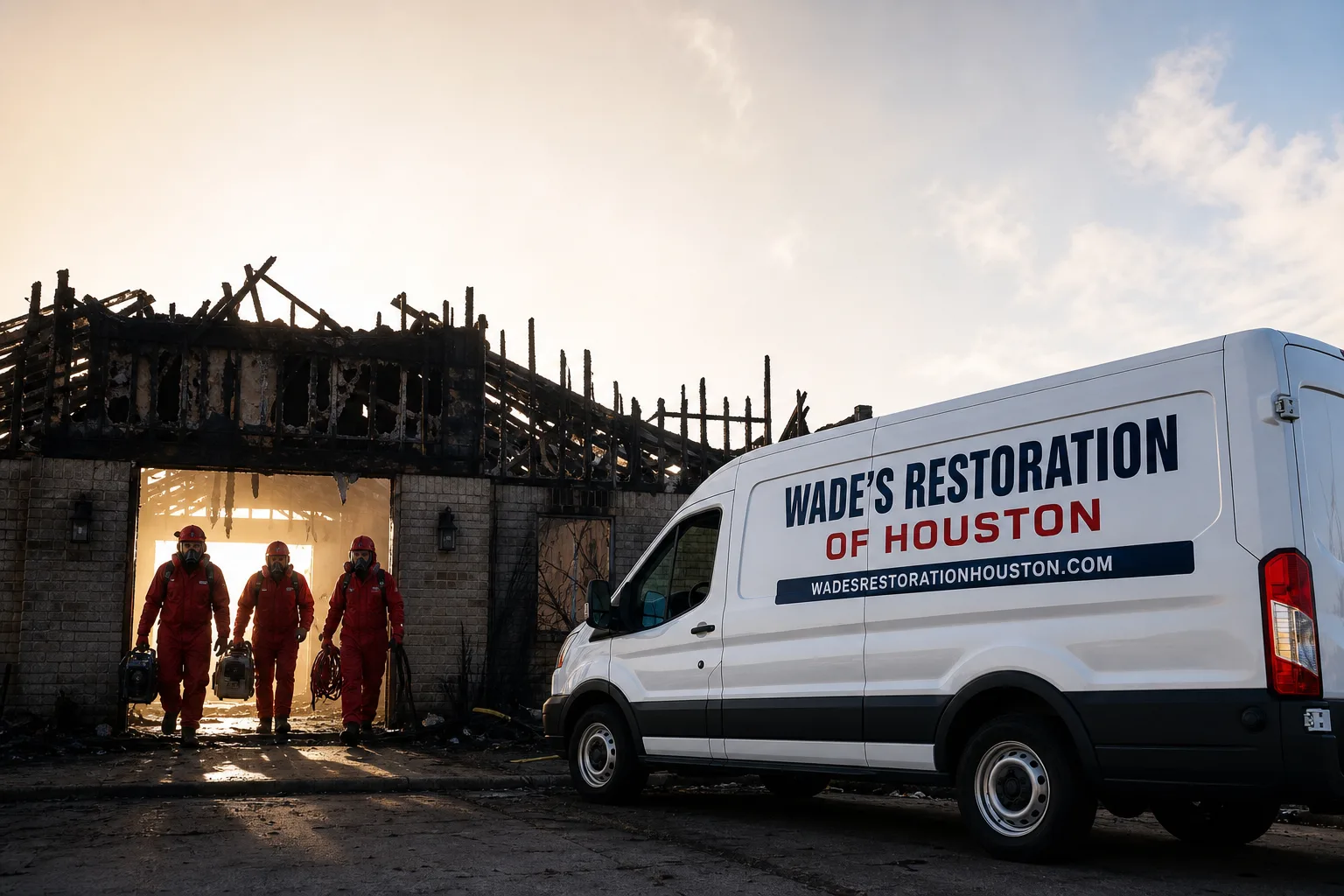
Fast, Reliable Sewage Cleanup Across Galveston
Sewage cleanup in Galveston is rarely a simple mop-and-dry job. On a barrier island where storm surge pushes black water through crawl spaces and bay-side neighborhoods flood from the north, a sewage backup usually means saltwater got in first, and now everything it touched is contaminated far beyond what a freshwater overflow would cause. We know the difference, and we know how to document it so your insurance claim holds up. Call Wade at (888) 534-8116 anytime, day or night. He answers his own phone.
We serve every Galveston zip code from 77550 to 77555, and we’re familiar with the split this island runs on: seawall-side homes in the East End and west end versus bay-side homes off Harborside Drive and Broadway that catch surge from Galveston Bay. That local know-how changes what we look for, what we document, and what we recommend before we ever put a fan down.
Why Wade’s Restoration of Houston Is Galveston’s Preferred Sewage Cleanup Company
Wade Ferris founded this company in 2007, and he still answers the phone himself. That matters on an island where big national franchises send a rotating cast of technicians who’ve never seen a pier-and-beam Victorian with knob-and-tube wiring. Wade’s crew has. We’ve worked in the East End Historic District, in post-Ike rebuilds on the west end, and in bay-side neighborhoods where Galveston Bay surge is the real threat, not the Gulf. Homeowners here tend to ask around before they let anyone inside, and our name keeps coming up for one reason: we show up when we say we will, we hand you the moisture log every day, and we never make you relay messages between us and your adjuster.
Every sewage cleanup we handle in Galveston gets the full documentation trail: photos before mitigation starts, daily moisture readings, and a written scope agreed before work begins. Wade’s team is IICRC-certified and RIA-affiliated, background-checked, and uniformed. We bring XPOWER extraction pumps, Dri-Eaz dehumidifiers, and Injectidry drying systems sized for the humidity and salt air this island throws at every job. There’s no charge to come out and give you a straight answer if you’re inside Galveston County, and every job carries our 90-Day Done Right Promise in writing.
Our Sewage Cleanup Services in Galveston
Here’s what we actually do when black water is involved. Each of these jobs in Galveston gets handled differently depending on which side of the island you’re on and whether saltwater got into the mix.
Sewage Backup Cleanup
A sewage backup in Galveston usually starts as a slow drain that turns into a floor full of black water. On the East End (77550), many of those 1880s-to-1920s homes still have original cast-iron waste lines under the pier-and-beam foundation, and those pipes are old. When they fail, sewage pools in the crawl space and wicks into old-growth cypress floor joists. We extract, remove saturated insulation, treat with antimicrobials, and dry the framing to a number, not a guess. You get the moisture log at the end.
Toilet Overflow Cleanup
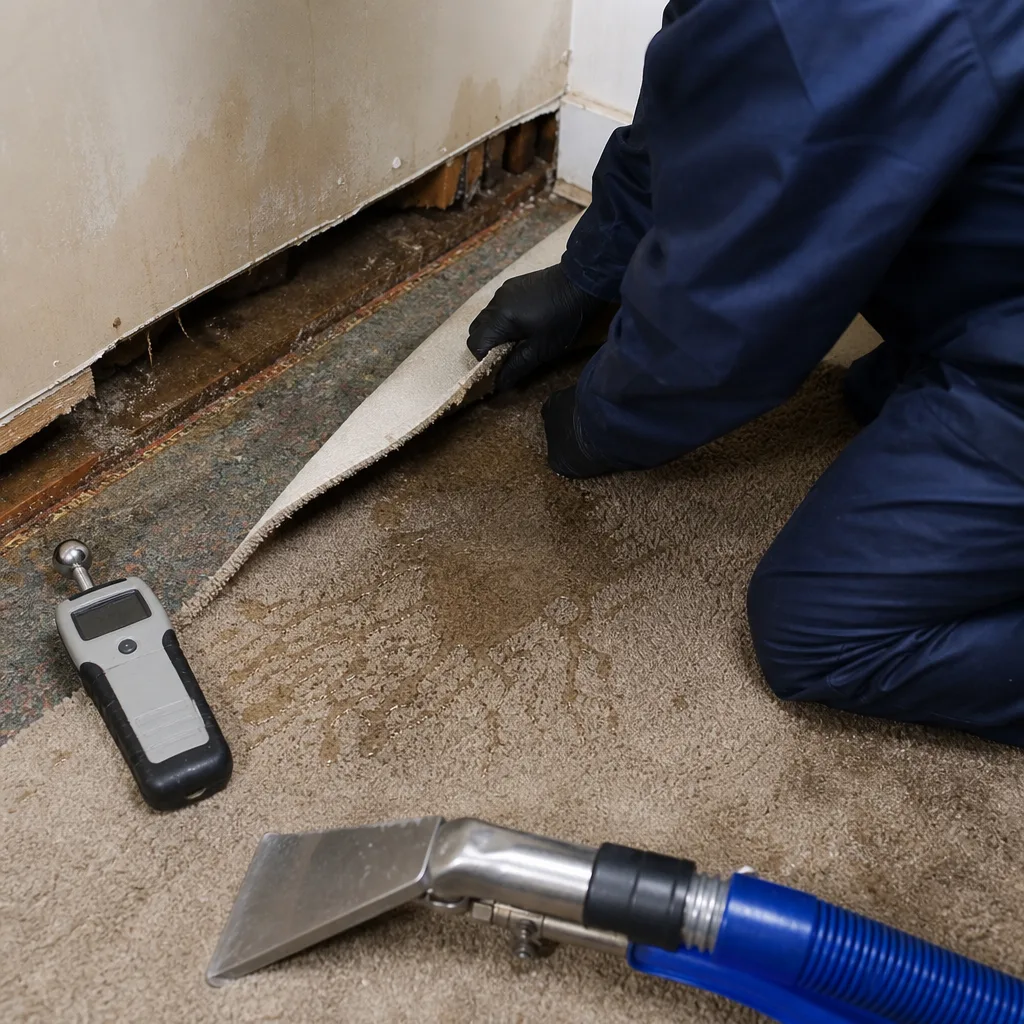
A toilet overflow in a Galveston home often means category 3 water, especially if it’s been sitting. In smaller bungalows off Broadway, bathrooms are tight and water spreads into adjacent bedrooms fast. We pull the contaminated flooring, treat the subfloor, and set containment so spores don’t spread through the HVAC while we dry the structure. The salt air here means mold pressure starts within 24 hours, so we move on these calls the same day.
Septic Failure Cleanup
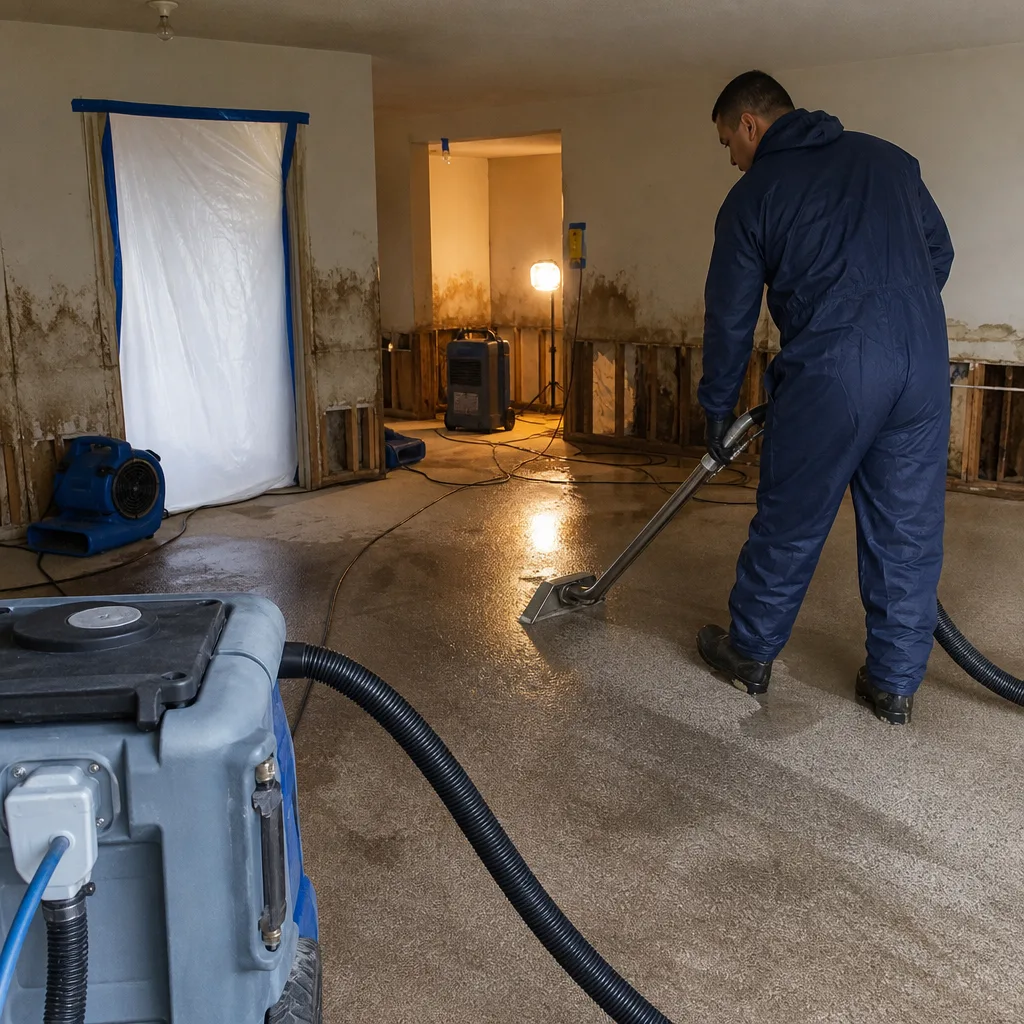
Galveston has plenty of homes on septic even inside city limits, especially in the older neighborhoods and on larger lots. A septic failure backed up by storm surge is a different animal than a routine tank issue. Bay-side homes in 77551-77553 are built low, and when Galveston Bay rises during a tropical storm, it fills the drain field, backs the effluent into the house, and saturates the crawl space. That’s the job we described off Harborside Drive: XPOWER pumps on black water extraction, corroded ductwork removed, pier-and-beam framing treated and dried with Dri-Eaz units. The copper wiring had already started to pit from the salt. If you’re seeing sewage odors after heavy rain, call before you run more water.
Black Water Extraction
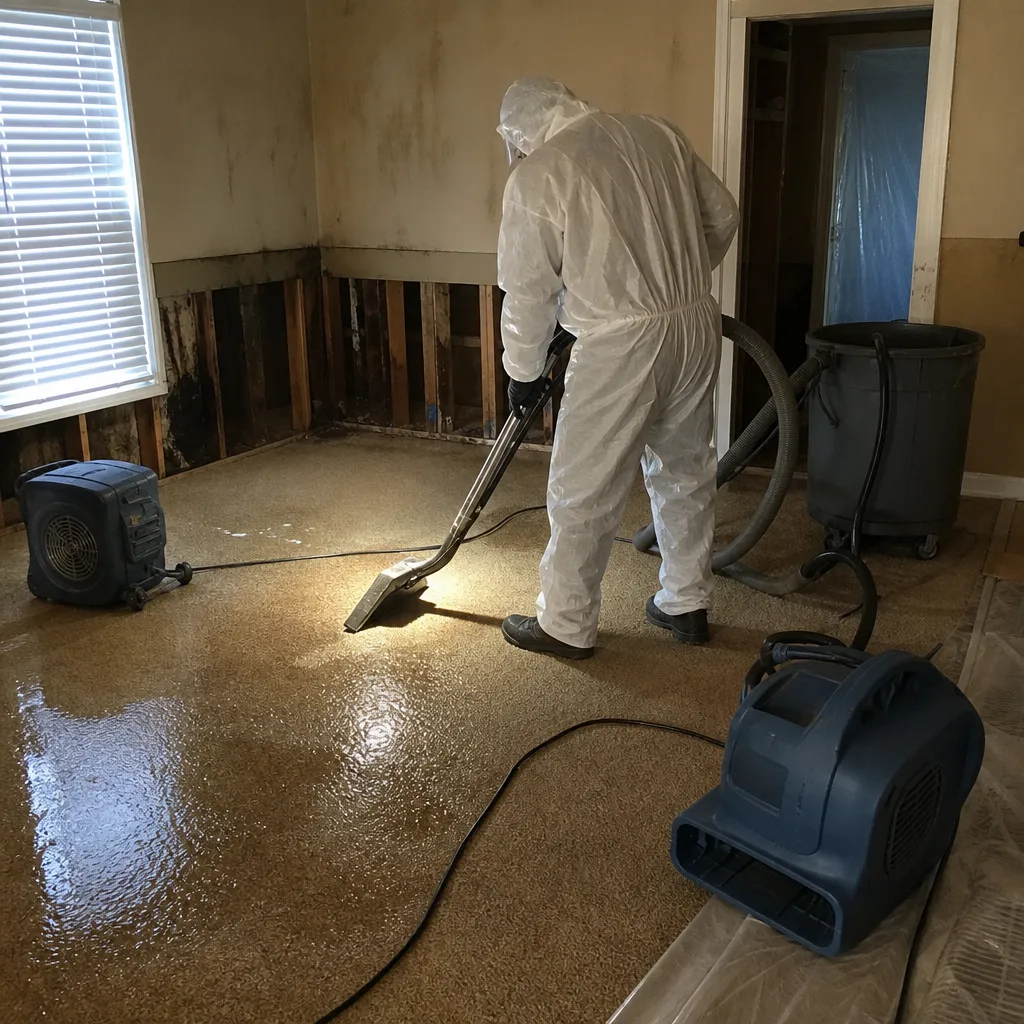
Black water extraction is the starting line of every sewage job in Galveston, and it has to be done right the first time. Category 3 water carries bacteria, viruses, and whatever drained out of the neighborhood’s sewers during the last surge. We use truck-mounted and portable extraction equipment to pull standing water fast, then remove all porous materials that touched it: carpet, pad, drywall, insulation. On Galveston, where the water is usually saltwater on top of sewage, we’re also watching for chloride residue that keeps eating metal long after the visible water is gone. That’s the part most crews miss.
Sanitization & Disinfection
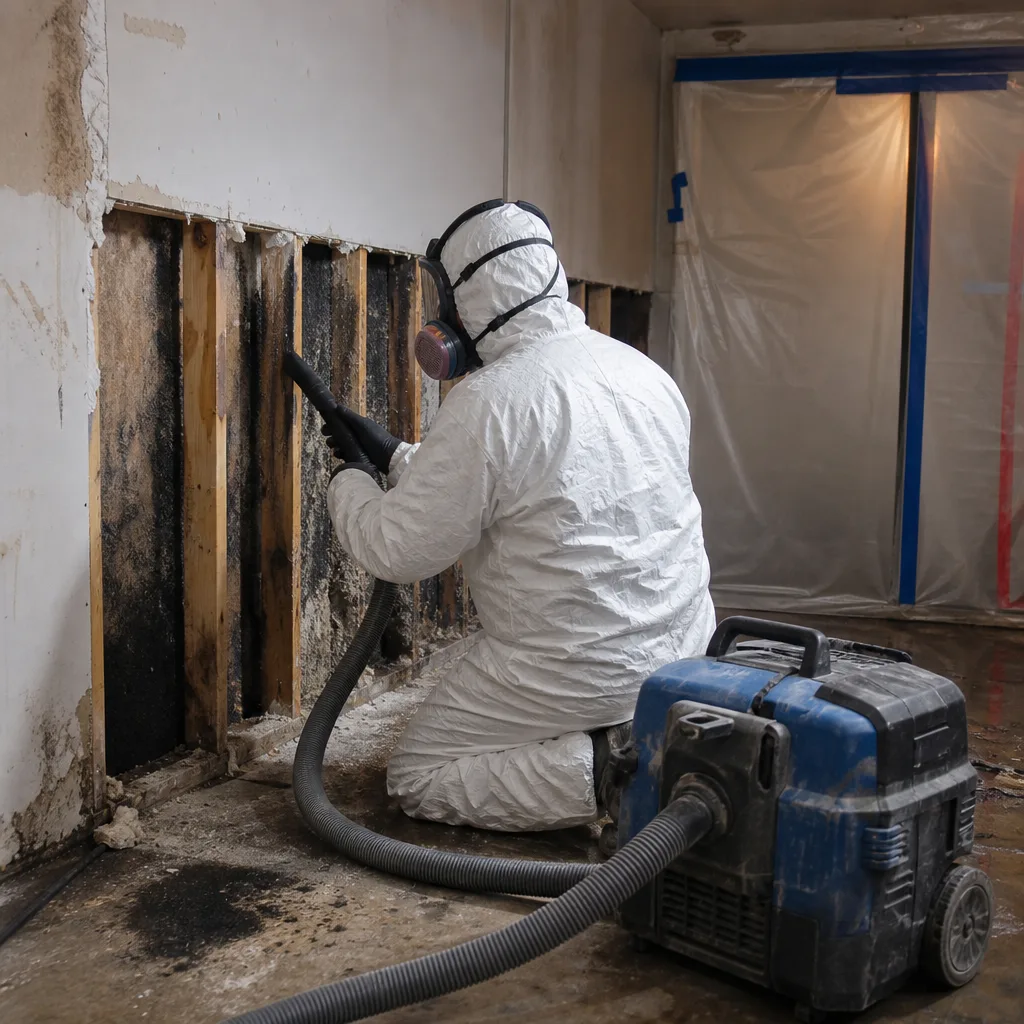
After extraction and removal, sanitization is not a fog-it-and-go step in Galveston. We apply EPA-registered antimicrobials to every surface the black water touched, including the framing, subfloor, and any remaining ductwork. On East End Victorians, we isolate original knob-and-tube wiring before any wet treatment starts; spraying near live, ungrounded wiring from 1920 is a shock hazard and will fail a local electrical inspection. The goal is to leave you with a structure that’s clean, documented, and safe to rebuild, not one that smells fine for three weeks and then gets musty.
Crawl Space Sewage Removal
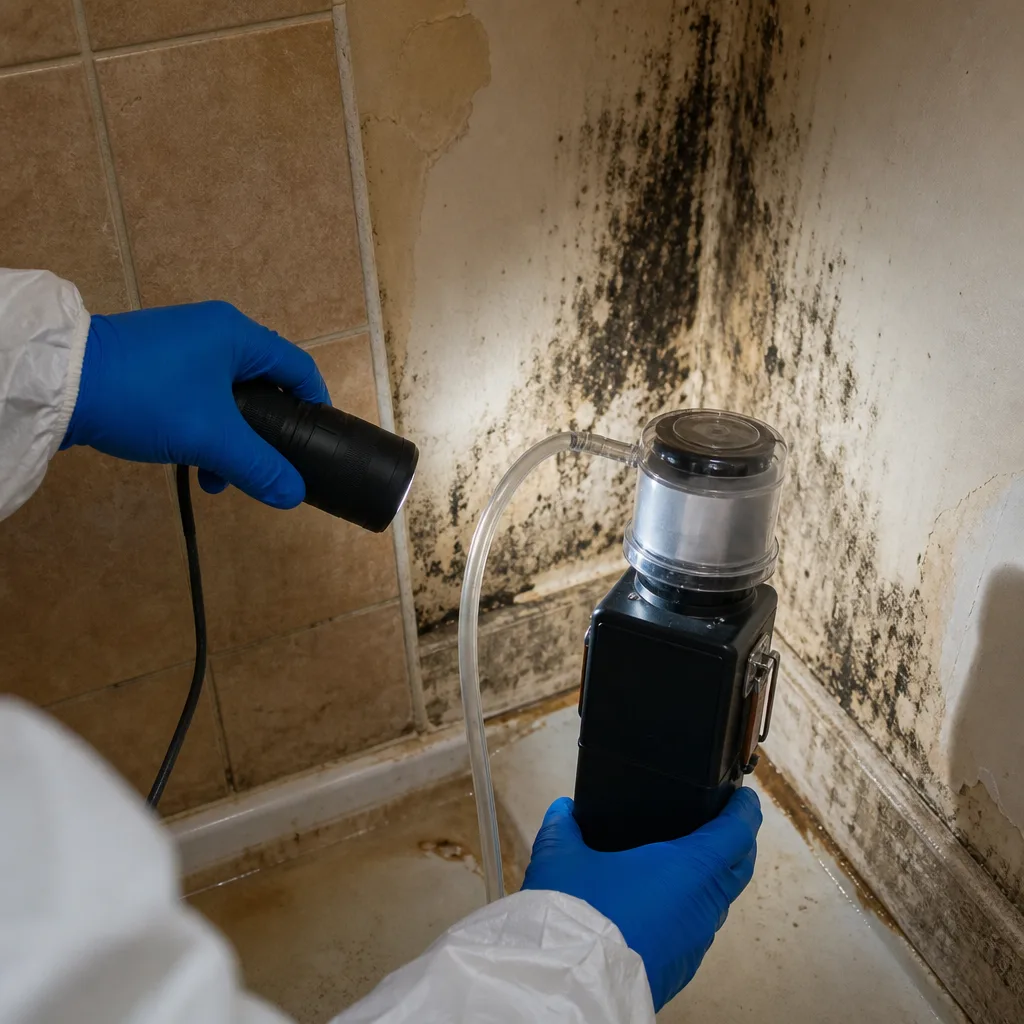
Pier-and-beam foundations are standard across most of older Galveston, and a sewage backup into a crawl space is one of the worst versions of this job. It’s dark, it’s low, it’s wet, and the salt-laden air is already working against you. We remove contaminated standing water, cut out saturated fiberglass batting, treat the cypress or pine framing, and run dehumidifiers sized for Houston’s cousin: Galveston’s year-round Gulf humidity. If we skip the saltwater chloride treatment, those fasteners and hangers start rusting within months. We don’t skip it.
What happens when you call
- 1
A real person answersNo phone trees - you reach a local pro.
- 2
You get an upfront price rangeHonest numbers before anyone is dispatched.
- 3
A background-checked tech heads outLicensed & insured, dispatched right away.
- 4
You approve before work beginsNothing starts until you say go.
Trusted Brands We Service in Galveston
We run equipment from manufacturers that hold up to Galveston’s humidity and salt air: XPOWER for extraction, Dri-Eaz for dehumidification, and Injectidry for in-place drying of walls and floors. Our technicians train to IICRC standards and our company is RIA-affiliated and IFA-recognized. That’s not marketing copy; it means the work we do in your Galveston home is done to the same standard used on commercial and municipal jobs. We stock common replacement parts on our trucks so we’re not waiting on a supply run from the mainland when your floor is still wet.
Common Sewage Cleanup Problems We See in Galveston Homes
- Saltwater in the sewage. On a barrier island like Galveston, storm surge pushes Gulf or bay water into sewer lines and crawl spaces. That means the black water in your house contains sodium chloride along with everything else. Freshwater drying math doesn’t work here. If we don’t flush the chlorides out of the framing and metal components, fasteners corrode and electrical panels pit within months. This is the biggest thing mainland contractors miss.
- Bay-side versus seawall-side damage profiles. Homes in 77551-77553 back up to Galveston Bay with no seawall between them and the water. A sewage backup in that zone often traces back to storm surge from the bay, not a broken line. On the seawall side in 77550 and 77554, surge comes from the Gulf but the sewage system behaves differently. The insurance documentation isn’t interchangeable, and neither is the cleanup scope.
- Old cast-iron and clay sewer lines under historic homes. East End Victorians and Craftsman homes run on original or early-20th-century waste plumbing. Those pipes crack, shift, and clog. When they fail, sewage sits under the house and wicks into cypress and heart-pine framing. Cypress is rot-resistant, but once it’s saturated with category 3 water, it still has to be treated and dried properly. Matching replacement framing stock is nearly impossible, so we work to save what’s salvageable.
- Mold pressure in 24 hours. Galveston’s Gulf humidity, combined with constant salt air, means mold spores colonize wet building materials fast. A sewage backup that’s been sitting for just one day is already growing things. We start containment and drying the same day we show up. If you wait, you’re compounding the problem and possibly triggering a permit issue with the city once reconstruction starts.
Pricing for Sewage Cleanup in Galveston, TX
Here’s what you can expect to pay in Galveston for sewage cleanup. A toilet overflow contained to one bathroom typically runs $900 to $1,800. A sewage backup that spreads into a hallway or adjacent bedroom lands in the $2,200 to $4,500 range. A crawl space sewage removal with saltwater intrusion on a pier-and-beam home, which is the common version on this island, typically falls between $3,500 and $8,000 depending on square footage and how much insulation and ductwork has to come out. Full black water extraction after storm surge with sanitization and framing treatment in a historic home can run $8,000 to $20,000 or more. These are real numbers for this market, not mainland prices. The variables are square footage, how long the water sat, whether saltwater is present, and how much of the original material can be saved. We give free estimates, and there’s no trip charge inside Galveston County. Call (888) 534-8116 and Wade will give you a straight number before any work starts.
We Also Serve Cities Near Galveston
Our Sewage Cleanup crews work across the upper Texas coast. If you’re in Texas City, Hitchcock, La Marque, or Dickinson, we can usually be at your door within the hour. The same documentation standards, the same 90-Day Done Right Promise, and the same live person answering the phone apply. If you’re searching for Sewage Cleanup in Galveston, you’ve found a local team that knows this island’s saltwater and surge problem better than any franchise ever will.
Serving Galveston, TX - Our Local Coverage Area
We’re based in the Galveston area and know this community well. Use the map below to see our service coverage - if you’re nearby, we can almost certainly help.
FAQs - Sewage Cleanup in Galveston
A storm surge changes the protocol because you’re now dealing with saltwater mixed into the sewage, and chloride contamination has to be addressed as part of the cleanup, not as an afterthought. We treat the framing with a corrosion inhibitor after antimicrobial application, we document the surge path for your insurer, and we remove anything that cannot be properly dried and saved. A standard toilet backup with no saltwater doesn’t require the same level of chloride remediation or flood-claim documentation. Call (888) 534-8116 and we’ll tell you which situation you’re in.
Yes, and documentation is everything. FEMA NFIP adjusters deny claims every year because the homeowner can’t prove the sewage entered as a result of storm surge rather than a pre-existing plumbing defect. We photograph the source, the surge path, the water line, and the materials before we remove anything. We give you that full photo set and our daily moisture logs to hand to your adjuster. Getting this wrong can cost you the entire claim, so we handle it from the first phone call.
The difference is where the water came from and what it carried. Bay-side homes in 77551-77553 are exposed to Galveston Bay with no seawall, so even a tropical storm can push surge northward and flood structures that never saw Gulf wave action. That water soaks the crawl space, backs up the septic or sewer, and leaves bay-sourced contamination. Seawall-side homes in 77550 and 77554 face a different surge path and typically have different foundation elevations after post-Ike rebuilds. The insurance trail and the damage profile are different, and so is the remediation scope. We scope them separately for a reason.
Often, yes, if we get to it quickly. Old-growth cypress is naturally rot-resistant, which is why those 1880s and 1890s homes are still standing. But when category 3 sewage saturates the joists and sills, the framing has to be extracted around, treated with antimicrobials, and dried to a specific moisture content before it can be considered safe. We’ve saved original cypress framing on East End jobs where the owner called us within 24 hours. Wait a week, and the outlook gets worse. Call (888) 534-8116 as soon as you see or smell sewage.
You need to start within 24 to 48 hours. Galveston’s Gulf humidity and salt air give mold a faster colonization window than inland Texas. Once mold is established, the city’s building department may require a mold remediation plan before reconstruction can be permitted, which adds time and cost. We answer the phone 24/7 and can have extraction running the same day you call. The faster we start, the more of your home we save and the fewer permit complications you’ll face.
Written by Wade Ferris, Owner at Wade’s Restoration of Houston, serving Galveston since 2007.