
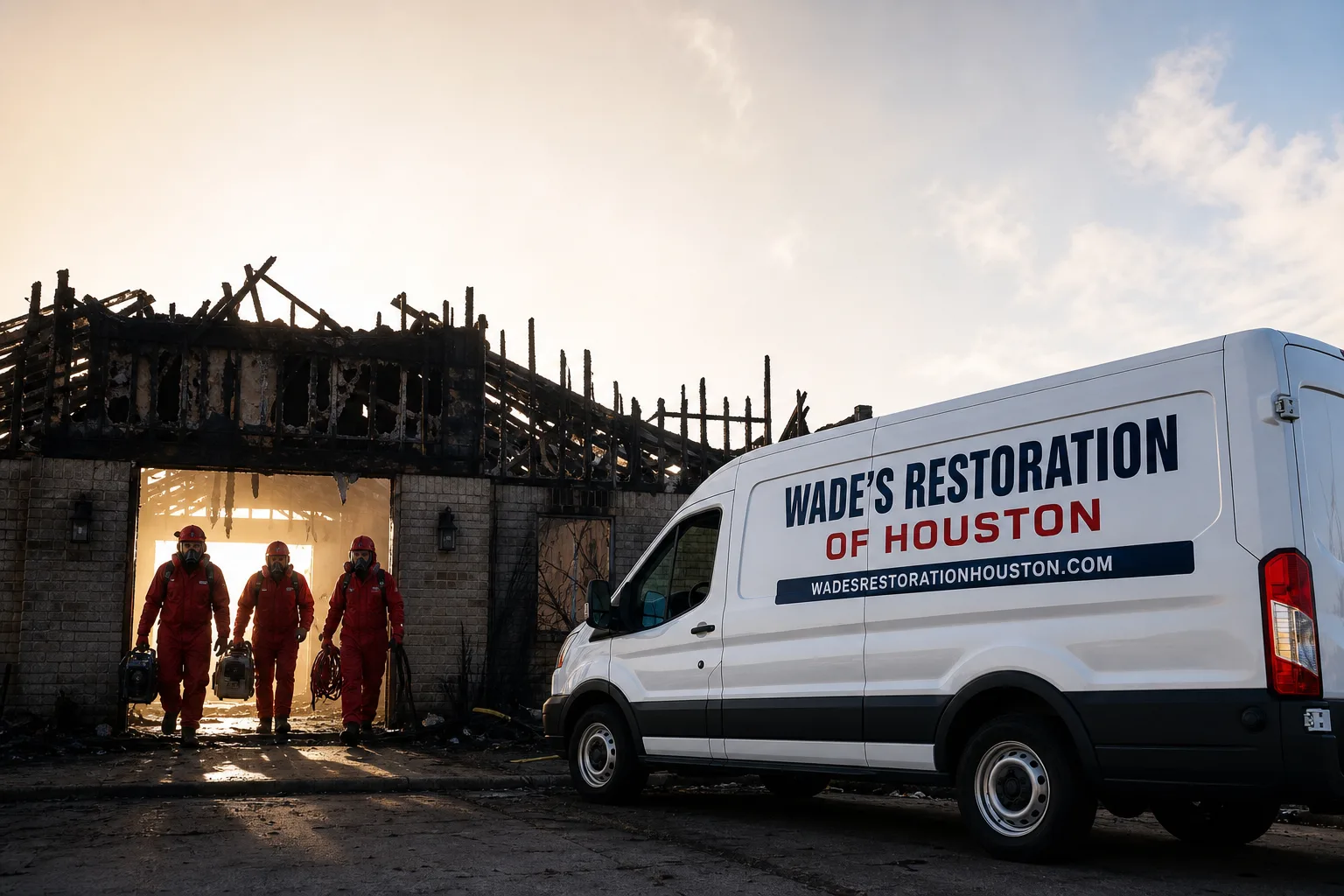
Fast, Reliable Storm & Disaster Restoration Across Spring
When a storm tears through Spring, you need water out and boards up before the real damage starts. Spring sits in a unique spot: it straddles the Harris County and Montgomery County line right inside the Spring Creek watershed. That means a single storm restoration job here often has to satisfy two different counties’ floodplain regulations and insurance documentation requirements at once, a complication that doesn’t exist in neighboring cities entirely within one county. Wade Ferris and his crew know exactly how that paperwork works, and more importantly, they know how water behaves in the slab-on-grade homes that dominate Spring’s housing stock. Call (888) 534-8116 and a live person answers, day or night. The owner himself picks up the phone.
Key Takeaways
- Storm damage in Spring often involves prior flood history, especially from Harvey and Imelda, hidden behind newer drywall.
- Homes in the Spring Creek watershed can require dual-county floodplain documentation before mitigation work gets approved.
- Wade’s Restoration of Houston responds to Spring calls 24/7 with a live person, not a voicemail tree.
- Every storm restoration job comes with the 90-Day Done Right Promise in writing.
- Slab-on-grade homes with original 1980s drywall wick water upward fast, the effective drying window is under 48 hours in Spring’s humidity.
Why Wade’s Restoration of Houston Is Spring’s Preferred Storm & Disaster Restoration Company
Wade Ferris founded this company in 2007 and has kept it small on purpose. His name is on the truck and his cell phone rings when you call. In Spring, people talk. A neighbor on Sawdust Road tells another neighbor on Rayford Road about the restoration crew that showed up at 2 a.m. after a roof took wind damage and had extraction running inside the hour. That’s how this business grew, one street at a time, through Glenloch, through Cypresswood, through the older neighborhoods south of Spring Creek where flood cut-lines hide behind fresh drywall. The work holds up, and if it doesn’t, Wade comes back. It’s in writing: the 90-Day Done Right Promise covers every storm restoration job in Spring.
Spring homeowners call because they’ve been burned before. National chains quote one number on the phone and show up with another. Wade operates differently: no-hassle upfront pricing, background-checked uniformed technicians, and the owner answering his own phone at whatever hour the storm hit. If you live in Spring, you might see him at the Kroger on Louetta Road next Saturday. People here value that kind of accountability.
Our Storm & Disaster Restoration Services in Spring
Our full Storm & Disaster Restoration team covers everything from first response to final reconstruction. In Spring, we focus on what actually happens to homes here when water and wind hit.
Flood Damage Restoration
Flood water in Spring is never just water. The flat Gulf Coastal Plain and heavy clay soils shed water laterally into homes rather than absorbing it. Houses on slab foundations with minimal moisture barriers take on water through base plates and wall cavities. We start extraction immediately, then map moisture through every affected cavity. Daily moisture readings get logged and handed to you at the end of the job. Nobody else around here does that. The clay soil under Spring keeps wicking water back toward the slab for days after the rain stops, so we run fans and dehumidifiers longer than the national chains would.
Storm Damage Cleanup
After the water is out, there’s debris. Shingles, insulation, drywall, sometimes tree limbs through a window. We clean it out and haul it off, but we also photograph everything before removal. Why? Because Spring homes with prior flood history carry FEMA Repetitive Loss designations, and your adjuster needs proof of what was already damaged before this storm versus what’s new. We document it all, from the first cut to the final clearance test.
Emergency Board-Up
When a window is shattered or a wall is breached, Spring’s post-storm humidity becomes an immediate threat. Interior relative humidity climbs above 80% within hours. Mold colonization accelerates beyond surface treatment in under 48 hours. That’s why emergency board-up is not just about security, it’s about controlling moisture ingress. We board up openings fast, usually within the first few hours of the call. Handwritten scopes agree to nothing until you’ve seen the line items.
Roof Tarping
Wind from a spring squall or remnants of a Gulf storm can tear shingles off fast. One open spot in the roof and rain has a direct path into your attic and down your walls. We tarp the roof fast with heavy-duty material, then schedule the actual repair. In Spring’s older subdivisions like Northgate Forest and Champions-area neighborhoods, roofs are often original or near end-of-life, so the tarp buys time while you file the claim.
What happens when you call
- 1
A real person answersNo phone trees - you reach a local pro.
- 2
You get an upfront price rangeHonest numbers before anyone is dispatched.
- 3
A background-checked tech heads outLicensed & insured, dispatched right away.
- 4
You approve before work beginsNothing starts until you say go.
Trusted Brands We Service in Spring
We use professional-grade equipment from Dri-Eaz, Injectidry, XPOWER, and B-Air on every Spring job. The B-Air blowers and Dri-Eaz dehumidifiers are the same machines restoration professionals use on commercial claims, not the rentals you’d pick up from a hardware store. The work is backed by IICRC certification and RIA affiliation, so when you file an insurance claim, the adjuster recognizes that the job was done to an accepted standard. Wade stocks his trucks with the equipment and parts needed for Spring’s common housing stock, which means less waiting around for a second trip.
Common Storm & Disaster Restoration Problems We See in Spring Homes
- Hidden prior flood cut-lines. In Spring homes that took on water during Harvey or Imelda, previous remediation cut drywall four feet up and rebuilt over framing that was never fully dried. We open the wall and find pencil marks on the studs and active mold behind the new finish layer. It re-contaminates the space within weeks if ignored.
- Lateral water intrusion through slab base plates. Spring’s clay soil pushes water sideways into the house, not down into the ground. Moisture gets trapped under base plates where nobody sees it. If you only dry the visible wet area, the hidden moisture keeps wicking up through the wall cavity for weeks.
- Dual-county floodplain paperwork delays. A home in the 77380 ZIP may sit in Harris County for tax purposes but Montgomery County for floodplain jurisdiction. Adjusters stall mitigation while counties sort out documentation. Every day of delay above 80% humidity compounds mold growth.
- Original paper-faced drywall from the 1970s and 1980s. Spring’s dominant housing stock was built during the Houston suburban boom with materials that wick water aggressively. Once saturated, paper-faced drywall holds moisture like a sponge and becomes mold-positive within 24 to 48 hours in Spring’s climate.
Pricing for Storm & Disaster Restoration in Spring, TX
We Also Serve Cities Near Spring
This page covers the restoration work we do in Spring and the surrounding communities. The same response and same written promises apply to neighbors in The Woodlands, Conroe, Tomball, and Aldine. If you’re just across the Montgomery County line or north along I-45, we’re already on the road to your area.
Serving Spring, TX - Our Local Coverage Area
We’re based in the Spring area and know this community well. Use the map below to see our service coverage - if you’re nearby, we can almost certainly help.
FAQs - Storm & Disaster Restoration in Spring
How does living in the Spring Creek watershed affect my flood restoration timeline?
Living in the Spring Creek watershed means your home is subject to floodplain regulations that homes outside the watershed don’t face. If your property falls under FEMA floodplain jurisdiction, your restoration timeline may include a documentation step that adds a day or two before mitigation can start. That’s why speed matters so much in Spring: every 24 hours of delay above 80% indoor humidity pushes mold colonization closer. Call (888) 534-8116 and we can tell you exactly what documentation applies to your address.
What should I do if my Spring home has had flood damage before, like from Harvey or Imelda?
Tell us about it up front. Homes in Spring with prior Harvey or Imelda damage often have hidden flood cut-lines and incompletely dried wall cavities behind new drywall. We look for that specifically. We open walls, check the framing moisture content, and document anything pre-existing for your adjuster before we proceed. A home with prior damage is not more difficult to restore, but it needs a restoration contractor paying attention to what’s behind the new drywall. Call (888) 534-8116 and mention the prior storm.
Why do I need to worry about two different counties’ floodplain regulations for my Spring storm damage claim?
Spring crosses the Harris and Montgomery County line, and floodplain jurisdiction follows the county boundary. A single property can fall under Harris County’s floodplain rules for one portion and Montgomery County’s for another. That means two sets of paperwork for one storm damage claim, and it can delay mitigation if you don’t know to file both. We’ve handled claims that required both counties’ floodplain documentation, and we can tell you based on your ZIP code whether you need one or both. Call (888) 534-8116 and ask.
My 1980s Spring home has original drywall and insulation. What special storm restoration concerns apply?
Original 1970s and 1980s construction in Spring used paper-faced drywall and fiberglass batt insulation that wick water aggressively. Once that type of drywall gets wet, it becomes mold-positive fast in Spring’s humidity. We remove and replace rather than patch. Trying to dry this material in place usually fails because the paper face holds moisture against the gypsum core. We handle it as a removal-and-replacement job, and the price reflects that. Call (888) 534-8116 for an exact quote on your home.
Can you help with emergency board-up after a storm in a Spring neighborhood like Northgate Forest?
Yes. We answer calls 24/7 and can have a crew on the road to Northgate Forest, Cypresswood, Gleannloch Farms, or any Spring neighborhood within the hour. Emergency board-up runs $150 to $450 per opening depending on size. The owner, Wade Ferris, answers his own phone at night, so you’ll talk to the person who is actually coming to your house. Call (888) 534-8116.
Our Work in Northgate Forest: A Storm Restoration Field Note
In the Northgate Forest subdivision, our crew pulled back water-damaged drywall after a storm and found a previous Harvey-era flood line marked in pencil on the studs. Active mold was already growing behind the newer finish layer. Because the home sat in the Spring Creek watershed with slab-on-grade construction, the original paper-faced drywall had wicked moisture upward and the fiberglass batt insulation was saturated. We removed the compromised material, dried the cavity to below 15% moisture content using Dri-Eaz dehumidifiers, and documented the pre-existing condition for the adjuster before reinstalling new drywall and insulation. That’s the difference between restoration work that lasts and work that looks fine until the next storm.
Our Storm & Disaster Restoration team does this kind of forensic-style restoration every week in Spring. The dual-county floodplain jurisdiction, the watershed history, the layered storm damage, it all gets handled by people who understand what they’re looking at.
If a storm just hit your Spring home, or you’re worried about one forecasted this week, call (888) 534-8116 now. A live person answers. We can have extraction running inside the hour, and the estimate is always free.
Written by Wade Ferris, Owner at Wade’s Restoration of Houston, proudly serving Spring and the surrounding communities since 2007.