
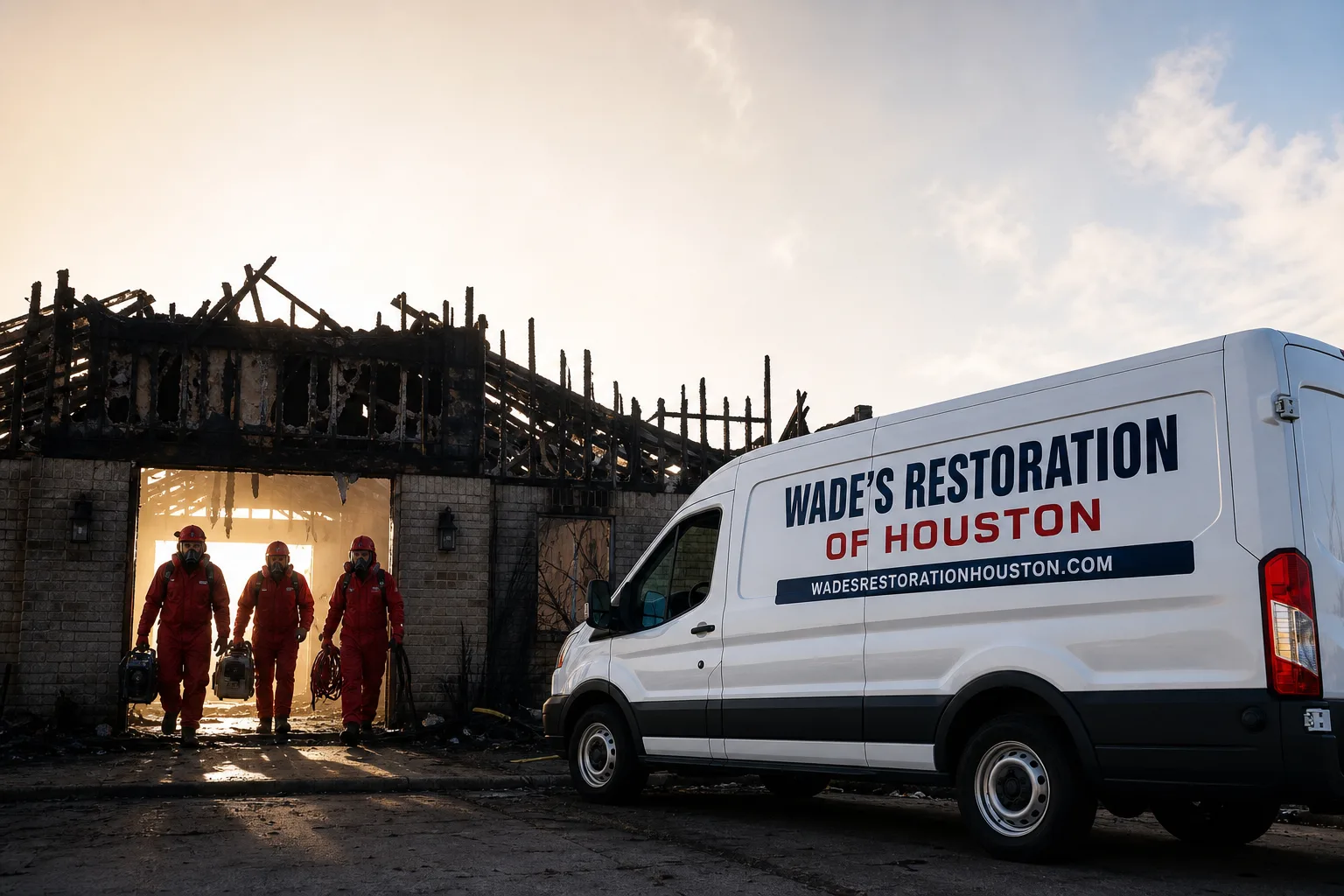
Fast, Reliable Storm & Disaster Restoration Across Dayton
Storm damage in Dayton doesn’t wait, and neither do we. When wind tears off shingles or the Trinity River climbs out of its banks and into your yard, you need someone who knows Liberty County flood behavior, not a crew driving in from Houston who’s never seen clay soil wick moisture through a slab. Wade Ferris has been running restoration crews since 2007, and he answers his own phone at (888) 534-8116. That matters at 2 a.m. when water is still rising.
Dayton sits in the Trinity River floodplain, which means the damage here is different. Prolonged riverine flooding leaves homes standing in water for days, not hours, after a storm. That slow-drain condition wicks moisture deep into slab foundations and drives rapid mold growth unlike the flash-flood patterns you see in the city. We build our drying plans around that reality. Most national outfits don’t.
Why Wade’s Restoration of Houston Is Dayton’s Preferred Storm & Disaster Restoration Company
Wade’s Restoration is not a franchise. Wade Ferris founded the company in 2007, publishes his address and license number, and still shows up on job sites himself. Ask anyone on your street. In a town the size of Dayton, reputation travels fast, and Wade has spent years building his by doing the unglamorous work right: daily moisture readings, honest scopes, and adjuster communication that doesn’t leave homeowners stranded in the middle.
When you call, a live person answers. Not a call center. Not a voicemail tree. Wade himself carries his phone, and he can have a crew on the road to Dayton within the hour of your call. For flood damage on Waco Street or wind damage off FM 1960, that speed is the difference between salvage and replacement.
We’re IICRC-certified and RIA-affiliated, which means our crews follow the industry’s real standards for water damage and structural drying. We run professional-grade equipment: Dri-Eaz dehumidifiers, XPOWER air movers, Injectidry drying systems. And every water, fire, and mold restoration job is backed by the 90-Day Done Right Promise, in writing. If it’s not done right, Wade makes it right. No fine print.
Our Storm & Disaster Restoration Services in Dayton
Flood Damage Restoration
Flood damage in Dayton is its own animal. The Trinity River doesn’t flash and recede like Houston bayous do. It rises, sits, and drains slowly, which means water has time to saturate everything it touches. We start with extraction, then immediately map moisture in walls, under cabinets, and beneath slab flooring. The silty clay soils common in river-bottom areas hold ground moisture against foundations for weeks after floodwater is gone. Standard drying timelines fail here. We run equipment longer, check sub-slab moisture daily, and hand you the full log when the job is done. Nobody else in this market does that.
Roof Tarping
Wind damage from Gulf storms and spring squall lines tears shingles and decking off Dayton roofs fast. A tarp keeps the next rain out while you work through the insurance process. We tarp within hours of your call, using proper fastening that holds through Southeast Texas wind, not flapping blue plastic that rips in the first afternoon breeze. If you’re in the 77535 zip code, we know the roof pitches and single-story ranch layouts common to the area. The tarp goes on right the first time, and we photograph everything for your adjuster.
Debris Removal
After a storm, Dayton yards fill with tree limbs, fence sections, and whatever the wind carried in from open fields. Debris removal is the unglamorous first step that makes the rest of the restoration possible. We haul, we don’t just pile. We also document the debris as part of your claim, so the adjuster sees exactly what the storm left behind before we clear it. You shouldn’t have to fight your own policy because the evidence got thrown in a dumpster without a photo.
Emergency Board-Up
A broken window or blown-out door leaves your Dayton home open to weather, animals, and people who shouldn’t be inside. We board up with plywood and proper fastening the same day you call. It’s not a permanent fix, but it keeps the damage from spreading while you wait on repairs. For Dayton homeowners with pier-and-beam foundations, we also secure crawlspace access points that storms knock loose, because open vents and floor-wall junctions let humid air pour into the subfloor.
Wind Damage Repair
Wind damage shows up in ways you don’t always see from the ground: lifted ridge caps, loosened flashing, subtle roof punctures from flying branches. We inspect for all of it, not just the obvious tear-out. In Dayton’s wind-driven rain events, small openings leak for days before you notice a ceiling stain. We find them early and document them fully, so your claim covers the real scope of damage, not just what’s visible.
Our full Storm & Disaster Restoration team handles everything from the first tarp to the final reconstruction.
What happens when you call
- 1
A real person answersNo phone trees - you reach a local pro.
- 2
You get an upfront price rangeHonest numbers before anyone is dispatched.
- 3
A background-checked tech heads outLicensed & insured, dispatched right away.
- 4
You approve before work beginsNothing starts until you say go.
Trusted Brands We Service in Dayton
We don’t show up with rented box-store equipment. Our Dayton crews run Dri-Eaz LGR 7000XLi dehumidifiers, XPOWER air movers, Injectidry hardwood drying systems, and B-Air units, all IICRC-approved for the conditions we actually face here. The extended drying times that Dayton’s clay soils demand are exactly why equipment quality matters. Cheaper machines burn out on week two. Ours don’t. When you call, we bring gear sized for a slow-drain flood, not a quick mop-up.
Common Storm & Disaster Restoration Problems We See in Dayton Homes
- Sub-slab moisture that won’t quit. Dayton’s silty clay soil holds water against slab foundations for weeks after a flood. Pulling dehumidifiers at 72 hours, like a Houston crew might, guarantees rebound mold and cupped floors a month later. We monitor sub-slab moisture daily and run equipment until the numbers read dry.
- Mold colonization inside 48 hours. Southeast Texas humidity above 80% combined with standing water means visible mold can appear in two days. Not a month. Two days. That’s why speed matters, and why we treat surfaces with antimicrobials during extraction, not after mold has already set.
- Pier-and-beam crawlspace failures. Older Dayton homes on pier-and-beam foundations trap floodwater vapor in the crawlspace. Every humid night, that vapor rises into the subfloor insulation and colonizes it before anyone checks. We seal crawlspace vents and floor-wall junctions as part of our flood protocol here.
- Adjuster low settlements for riverine flooding. Adjusters who don’t know Liberty County approve standard extraction and drying. That leaves Dayton homeowners underfunded for the extended equipment runs and treatments this market actually requires. We deal with adjusters directly, provide full documentation, and push for the scope the conditions demand.
Pricing for Storm & Disaster Restoration in Dayton, TX
We don’t do phone-then-door bait pricing. You get a written scope before work starts, and if you have another written estimate, we’ll give you a free second opinion. No trip charge inside our own county. Seniors and veterans get 10% off, always. Call (888) 534-8116 for an exact quote.
We Also Serve Cities Near Dayton
Our crews work throughout Liberty County and the surrounding area. We regularly handle storm damage in Liberty, Mont Belvieu, Highlands, and Atascocita, bringing the same floodplain-specific drying protocols to every Dayton job and the towns around it. If you’re in one of those communities and watching water rise, call us the same way you would if you lived next door.
Serving Dayton, TX - Our Local Coverage Area
We’re based in the Dayton area and know this community well. Use the map below to see our service coverage - if you’re nearby, we can almost certainly help.
FAQs - Storm & Disaster Restoration in Dayton
How long does flood restoration actually take in Dayton after a Trinity River event?
Most Dayton flood jobs run 10 to 14 days of drying time, not the 3 to 4 days a Houston-area standard would suggest. After a Trinity River crest left a 1970s slab ranch on Waco Street with standing water for four days, our crew ran Dri-Eaz LGR 7000XLi dehumidifiers and XPOWER air movers for 11 days straight, because the silty clay soil kept pushing humidity back through the slab. We opened interior walls, treated sill plates with an antimicrobial, and sealed crawlspace vents until sub-slab moisture meters read below 15%. If a contractor quotes you a 72-hour dry-out for a Dayton river flood, they don’t understand this floodplain. Call (888) 534-8116 for a realistic timeline on your home.
Why do Dayton slab homes need extended dehumidification if there’s no visible water in the house?
Because the water isn’t in the house. It’s under it. Dayton’s clay-heavy soils hold ground moisture against the slab and keep pushing water vapor upward for weeks after floodwater recedes. Even when your floors look dry, sub-slab moisture can sit at 20% or higher, and that’s what causes cupped floors, buckling tile, and mold inside wall cavities a month later. We take daily moisture readings and don’t pull equipment until the numbers say the job is done. That log is yours to keep when we finish.
What should I check after a river flood on a pier-and-beam home in Dayton?
Check the crawlspace first. Floodwater vapor collects under pier-and-beam homes and re-enters the structure every humid night, colonizing subfloor insulation before anyone sees it. Look for standing water under the house, sodden insulation, and open vents or damaged skirting. Don’t run a fan down there without knowing what you’re doing, it spreads mold spores through the living space. We seal vents, remove wet insulation, and treat the framing with antimicrobials as part of our Dayton flood protocol. Call (888) 534-8116 and we’ll inspect it properly.
Does Dayton’s floodplain affect how roof tarping should be done after wind damage?
Yes, and it’s about timing, not technique. Dayton’s position in the Trinity floodplain means a wind-damaged roof is almost always followed by more rain, often within hours. The longer you wait to tarp, the more water gets into your attic, and the more drying we’ll need to do later. We tarp same-day, fasten for Southeast Texas wind loads, and photograph everything so your adjuster sees the damage before the tarp covered it. That documentation matters when you’re filing a wind claim in a flood-prone zip code.
How quickly can mold appear in a Dayton home after floodwater recedes?
Visible mold can appear within 24 to 48 hours in Dayton’s heat and humidity. It’s not a maybe. It’s a timeline. The combination of standing water, 90% relative humidity, and Dayton’s warm temperatures creates perfect colonization conditions almost immediately. That’s why we apply antimicrobials during extraction, not as an afterthought, and why waiting even one day to call makes the job bigger. If water touched your home, call (888) 534-8116 now. Waiting costs more every hour.
If a storm or flood has hit your Dayton home, don’t wait for the damage to spread. Call Wade’s Restoration at (888) 534-8116 for a free estimate. Wade answers his own phone, and he’ll be there himself.
Written by Wade Ferris, Owner at Wade’s Restoration, serving Dayton and Liberty County since 2007.