

Mold Remediation in Lumberton, TX: Scoped for Harvey-Then-Imelda Homes
Mold remediation in Lumberton runs $1,800-$6,500 for a typical single-room job, but the real number depends on whether your home carries one mold generation or two. Homes that flooded in both Hurricane Harvey (2017) and Tropical Storm Imelda (2019) often need layered remediation, which means a full mold inspection before any demolition starts. That’s the difference between a cleanup that holds and one that reblooms the first humid week in July. Call (888) 534-8116 and Wade’s crew will take moisture readings before we touch a single piece of drywall.
We’re not a franchise operation with a call center in another state. Wade Ferris owns this company, answers his own phone, and has been running restoration crews through Southeast Texas storms since 2007. Lumberton’s particular situation isn’t something you learn from a manual. You learn it pulling two layers of mold out of a wall on FM 421.
Two Floods, Two Mold Layers: Why Lumberton Jobs Aren’t Standard Cleanups
Lumberton sits in a low-lying pocket of Hardin County where Village Creek tributaries and Neches River backwater repeatedly overtop during slow-moving tropical systems. Harvey and Imelda hit this specific community within two years of each other. What that means for mold work is something we see constantly in Lumberton and almost nowhere else: a home gets hurriedly dried and sealed after Harvey in fall 2017, insurance pressure pushing everyone to close the claim fast. The wall cavities never truly dried. Then Imelda comes through in September 2019 and wets the same framing again. When we open those walls, there are two distinct mold colonies with different growth patterns. The inner Harvey-era bloom is matted and dark, fed on trapped moisture for two years. The outer Imelda bloom is younger, greener, colonizing the damp drywall edge. You can’t remediate one and leave the other. The scope has to treat this as a two-event loss, and the documentation has to reflect that for the adjuster.
Off FM 421 near the Village Creek tributary, our crew opened a 1990s brick-veneer slab home where the homeowner had hurriedly sealed walls after Harvey. Behind vinyl flooring we found a matted black mold layer from 2017 feeding on trapped moisture, with a separate green-gray bloom from Imelda 2019 colonizing the subfloor edges. We removed the entire floor system, used Dri-Eaz LGR dehumidifiers and XPOWER air movers to dry the slab to below 15% moisture content, and documented both layers for the insurance adjuster before rebuild. That’s not an unusual day in this zip code. That’s just what a real Lumberton Mold Remediation job looks like when you do it right.
How Lumberton’s Climate and Housing Stock Feed Mold
Southeast Texas humidity regularly sits above 85% relative humidity for months at a stretch. In Lumberton, that’s not a seasonal nuisance. It’s the engine that keeps mold alive inside wall cavities and under flooring once floodwater wicks up into the building materials. Most Mold Remediation in Lumberton work involves slab-on-grade construction, because the city’s housing stock is largely 1970s to 2000s single-story brick-veneer and wood-frame homes built on slabs. Slab foundations were never designed with flood resistance in mind. When water sits against them, the concrete wicks moisture upward into framing, drywall, and whatever flooring got installed after the last flood. Vinyl plank and laminate over a damp slab is one of the worst combinations you can have here. It traps moisture in a dark, warm, low-airflow space. Mold colonizes within 48 to 72 hours and keeps blooming every time humidity spikes.
That’s why our scope in Lumberton almost always starts with moisture mapping and a written plan, not a demolition crew swinging hammers. Wade takes moisture readings every single day and hands the homeowner the full log at job’s end. If the slab isn’t below 15% moisture content before new flooring goes down, the next bloom is already scheduled. It’s just a question of when.
Our Mold Remediation Services in Lumberton
Mold Inspection & Testing
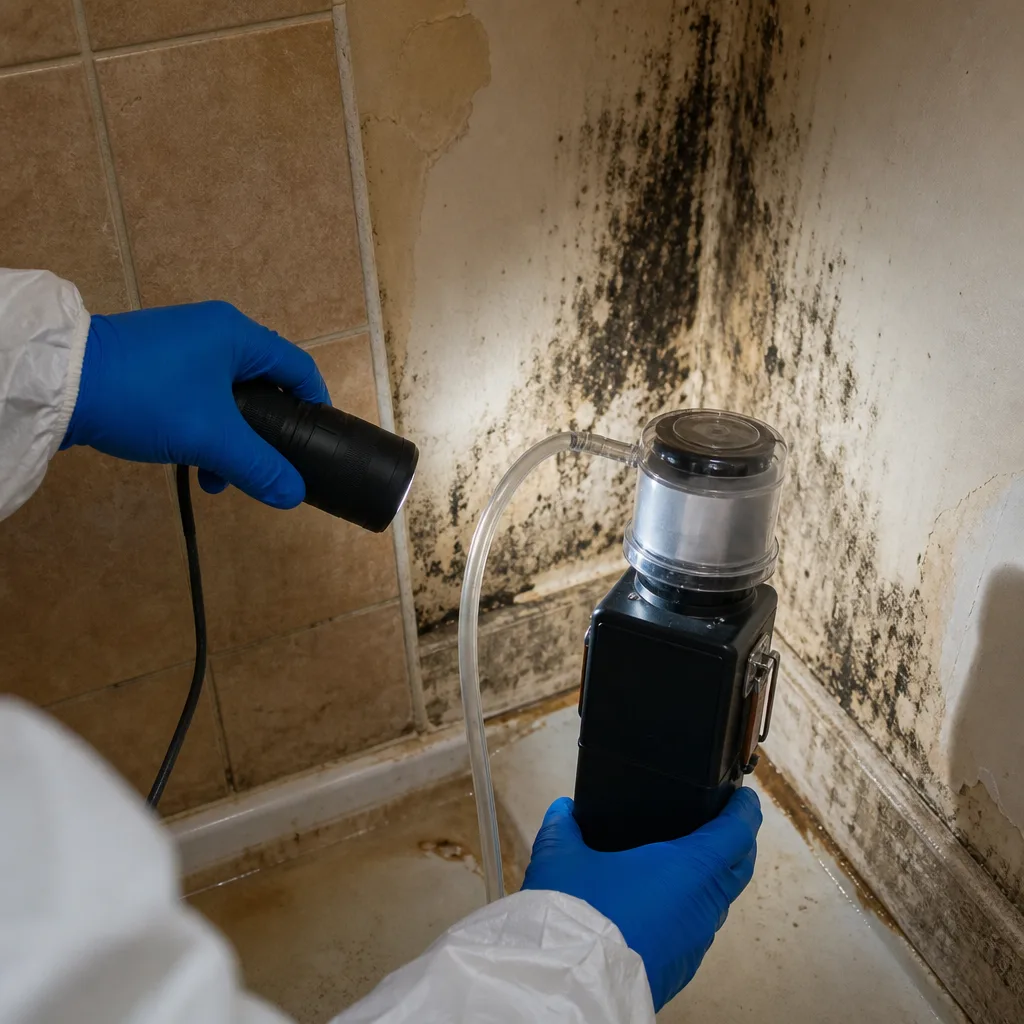
We start every Lumberton job with inspection and testing, because guessing is how two-layer homes get half-remediated. We check wall cavities, subfloor edges, HVAC returns, and crawl spaces where present. We pull air samples and surface samples only when it changes the scope or the insurance documentation. Otherwise we spend your money on drying and removal, not lab fees you don’t need.
Mold Removal
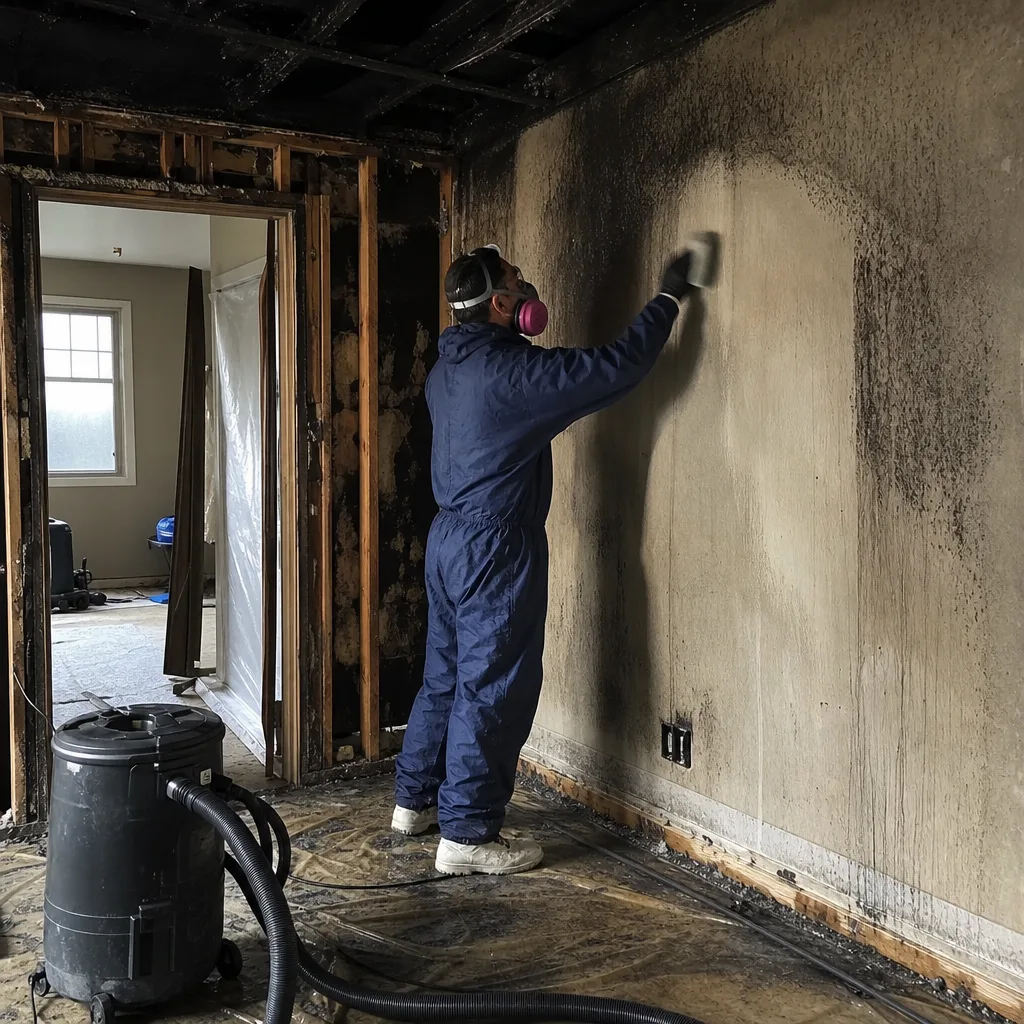
Removal in Lumberton means physically cutting out affected drywall, flooring, and insulation, not spraying everything with bleach and calling it done. We establish containment so spores don’t migrate to the rest of the house during demolition. Then we bag and remove the contaminated material through the shortest path to the exterior. You’d be surprised how many homes in the 77657 zip code still have the Harvey mold layer behind walls because a previous crew only wiped down the surface.
Black Mold Remediation
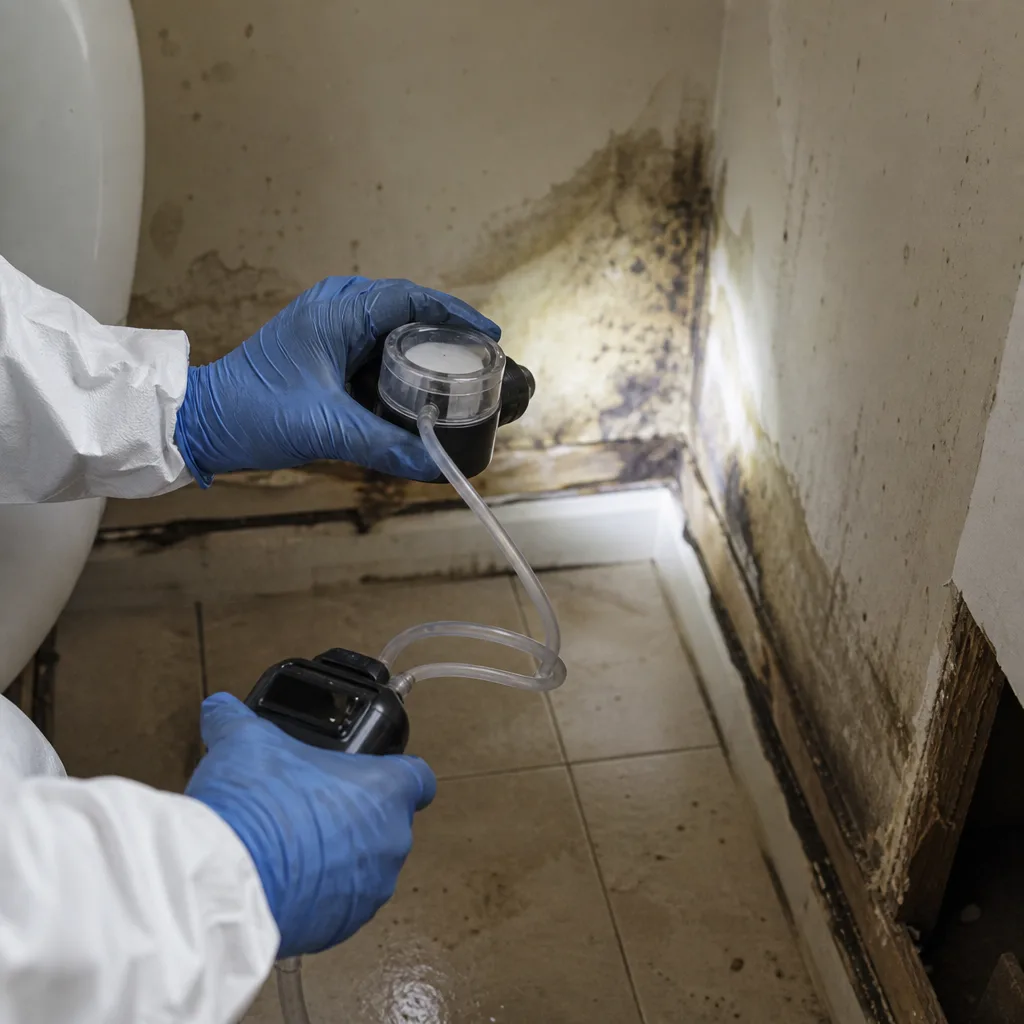
When a Lumberton homeowner says black mold, they’re usually looking at Stachybotrys or a similar toxigenic species that thrives on cellulose-rich materials left wet for more than a week. The Harvey-then-Imelda homes are prime candidates because the inner layer has been wet on and off for years. This isn’t a cleaning job. It’s containment, controlled demolition, HEPA air scrubbing, and verification. Our crews carry the IICRC training to do this correctly, and we document every step for your adjuster.
Air Quality Restoration
After the contaminated material is out and the framing is dry, we run HEPA air scrubbers to pull residual spores from the air and off horizontal surfaces. In Lumberton’s summer, when outdoor humidity is already brutal, this step matters more than people think. We log interior humidity and temperature daily until levels stabilize. You get that log at the end. If your air doesn’t test clean, we’re not done.
Crawl Space Treatment
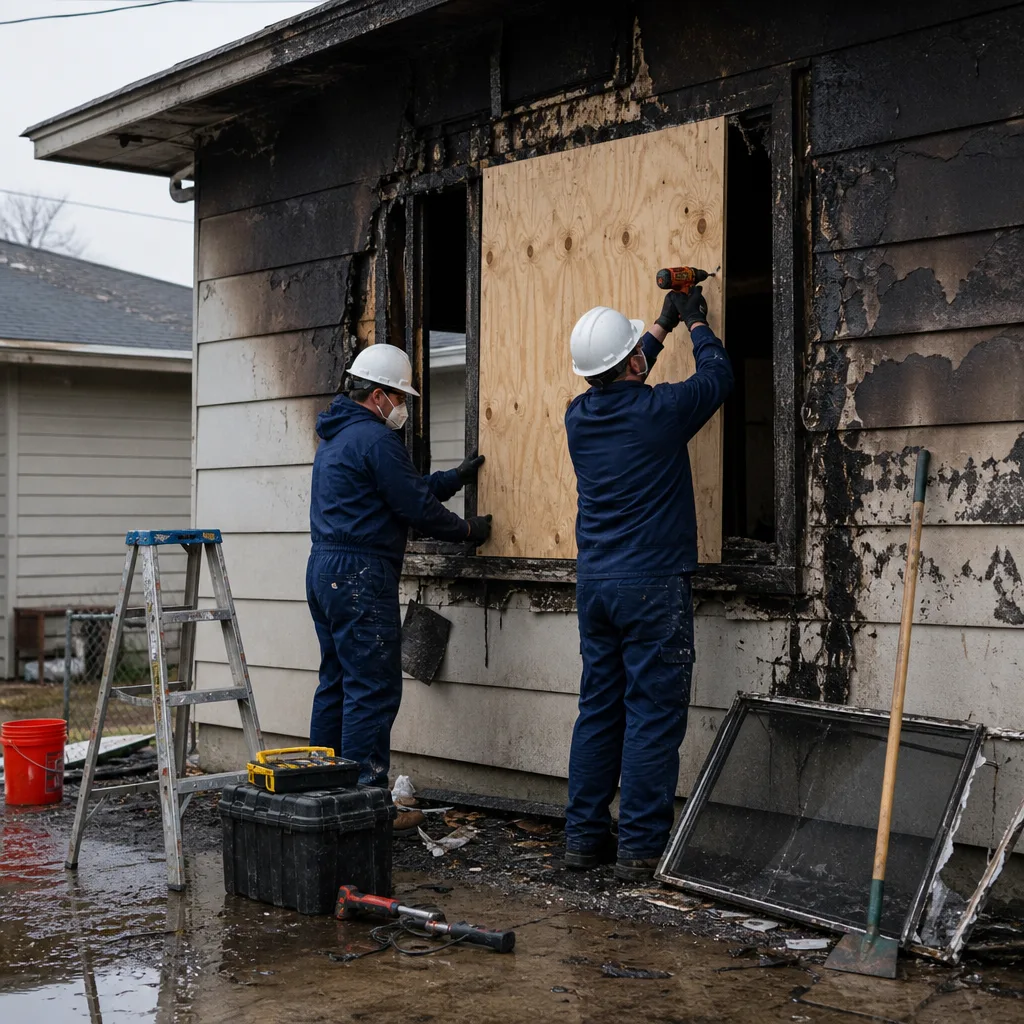
Some older Lumberton homes have raised wood floors with crawl spaces instead of slabs. Those spaces trap humidity against floor joists, and after flood events they’re a mold factory. We install vapor barriers, add venting or encapsulation where needed, and treat the wood framing. A crawl space that stays wet under your house will keep pushing musty air up into the living space no matter how many plug-in dehumidifiers you buy.
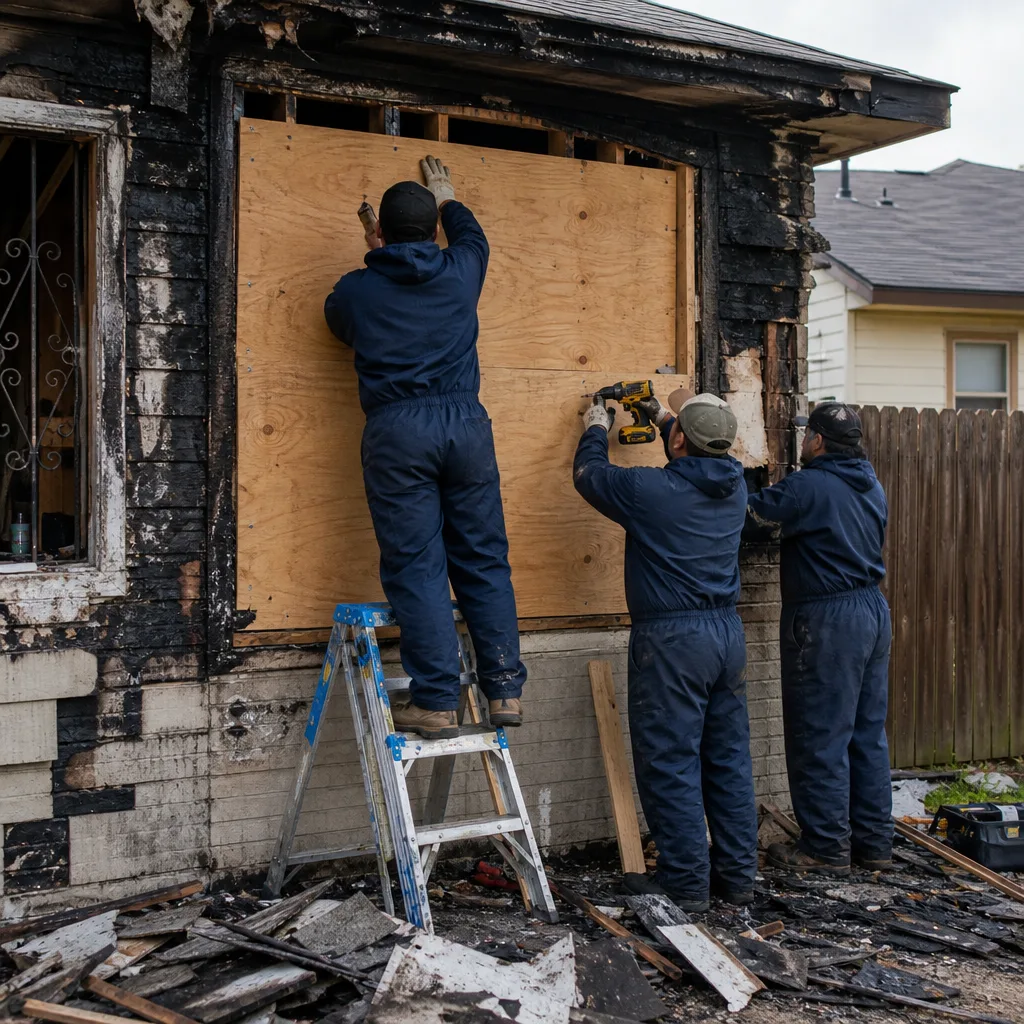
Moisture & Humidity Control
The long game in Lumberton is moisture control. Remediation without a plan for where the water came from and where it’s still trapped is a half-measure. We identify the source, dry the structure, and recommend drainage, ventilation, or dehumidification steps that fit your home’s construction. Slab homes need one approach. Pier-and-beam homes need another. A 1990s brick-veneer on Village Creek needs something specific. That’s what we do.
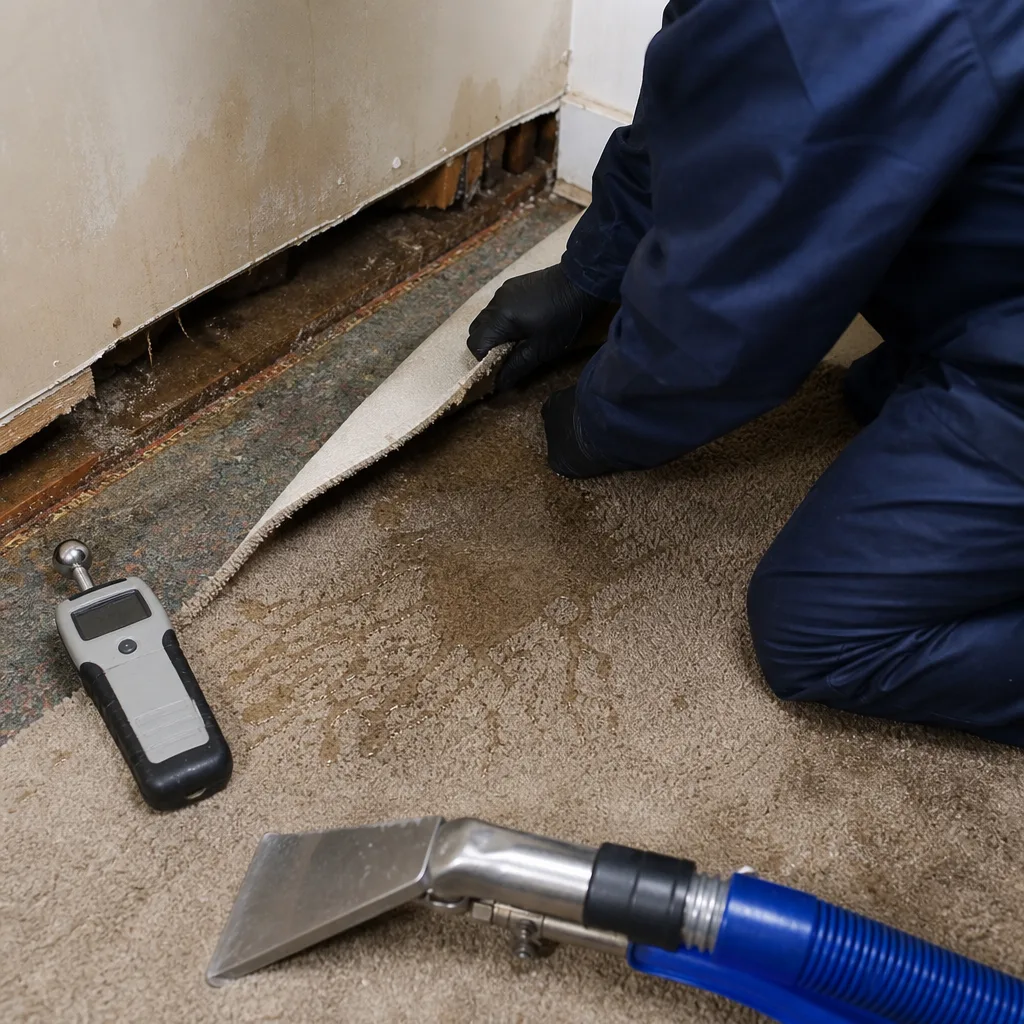
What happens when you call
- 1
A real person answersNo phone trees - you reach a local pro.
- 2
You get an upfront price rangeHonest numbers before anyone is dispatched.
- 3
A background-checked tech heads outLicensed & insured, dispatched right away.
- 4
You approve before work beginsNothing starts until you say go.
Common Mold Problems We See in Lumberton Homes
- The hidden Harvey layer: A previous remediation only addressed the 2019 surface mold. The 2017 bloom is still alive inside the wall cavity, reactivating within weeks of the crew leaving. You can’t see it from the outside. You find it by opening the wall.
- Damp slab under new flooring: Vinyl planks installed over a slab that never dried below 15% moisture create a sealed incubation chamber. The mold grows under the flooring and spreads before anyone notices a smell.
- Drywall wicking above slab level: Capillary action keeps pulling moisture up from the slab into the drywall even after air scrubbers finish. If the bottom 12 to 24 inches of drywall aren’t cut out and replaced, the mold comes back.
- Crawl space humidity: Homes with raised wood floors absorb ground moisture through the crawl space. Without a vapor barrier and proper venting, the subfloor stays damp and mold migrates into the living space.
Pricing for Mold Remediation in Lumberton, TX
A single-room mold removal in Lumberton typically starts around $1,800 and runs up to $4,500 depending on how far the contamination extends into the framing and subfloor. A whole-home job, especially a two-event Harvey-Imelda house, commonly lands between $6,500 and $15,000 because you’re removing layered materials and drying the slab properly. Mold inspection and testing with a written scope runs $300-$550. Crawl space treatment, including vapor barrier installation, runs $1,200-$3,500. Air quality restoration after a removal job adds $800-$1,800 in most cases.
What drives the cost up in Lumberton specifically is the layered moisture history. If we find the Harvey layer still active behind walls sealed after 2017, the demo scope expands. If the slab is reading above 18% moisture, we’re running drying equipment longer before any rebuild can happen. Every estimate is free and in writing before any work starts. We have a Free Second Opinion on any written estimate, and No Trip Charge inside Hardin County. Call (888) 534-8116 for an honest number.
Trusted Equipment and Brands in Lumberton
We run professional-grade equipment that holds up to Lumberton’s humidity load. Our drying setups use Dri-Eaz LGR dehumidifiers sized for the actual cubic footage, paired with XPOWER air movers to keep air circulating across wet surfaces. For hard-to-dry wall cavities and under-cabinet spaces, Injectidry injection systems push dry air where standard equipment can’t reach. The brand names matter less than the results, but you should know we’re not showing up with hardware store fans and a wet vac. We’re IICRC-trained and we stock the moisture meters, HEPA scrubbers, and containment materials the job requires before we knock on your door.
We Also Serve Cities Near Lumberton
Our crews work throughout this corner of Hardin County and the surrounding areas. We’re regularly in Beaumont, Liberty, Dayton, and West Livingston for the same two-event mold jobs and slab-drying work we handle in Lumberton’s 77657 zip code. Same owner, same equipment, same written scope.
Serving Lumberton, TX - Our Local Coverage Area
We’re based in the Lumberton area and know this community well. Use the map below to see our service coverage - if you’re nearby, we can almost certainly help.
FAQs - Mold Remediation in Lumberton
It means the job has to be scoped as a two-event loss. A standard single-event cleanup assumes one wetting and one mold generation. In Lumberton, many homes have a 2017 Harvey bloom sealed behind drywall and a 2019 Imelda bloom on top of it. We open the wall, identify both layers, document them separately, and remove all affected material. Skipping the inner layer means the remediation fails within months. Call (888) 534-8116 and we’ll schedule the inspection that tells you exactly what your house is carrying.
Because the slab itself holds moisture, and flooring laid over a damp slab creates a sealed chamber where mold grows unseen. Vinyl and laminate don’t breathe. If water wicks up through the concrete after a flood, the underside of that flooring stays wet indefinitely. Complete floor removal lets us take direct moisture readings on the slab and dry it below 15% before anything goes back down.
We look for distinct growth patterns and document them separately: a dark, matted inner layer from 2017 and a greener, newer layer from 2019. We note which materials each layer affected, photograph everything, and mark the boundaries on a diagram for your insurance adjuster. That documentation matters because a two-event loss changes what coverage applies, and the adjuster needs evidence to process it correctly.
Within 48 to 72 hours. When relative humidity sits above 85% and temperatures are in the 90s, mold spores germinate fast on any wet organic material like drywall, plywood, or carpet pad. By day five, visible growth is common. By the time you smell it, the colony has been active for a while. Speed matters, but so does doing it right the first time.
It starts with removing any standing water and drying the floor joists to an acceptable wood moisture content. Then we address the source of the humidity: ground moisture. A sealed vapor barrier over the dirt, foundation vents opened or mechanical ventilation added, and where needed, full encapsulation with a dehumidifier. The goal is to keep the air under your house dry enough that the joists can’t support mold growth. Call (888) 534-8116 to have Wade’s crew assess your specific crawl space.
Written by Wade Ferris, Owner at Wade’s Restoration of Houston, serving Lumberton since 2007.