

Fast, Reliable Mold Remediation Across Fulshear
Mold remediation in Fulshear typically costs between $1,800 and $6,500 depending on how far the moisture has traveled, and in this town the answer to “how far” is often further than you’d think. Fulshear’s brand-new homes on expansive clay hold water differently than older construction, and once mold starts behind a baseboard it doesn’t wait. We get calls from Cross Creek Ranch, Polo Ranch, and the newer phases off FM 1093 every week, usually within 48 hours of a water event, because that’s how fast colonization begins in tight-wrap construction. If you see staining or smell must, call (888) 534-8116 and Wade will pick up.
Why Wade’s Restoration of Houston Is Fulshear’s Preferred Mold Remediation Company
Wade Ferris started this company in 2007 and he still answers his own phone. That matters in Fulshear because when you call about mold behind a baseboard at 9pm, you’re not getting a call center in another state. You’re getting Wade, and he’s been through enough Fort Bend County flood seasons to know exactly what he’s looking at.
Fulshear homeowners tell us the same thing over and over: they bought new construction thinking it meant fewer problems, then a moderate rain backed up the detention pond and now the builder’s warranty excludes mold. Wade’s Restoration of Houston has handled enough of these to know that the water source matters as much as the mold itself. We document everything, we hand you the moisture log, and we deal with your adjuster or your HOA directly so you’re not relaying messages between parties who don’t want to talk to each other.
Every Mold Remediation job we do for Fulshear homeowners carries the 90-Day Done Right Promise in writing. If it’s not right, Wade comes back and makes it right. No fine print, no argument. That’s how we’ve kept a reputation on the ground here: ask anyone on your street who’s had a water event.
Our Mold Remediation Services in Fulshear
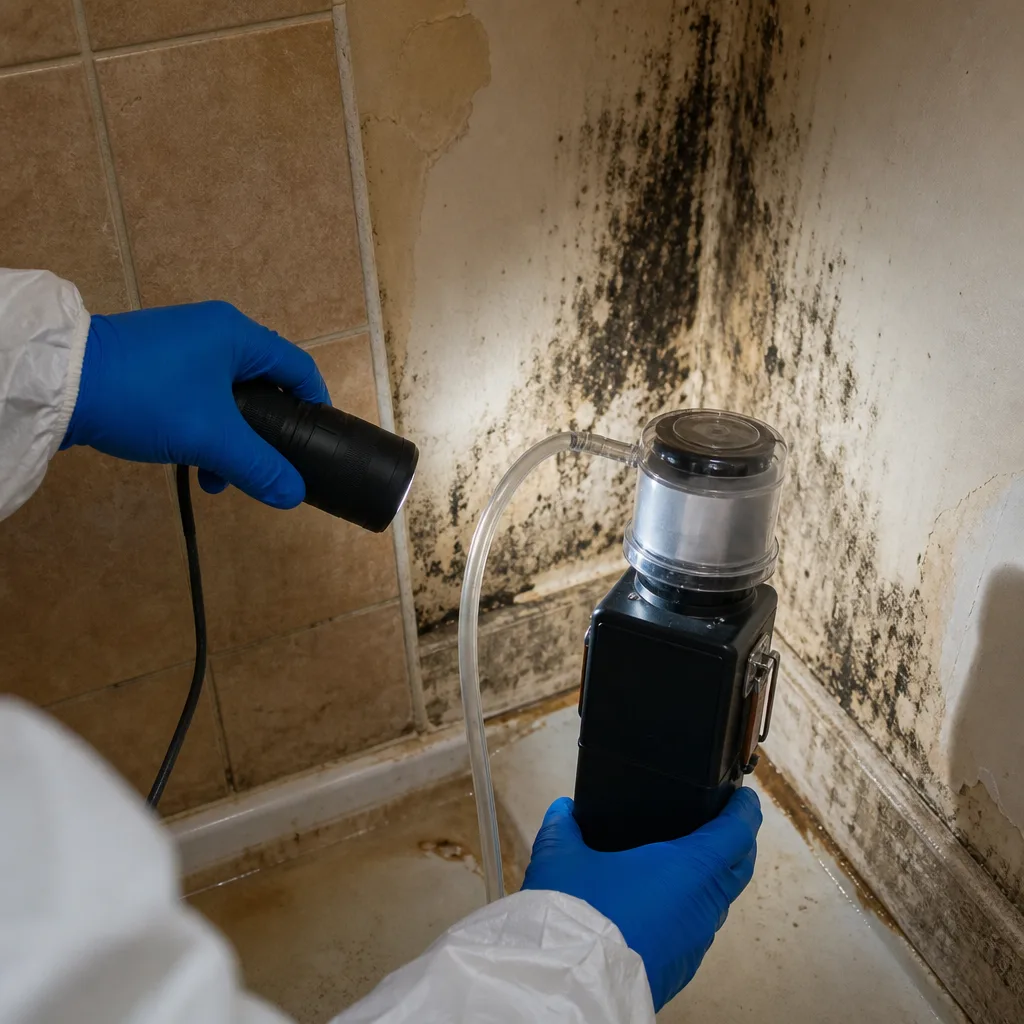
Mold Inspection & Testing
In Fulshear, a mold inspection has to answer a question most inspectors in Houston don’t even ask: is the moisture coming from a flood backup or from a slab-heave crack in the Vertisol clay under your foundation? The two sources require completely different fixes, and if you treat one when you have the other, mold comes back. We test air and surface samples and trace the moisture path back to the source before we ever write a remediation scope. In the newer subdivisions around FM 359, that often means walking the exterior drainage and checking whether the detention pond serving your phase is actually at final engineered capacity.
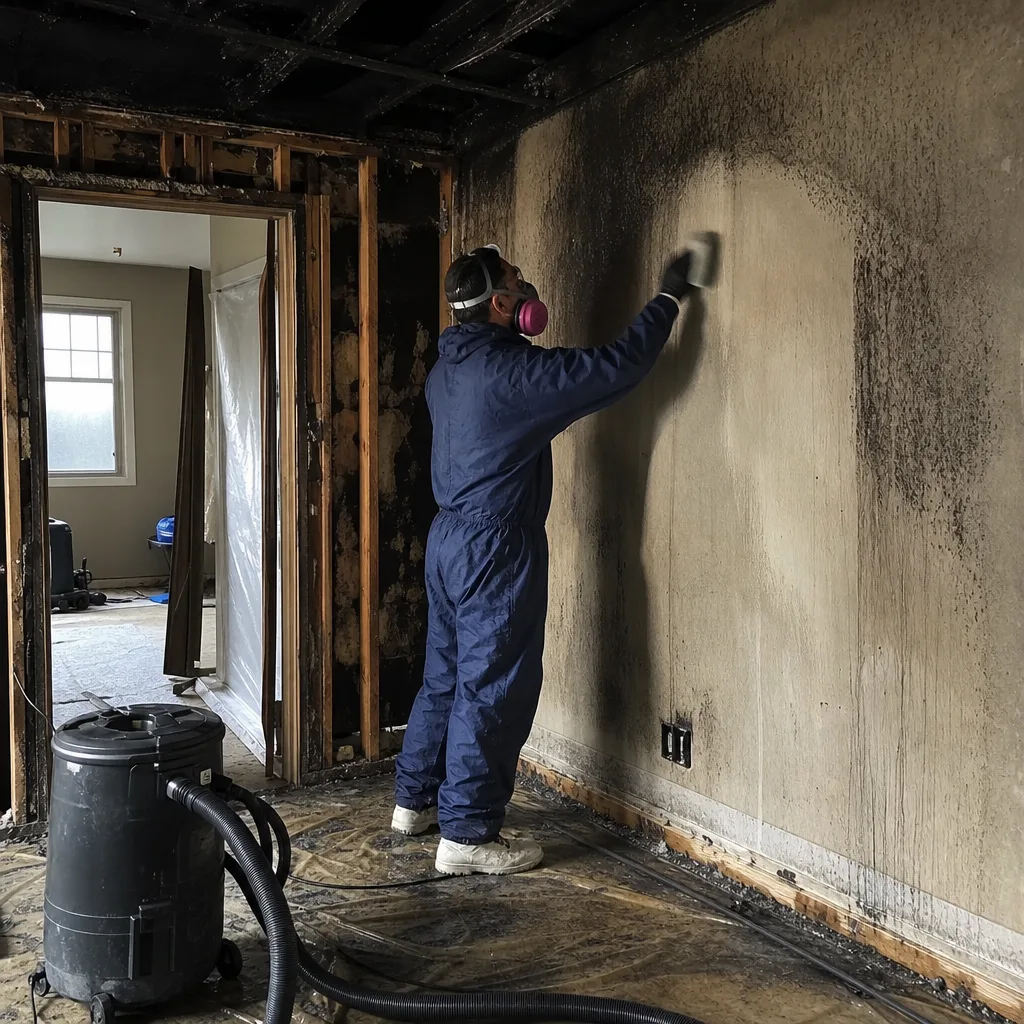
Mold Removal
Mold removal in a Fulshear home usually means more than cutting out a patch of drywall. Because so many of these homes are spray-foam insulated or tight-wrap, moisture gets trapped in wall cavities instead of drying outward. We set professional drying equipment from Dri-Eaz and XPOWER to pull moisture out of the assembly before we remove and replace affected material, and we confirm it’s dry with daily moisture readings you get to keep. If your builder-grade bathroom fan was never ducted to the exterior and your master bath has been holding 70% humidity for two years, we’ll find that too.
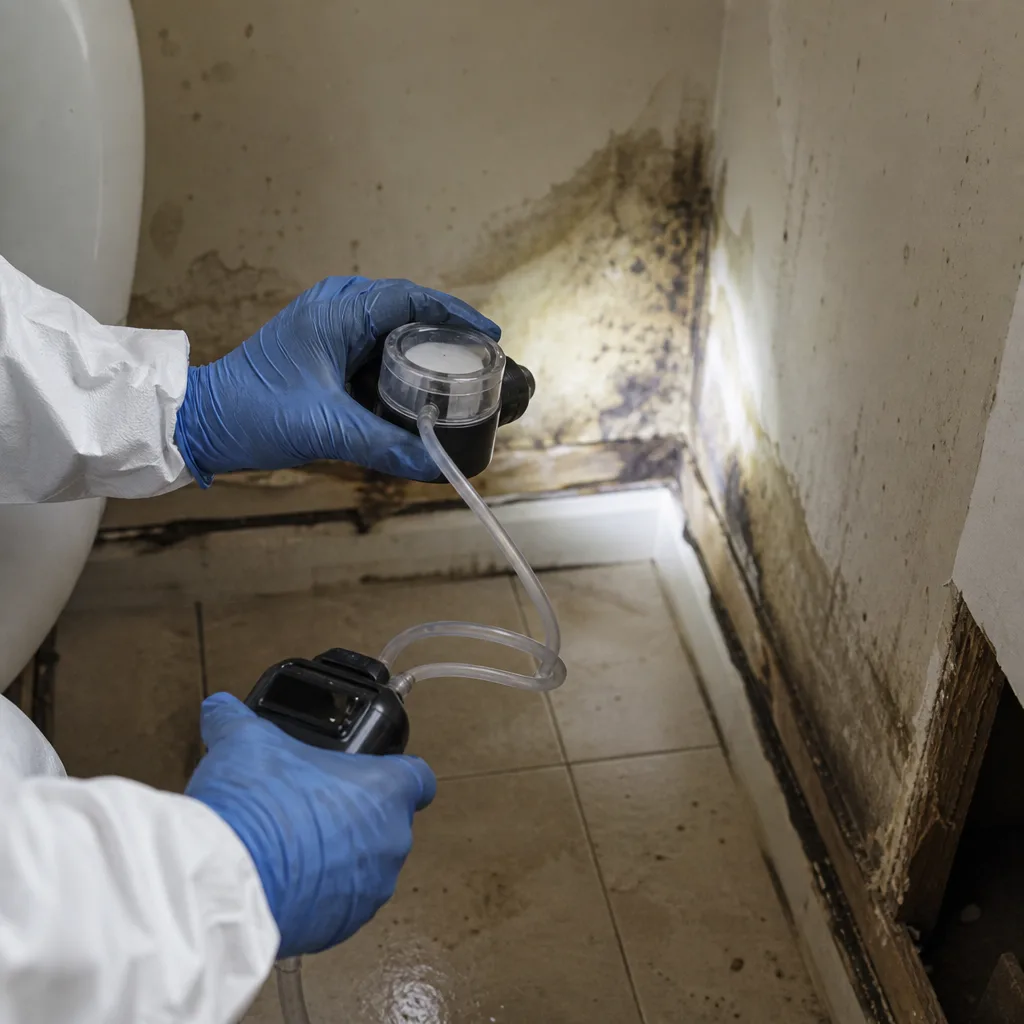
Black Mold Remediation
Black mold, the Stachybotrys you read about that makes people nervous, is a moisture problem first and a mold problem second. In Fulshear it shows up most often in first-floor studies and master closets on exterior walls where slab cracks let groundwater wick up, or where a drainage backup left standing water for hours before anyone noticed. We contain the affected area, remove the material, treat the framing, and then address the reason the moisture got in. Walking away from black mold without fixing the water source is a guarantee it comes back.
Air Quality Restoration
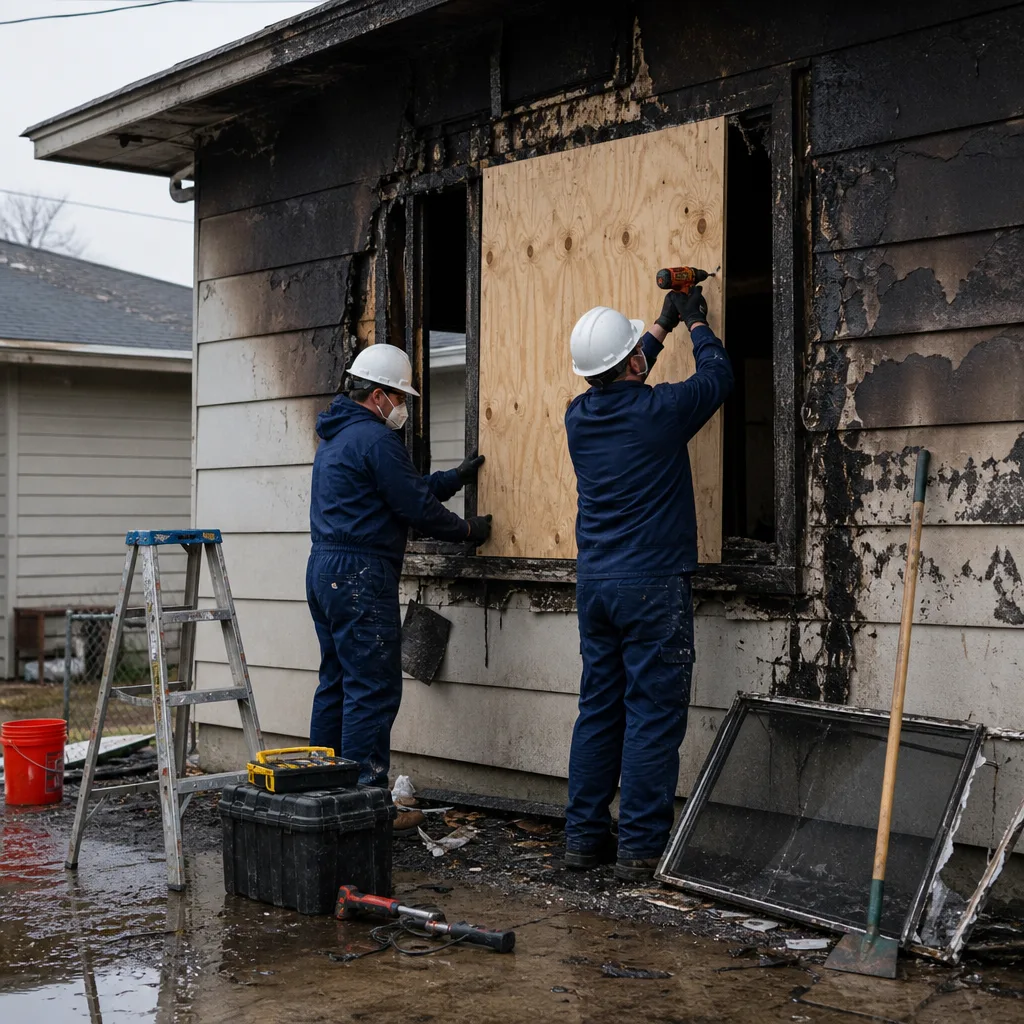
After any mold removal in Fulshear, the air in the home needs to be brought back to a healthy baseline. We run HEPA air scrubbers during the job and re-test when we’re done, with before-and-after numbers you can see. For homes that have had chronic humidity, we’ll also talk about whether your exhaust fans are actually doing anything and whether a whole-home dehumidifier makes sense. Tight, energy-efficient construction is great for utility bills and terrible for trapped moisture unless you manage the air.
What happens when you call
- 1
A real person answersNo phone trees - you reach a local pro.
- 2
You get an upfront price rangeHonest numbers before anyone is dispatched.
- 3
A background-checked tech heads outLicensed & insured, dispatched right away.
- 4
You approve before work beginsNothing starts until you say go.
Trusted Brands We Service in Fulshear
We’re an IICRC-certified firm and we’re affiliated with the RIA, which matters when the job is in a new-build home and the HOA or builder wants documentation that stands up. Our crew runs Injectidry systems for in-place drying of wall cavities when removal isn’t the first step, and B-Air air movers for circulation. Because we work Fulshear regularly, we keep equipment staged so we don’t lose half a day driving across Houston when your call comes in.
Common Mold Remediation Problems We See in Fulshear Homes
- Slab-heave cracks mistaken for isolated leaks. A hairline crack in a two-year-old slab can look like a one-time thing, but when the adjacent detention pond isn’t finished and the clay soil is cycling through wet-dry seasons, water keeps coming back. We check the drainage before we open the wall.
- Trapped moisture in tight-wrap wall assemblies. These energy-efficient homes are built to hold conditioned air, which is great until water gets in. There’s no path for it to dry outward, so surface mold grows on the backside of drywall while the front looks fine.
- Undersized or un-ducted exhaust fans. Builder-grade fans that terminate in the attic or run long, undersized vent lines don’t move enough air to keep master baths below 70% humidity. Mold regrows within months because the moisture never left.
- First-time claims on homes that have never flooded. Owners of three-year-old Fulshear homes sometimes don’t know that their standard homeowner’s policy has a flood exclusion, and the first sign of trouble is mold in a closet after a “moderate” rain. We walk through the documentation needs during the initial call because the clock on filing is already running.
Pricing for Mold Remediation in Fulshear, TX
Here’s what we actually see in Fulshear, and these are honest ranges based on the work we’ve done here:
- Mold inspection and testing: $350-$650 depending on how many rooms are sampled and whether we need to trace a moisture source through the slab.
- Small-scale mold removal (one wall section, one closet): $1,500-$4,000 including containment, removal, treatment, and drying.
- Full-room or multi-room remediation: $4,000-$8,500 especially in tight-wrap homes where drying takes longer and affected areas are larger than what’s visible.
- Air quality restoration after remediation: $500-$1,500 for scrubbing and post-job clearance testing.
What pushes the cost up in Fulshear specifically is when the water source needs a structural fix, like a slab crack that’s actively wicking or an exhaust system that needs re-ducting. The mold removal itself is straightforward; the reason it happened is where the scope grows. We give you a written scope before work starts, and we honor the standing offers: free second opinion on any written estimate, no trip charge in our own county, and 10% off for seniors and veterans, always. Call (888) 534-8116 for an exact number on your home.
We Also Serve Cities Near Fulshear
Our Fulshear crew regularly handles mold remediation work in Brookshire, Katy, Cinco Ranch, and Pecan Grove. The same owner, the same phone number, the same written promise. If you’re in one of those towns and the mold started after a storm or a plumbing failure, call us and Wade will tell you straight what you’re dealing with.
Serving Fulshear, TX - Our Local Coverage Area
We’re based in the Fulshear area and know this community well. Use the map below to see our service coverage - if you’re nearby, we can almost certainly help.
FAQs - Mold Remediation in Fulshear
The short answer is that you usually can’t tell without tracing the moisture path, and the two require different fixes. A drainage backup typically leaves water staining that starts at the baseboards and follows door openings and low spots, while a slab crack wicks moisture upward from the floor plate in a more localized pattern. We find the source by reading the moisture pattern with thermal imaging and inspection probes, and in Fulshear’s newer subdivisions we also walk the exterior drainage to check whether your phase’s detention pond is at final capacity. Call (888) 534-8116 and we’ll sort it out, usually same day.
Because your home is built tighter, and moisture that gets inside has nowhere to go. Older Katy homes had enough air leakage that wall cavities could dry on their own over a few days. Your spray-foam or tight-wrap Fulshear house holds that moisture in place, and with Gulf Coast humidity above 70% for much of the year, mold colonizes within 24 to 48 hours. That’s why drying has to be active, with equipment and daily moisture readings, not passive.
Yes, and we do this routinely for Fulshear homeowners. We document the moisture source, photograph everything before we open any walls, and write up a findings report that identifies whether the water came from a drainage backup attributable to unfinished infrastructure or from a plumbing or slab issue inside your property. If your HOA or the developer says it’s not their problem, you’ll have a documented, dated record from a credentialed restoration firm to show them. We’ll also talk to your insurer directly so you’re not the one stuck between parties.
Yes, and here’s why: Fulshear homes built after roughly 2012 were constructed during a period when detention infrastructure lagged behind the pace of development, and a previous owner may have had a water event they never filed a claim for simply because they didn’t want their insurance to go up. Tight-wrap construction means the evidence can be hidden behind baseboards or inside wall cavities. An inspection before close costs a few hundred dollars and tells you whether you’re buying a home or buying a moisture problem.
Within 24 hours, and sooner is better. In Cross Creek Ranch’s tight-wrap homes, mold colonization begins within 24 to 48 hours of water intrusion, and every hour before drying starts means more material that has to be removed. Don’t wait to see visible mold. If you’ve had a backup, a leak, or standing water of any kind, call (888) 534-8116 and Wade will get eyes on it fast.
Key takeaways for Fulshear homeowners: tight-built new construction holds moisture and grows mold faster than older homes; the water source matters more than the mold itself; detention pond capacity issues in unfinished subdivisions cause flooding in homes that have never flooded before; and documentation is everything when the builder, HOA, or insurer says it’s not their responsibility.
Wade’s Restoration of Houston is locally owned and operated by Wade Ferris. We’re IICRC-certified, RIA-affiliated, and background-checked, and every mold job in Fulshear carries the 90-Day Done Right Promise in writing. If you’ve got mold, suspect you’ve got mold, or just watched water back up into your first floor after a rain, call us at (888) 534-8116. Wade answers.
Written by Wade Ferris, Owner at Wade’s Restoration of Houston, providing Mold Remediation to Fulshear and surrounding Fort Bend County communities since 2007.